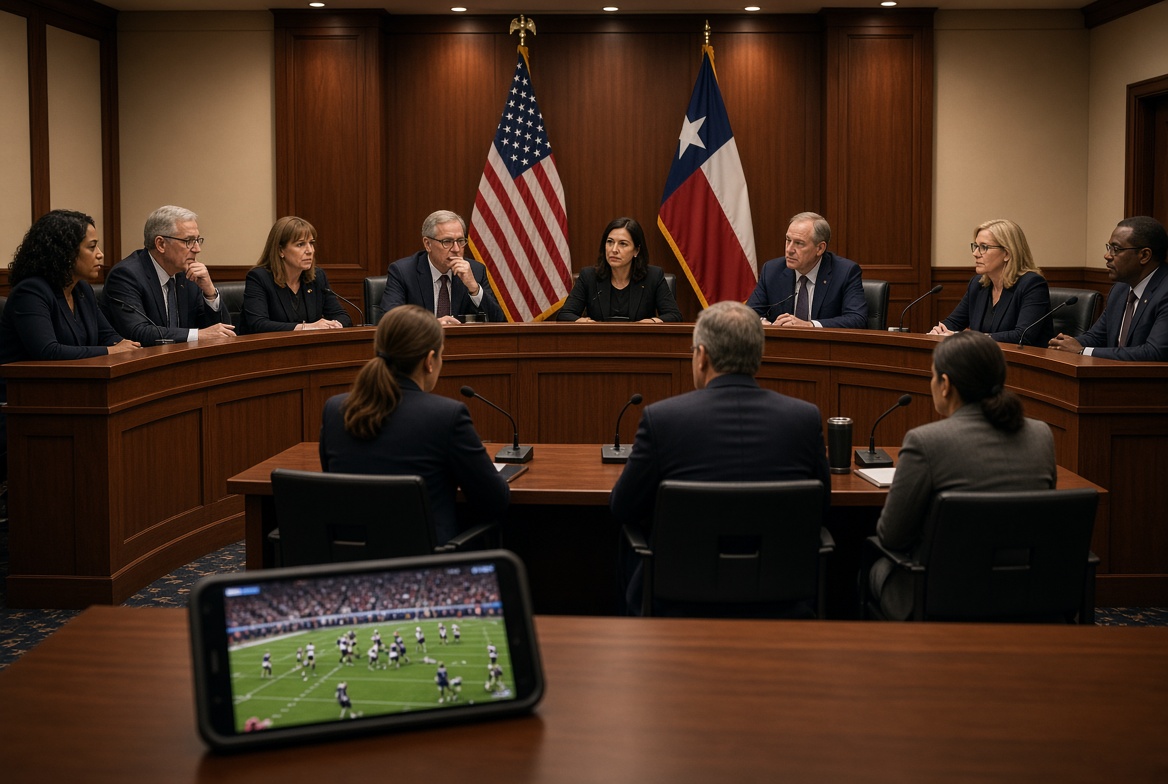
There is a battle brewing in prediction market regulations. Sides are being taken. Battle plan being drawn. One party firmly believes that prediction markets are legitimate swaps and commodity exchanges that are appropriately regulated under the federal CFTC. The other is that prediction markets are essentially wagering and gaming and belong under the control of individual state authorities, as with any casino, sportsbook, or iGaming operator.
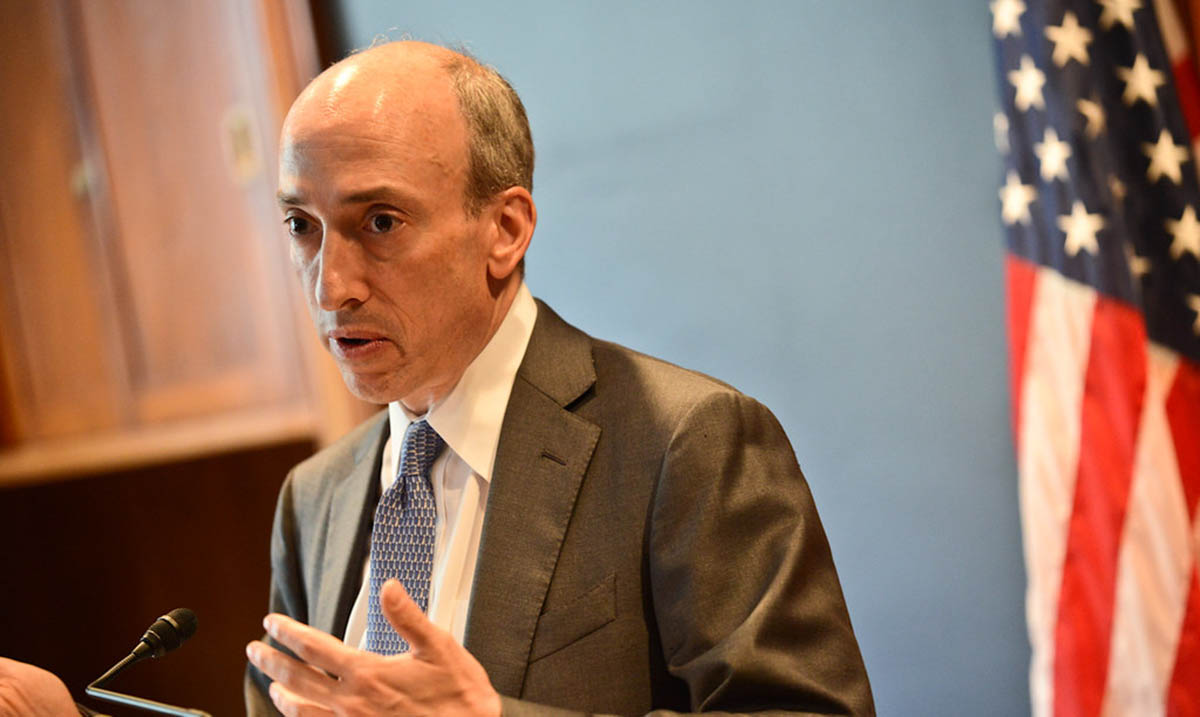
Former CFTC and SEC chairman Gary Gensler has stepped into a high-stakes legal clash, filing an amicus brief that directly challenges his former agency’s push for broad control over sports event contracts. Gensler argues that these contracts fall outside the Dodd-Frank swap definition, siding firmly with state regulators against platform ambitions for federal preemption. This brief, submitted to the Sixth Circuit, intensifies an already heated jurisdictional battle.
Gensler’s filing insists that Congress never intended with Dodd-Frank to turn derivatives regulators into national sports-wagering overseers. As courts split on these issues, his brief lends some heavyweight credibility to calls to preserve state gaming authority.
Gensler’s Brief Directly Contradicts Current CFTC Position on Swap Classification
Gensler filed his amicus curiae brief in KalshiEX LLC v. Matthew Schuler, supporting Ohio officials who seek to enforce state gambling laws against the platform’s sports-related event contracts. He contends that sports bets simply do not qualify as swaps because they lack the core focus on hedging economic risks that defines derivatives under the Commodity Exchange Act.
This stance clashes entirely with the CFTC’s own May 12 amicus filing in the same appeal. Current CFTC chief Michael Selig maintains that properly listed event contracts on designated markets are preempted by federal law, taking precedence over conflicting state rules. Gensler, however, highlights how Congress crafted Dodd-Frank amid the 2008 financial crisis to address systemic threats from over-the-counter swaps, not everyday sporting outcomes.
Gensler’s reasoning emphasizes legislative history and statutory text. Sports contracts, he writes, fail to meet the “potential financial, economic, or commercial consequence” threshold in a meaningful hedging sense. Consequently, they should remain subject to longstanding state gaming oversight rather than automatic federal regulation.
Key Arguments in Gensler Amicus Brief on Sports Prediction Markets CFTC Swap Rules
| Argument | Core Point | Implication for Traders |
|---|---|---|
| Legislative Intent | Dodd-Frank targeted crisis-era derivatives risks, not sports wagering | Supports a narrower federal role |
| Swap Definition | Requires genuine economic hedging, absent in typical sports contracts | Challenges broad preemption claims |
| Special Rule | Allows CFTC to block certain listings but does not classify gaming as swaps | Limits federal expansion into gaming |
| Agency Capacity | CFTC lacks resources and expertise for nationwide sports regulation | Allows CFTC to block certain listings, but does not classify gaming as swaps |
Context of the KalshiEX Appeal and Multi-Circuit Litigation
KalshiEX brought its Ohio lawsuit after receiving cease-and-desist orders from state gaming authorities. A federal district judge denied the platform’s preliminary injunction request, prompting the Sixth Circuit appeal scheduled for oral arguments later this summer. Gensler’s brief joins filings from the Indian Gaming Association, American Gaming Association, and Better Markets, all backing Ohio.
As in most of these cases pending around the country, we see the prediction market operators and the CFTC on one side, and state gaming authorities, attorneys general, gaming trade groups, and Indian tribes on the other. At stake, a large amount of money, both direct wagering and tax revenues.
Conflicting rulings across court circuits are adding layers of legal complexity. The Third Circuit sided with preemption in April, while other panels have shown more sympathy toward state positions. This patchwork creates headaches for traders seeking consistent rules across borders, raising the possibility that the Supreme Court may ultimately decide the fate of sports prediction markets and CFTC swap rules.
Gensler submitted the brief one day after the CFTC published its latest proposed rulemaking on event contracts. That notice outlines rules for evaluating contracts tied to enumerated activities such as gaming. Yet Gensler argues the Special Rule serves only as a gatekeeping tool for exchanges, not a backdoor to reclassify sports bets as swaps.
Timeline of Key Developments in Prediction Market Jurisdiction Battles
| Date | Event | Impact |
|---|---|---|
| May 12, 2026 | Introduces a structured review process | Bolsters platform arguments for preemption |
| June 10, 2026 | CFTC releases event contracts NPRM | Introduces structured review process |
| June 11, 2026 | Gensler submits opposing amicus brief | Highlights internal regulatory divide |
| July 30, 2026 (scheduled) | Sixth Circuit oral arguments | Potential turning point for traders |
Gensler described his filing as rooted in respect for the legislative process he helped shape. He insists his comments underscore a deep commitment to original statutory meaning over expansive reinterpretations. In this CNBC appearance, Gensler elaborates on why Congress excluded sports betting from Dodd-Frank’s swap framework:
Legislative History and the Limits of Dodd-Frank Scope
Gensler repeatedly returns to the crisis-driven origins of Dodd-Frank. Lawmakers sought to mitigate systemic threats from opaque derivatives markets through clearing, reporting, and dealer oversight. Gensler argues that nothing in the voluminous record suggests intent to federalize sports wagering, which operated under its own, separate patchwork of laws for decades.
He points to the absence of any debate around preempting the Professional and Amateur Sports Protection Act or state gaming regimes. This omission on this topic, combined with explicit carve-outs and special rules, demonstrates deliberate boundaries, according to Gensler.
Additionally, Gensler highlights agency resource constraints. The CFTC simply lacks the appropriations and specialized expertise needed to police nationwide sports integrity issues at scale. Leaving such matters to states with established, gaming-tax-revenue-funded gaming commissions makes practical sense, he contends.
Statutory Provisions Central to Gensler Amicus Brief Analysis
| Provision | Description | Gensler Interpretation |
|---|---|---|
| CEA Swap Definition (7 U.S.C. § 1a(47)) | Focuses on financial risk transfer | Excludes pure sports contingency contracts |
| Special Rule (7 U.S.C. § 7a-2(c)(5)(C)) | Authority to prohibit certain listings | Gatekeeper, not classification tool |
| Preemption Clause (7 U.S.C. § 2(a)(1)) | Exclusive jurisdiction over swaps | Applies only to qualifying instruments |
Broader Implications for Traders and Market Innovation
Even as traders pour millions daily into event contracts tied to sports outcomes, regulatory clarity remains elusive. Gensler’s brief highlights how overreaching federal claims could disrupt established gaming ecosystems that have long been governed by state compacts.
State attorneys general, tribal leaders, and gaming associations applaud the former chair’s stand. They view his brief as reinforcing their authority to protect consumers and revenue streams under state and local rules.
What remains certain is that resolution won’t occur until one of three events: Congress passes a new law to specifically address discrepancies; the Supreme Court rules on the appropriate regulatory venue for sports prediction markets in particular; or a voluntary agreement between leading prediction markets and states is reached, with some concessions on each side. PolyPunter “predicts” the third option remains the most likely.
References
- The Defiant Original Coverage
- Gensler Amicus Brief PDF
- CoinDesk Report
- Law360 Coverage
- CFTC Amicus Filing
- Yahoo Finance Summary
- PYMNTS Coverage
- CourtListener Docket