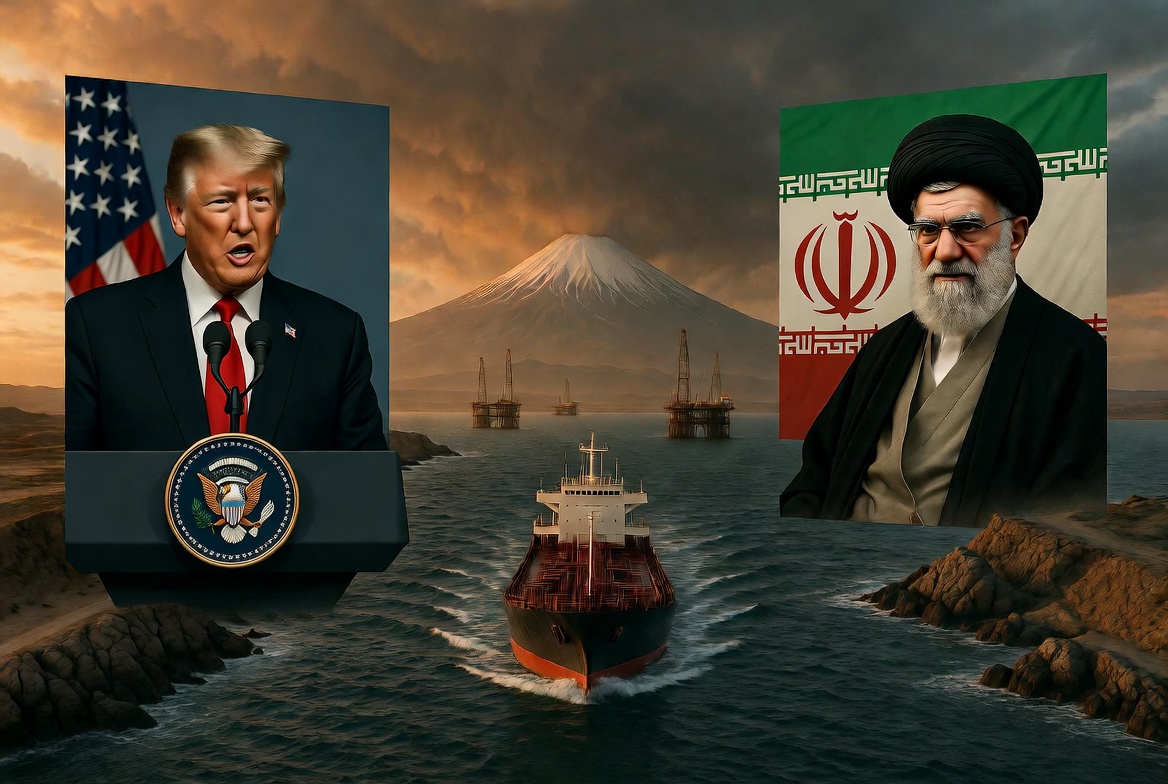
Prospects of a U.S.- Iran peace deal changes daily based on breaking news reports that more often than not, are opaque, agenda driven, and often straight-up negotiations propaganda. In short, volatility is the key descriptor.
In recent trading, prediction market consensus have dramatically slashed probabilities for a permanent U.S.-Iran peace agreement materializing by June 30, sending cross-market ripples through linked financial contracts heavily affected by the current conflict. Notably, oil prices and inflation related contracts. The downward shift highlights deepening skepticism amid stalled talks and renewed regional frictions in the Gulf and Lebanon.
Odds Tumble as Diplomatic Momentum Fades
Market pricing for a lasting accord by the end of June now sits near 30% on major platforms, reflecting a steep decline from levels that once approached 76% just days earlier toward the end of May. This rapid repricing comes as traders digest news reports of suspended negotiations, tougher verification demands, and persistent disputes over nuclear enrichment and maritime access between the two warring parties.
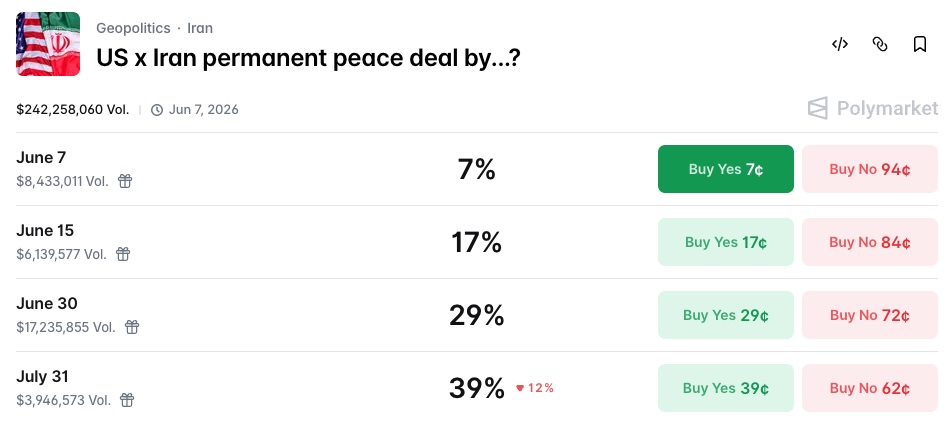
While short-term ceasefire extensions still carry some favorable probability, the bar for a permanent deal (defined by explicit commitments to end hostilities rather than temporary pauses), appears increasingly out of reach in the near term. Volume on the June 30 contract alone exceeds $17 million, underscoring intense geopolitical trader interest as positions adjust to in response to daily information developments.
Needless to say, when you see such sharp movements on questions where the underlying fundamentals haven’t really shifted, it’s a good time to consider the old expression, “Nobody knows nothing”.
Key Drivers Behind the Probability Shift
Peace deal negotiations that gained traction through intermediaries have hit roadblocks over uranium stockpiles, Strait of Hormuz navigation rights, and responses to actions around Lebanon. None of this is particularly new in the past 60-days, or what the world knows as “new” considering that almost all updates come via political leadership in both Iran and the U.S.
Logically speaking, the only reason either side releases information on negotiations is to further their own agenda. Now, there are likely some pure leaks fed to reporters, but this appears to be largely the exception, not the rule, and little of these journalists nuggets have borne much fruit.
Nevertheless, many traders who previously leaned optimistic now favor later resolutions, with December 31 probabilities holding stronger around 72%. This forward shift signals expectations that any breakthrough will require more time for meaningful concessions on both sides, as reflected in ongoing ceasefire prediction markets.
Probability Snapshot for US-Iran Permanent Peace Deal
| Date | Current Yes Probability | Trading Volume | Change Trend |
|---|---|---|---|
| June 7 | 7% | $8.4M | Sharp Drop |
| June 15 | 17% | $6.1M | Declining |
| June 30 | 30% | $17.2M | Steep Fall |
| July 31 | 39% | $3.9M | Moderate |
| December 31 | 72% | $6.5M+ | Stable |
Data reflects live conditions as of June 1, 2026. Probabilities update continuously with new trades.
Oil Markets Brace for Prolonged Supply Risks
Failure to secure a near-term permanent deal keeps downward pressure on global energy flows and conversely upward pressure on prices. The Strait of Hormuz, a critical chokepoint for roughly 20% of world oil trade, remains vulnerable to disruptions both during the current fragile and oft-abused ceasefire, and certainly even more so if full kinetic actions reignite. Traders in oil-linked contracts have begun pricing with higher volatility through summer as a result.
Temporary signs of de-escalation previously triggered sharp drops in crude benchmarks, yet renewed doubts have reversed some of those moves. Extended Hormuz closure or disruption scenarios could push WTI toward $100+ levels, affecting gasoline prices and broader inflation metrics.
Trader Sentiment and Volume Patterns
Smart money flows have tilted heavily toward No on Peace Deal shares on near-term prediction market outcomes in recent sessions. Comments on these trading platforms reveal frustration over slow progress, with some highlighting how Israeli operations in Lebanon and Iranian responses have derailed momentum. Though it’s worth noting none of these commenters likely has any access to the actual elements affecting peace deal negotations.
Despite the pessimism on June deadlines, overall engagement stays robust. The broader permanent peace market has surpassed $241 million in cumulative volume, demonstrating the large interest and market draw on this topic.
Broader Implications for Geopolitical Contracts
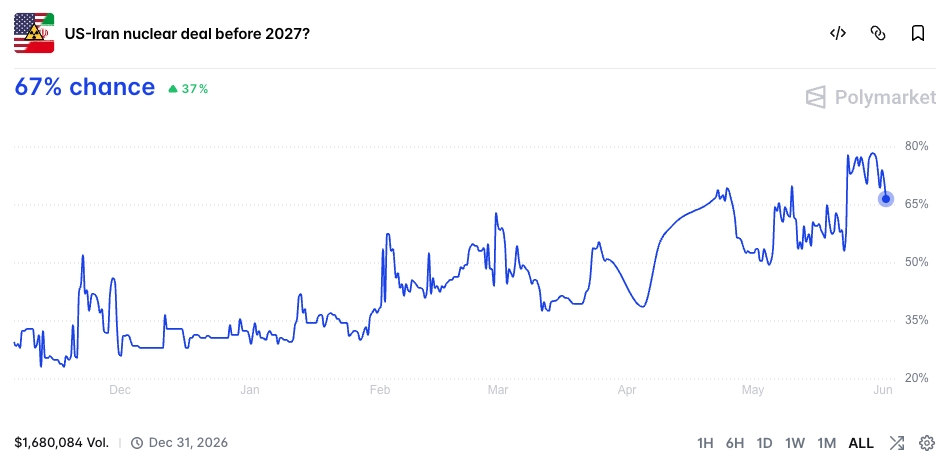
The potential peace deal repricing has cascaded into related markets. Nuclear deal probabilities by year-end remain more optimistic at around 67-68%, yet short-term versions lag significantly. Invasion scenarios before 2027 sit low, while regime stability questions and Hormuz reopening contracts show mixed movements as uncertainty lingers.
Traders continue scanning official public statements and intermediary updates for any pivot that could restore higher near-term odds. Though the validity of released information puts pause on sharper traders putting too much stock into these government issued updates. True inside information in this particular negotiations is intensely limited; perhaps ten people in the world are privy to the reality.
Looking Ahead as Deadlines Approach
With June 30 drawing closer, attention turns to whether any last-minute framework can emerge or if ceasefire period talks will extend into later windows. Persistent gaps on core issues suggest probabilities will continue to favor pessemism, pending any word of movement on these redlines.
References
- US x Iran permanent peace deal by…? – Polymarket
- Iran Prediction Markets & Live Odds 2026 – Polymarket
- Iran war: What is the Strait of Hormuz and why does it matter? – BBC
- US-Iran nuclear deal before 2027? – Polymarket
- Oil prices will rise everywhere if Iran moves to close the Strait of Hormuz
- Iran Ceasefire Predictions & Real-Time Odds
- Polymarket sees just a 30% chance now of a US-Iran permanent peace deal by June 30