
Prediction market contracts tracking every development in U.S.-Iran relations have generated hundreds of millions of dollars in volume, creating intense activity in markets centered around opaque diplomatic and military signals from parties involved in the conflict. Added to that extensive propaganda and misinformation, and you have a highly volatile, highly imperfect market that favors steady, thoughtful, savvy traders.
Traders are actively adjusting positions as news reports emerge from negotiations, often several times a day now. This trading surge highlights how these high-stakes wagers on peace deals, ceasefires, and strategic waterways capture global geopolitical attention and drive interconnected movements in commodity futures markets.
Peace Deal Markets Command Massive Capital Inflows
Traders have committed more than $219 million to contracts on a U.S.-Iran permanent peace deal by December 31, 2026, with probabilities holding near 77% in late May. Because diplomatic developments are unpredictable, traders have to stay glued to the daily news.
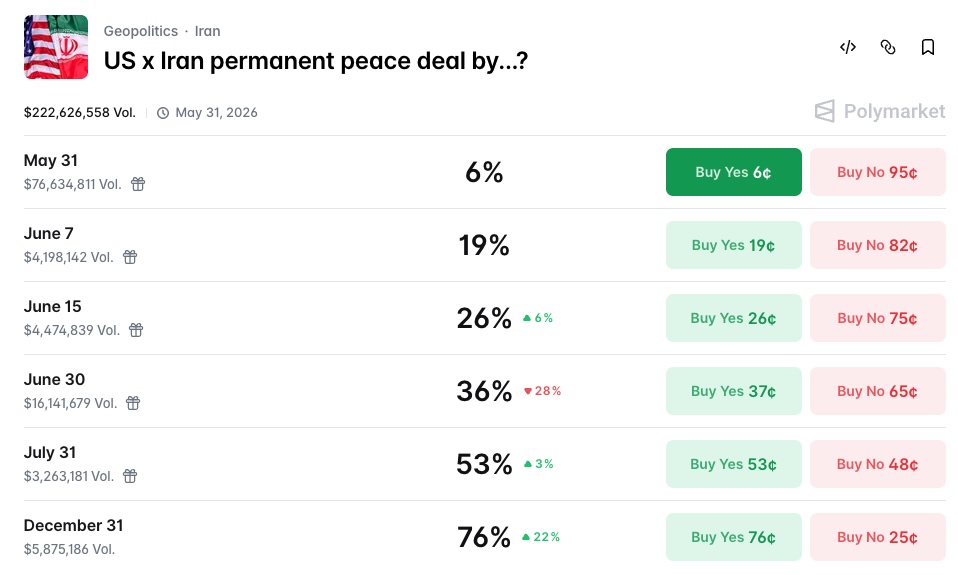
Short-term extension markets are also attracting strong interest. Contracts asking whether officials announce a new ceasefire agreement by June 30 trade with notable liquidity, often reflecting 77% yes probabilities amid ongoing mediated talks.
Meanwhile, nuclear framework bets remain steady. Markets on a U.S.-Iran nuclear agreement before 2027 show probabilities circling between 58% to 82%, fluctuating amid leaks about uranium limits and sanctions relief.
Key Volumes and Current Probabilities in Iran Diplomacy Contracts
| Contract Topic | Total Volume | Leading Probability | Resolution Date |
|---|---|---|---|
| US-Iran Permanent Peace Deal | $219M+ | 77% | Dec 31, 2026 |
| Iran Ceasefire Extension | $49M+ | 77-100% | June 30, 2026 |
| Strait of Hormuz Reopening | $31M+ | Low near-term | End of May 2026 |
| Iranian Regime Change | $19M+ | Varies 5-13% | By June 30 or 2027 |
These figures, drawn from live trading data on Polymarket Iran Predictions.
Hormuz Strait Wagers Tie Directly to Energy Price Swings
Speculation about reopening the Strait of Hormuz has drawn in tens of millions in trading volume. Contracts monitoring traffic returning to normal flow levels show subdued near-term odds, yet longer horizons reveal growing trader optimism tied to ceasefire progress. They are symbiotic, as a militarily enforced reopening appears to be off the table, or at least demoted, as a likely U.S. action.
Traders buying into extension shares are in naturally volatile markets, as any public announcement can not only dramatically shift probabilities but may also be simply propaganda.
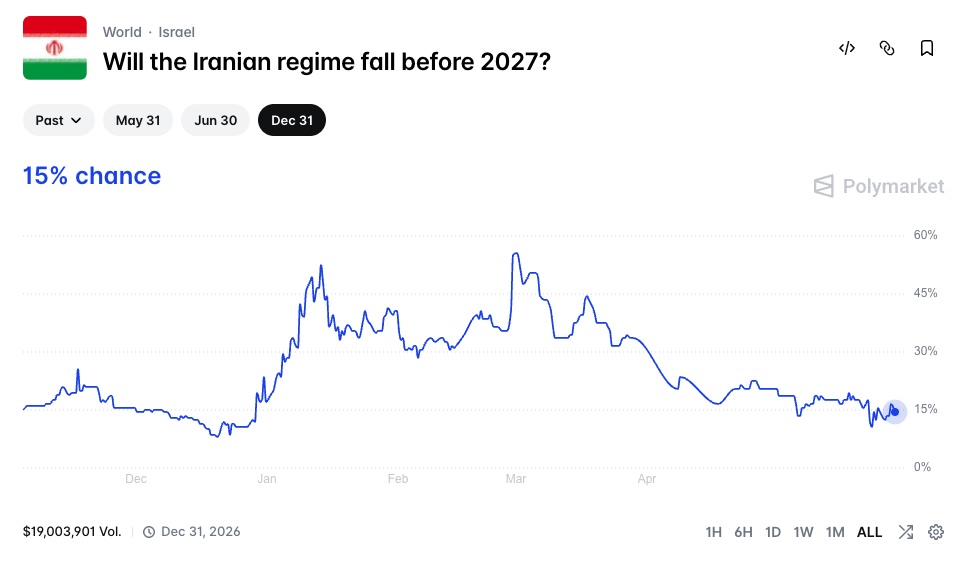
Regime stability contracts add depth to the ecosystem of U.S.-Iran conflict markets. Nearly $19M has been wagered on whether the current Iranian leadership will fall before 2027.
Patterns in Trading Show Adaptive Risk Strategies
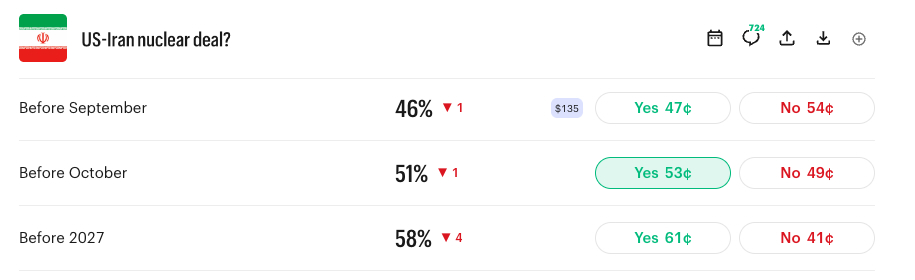
Probabilities on nuclear deals with Iran are evolving rapidly as memos circulate. Kalshi markets on pre-2027 resolutions hold around 58%, while shorter windows reflect far more caution, compelling bettors to balance immediate signals against longer-term strategic factors. This is an if-and-when multivariable forecasting market, betting on the timing of an event that may or may not even take place.
This Bloomberg Businessweek segment examines how platforms manage conflict-related contracts and resulting debates.
Interconnected Contracts Reveal Global Ripple Effects
Savvier traders are combining event contracts about Hormuz reopening with nuclear concession markets in sophisticated ways that increase the likelihood of positive portfolio returns. When one set of probabilities shifts, related contracts often move together, exposing advanced hedging tactics. Singular market participation runs the risk of higher volatility and more “gambling” like participation.
Traders across the commodities spectrum increasingly consult these U.S.-Iran conflict-implied odds when assessing futures prices.
Watch this Reuters discussion on Hormuz shipping risks and international responses for added perspective.
Activity Shows No Signs of Slowing
Volumes tied to U.S.-Iran diplomatic contracts remain elevated as talks advance unevenly and with little clear public information to trust. This setting rewards close attention to nuances and deep, independent research. Whether examining waterway access or regime resilience, the contracts operate in a highly volatile, highly emotional human decision-making environment.
Hundreds of millions in committed wagers reflect a conviction that collective probabilities can clarify intricate geopolitical puzzles. This is the larger value of prediction market trading — price discovery in otherwise highly imperfect markets.
References
- Polymarket Iran Predictions
- Polymarket Iran Live Odds
- US-Iran Permanent Peace Deal Market
- Kalshi Iran Markets
- Iran Regime Change Market
- Bloomberg Iran Platforms Video
- Hormuz Reuters Discussion
- Strait of Hormuz Contracts
- Forbes Iran Volumes Report
- Bloomberg Iran Bets Analysis