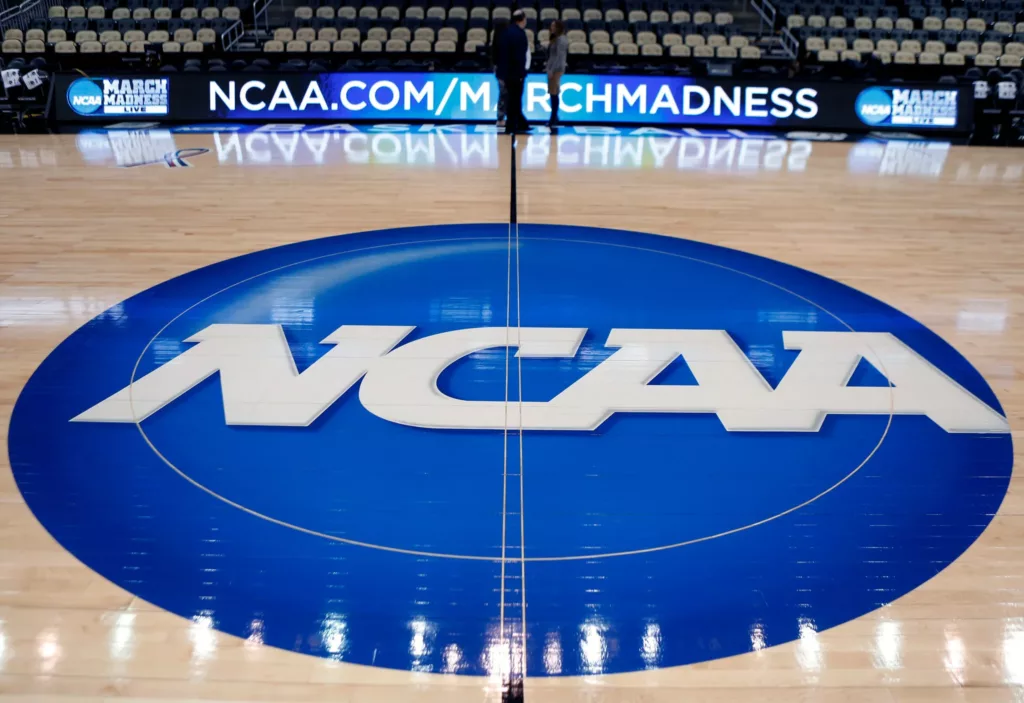
In a move that underscores the growing tensions between collegiate sports governance and emerging prediction markets, the National Collegiate Athletic Association (NCAA) has formally demanded that Kalshi eliminate references to “March Madness” from its platform. This request, made public in late February 2026, highlights the NCAA’s vigilant protection of its intellectual property amid the expanding landscape of event-based trading.
As March approaches, the timing could not be more poignant, with the annual college basketball tournament on the horizon. With Kalshi already complying by switching to generic descriptors, the incident raises questions about the intersection of trademarks, regulated markets, and sports integrity.
What Happened: The NCAA’s Formal Demand and Kalshi’s Response
The dispute came to light when the NCAA stated on Friday, February 20, 2026, asserting that Kalshi had been using its federally registered trademark “March Madness” without permission. The term, synonymous with the NCAA Division I Men’s and Women’s Basketball Tournaments, appeared in Kalshi’s event contracts, allowing users to trade on outcomes related to the tournament. The NCAA emphasized that this usage implied an unauthorized affiliation or endorsement, which they deemed a misrepresentation.
In their official response, the NCAA stated: “The NCAA has previously addressed issues with Kalshi illegitimately using NCAA marks for their offerings. This continues to be a misrepresentation of any NCAA involvement, and we have requested immediate removal of NCAA trademarks.” This was not an isolated incident; it builds on prior communications where the NCAA had flagged similar concerns.
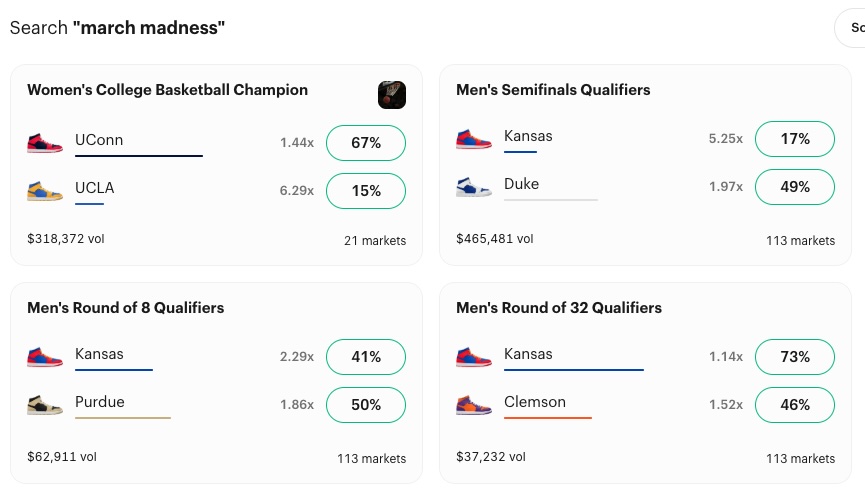
Kalshi, known for its federally regulated prediction markets where users can bet on yes/no outcomes of real-world events, had incorporated “March Madness” into market descriptions for tournament-related contracts. Examples included predictions on which teams would advance to the “Sweet Sixteen” or “Final Four,” other trademarked phrases owned by the NCAA. Following the request, Kalshi swiftly complied, rephrasing their markets to neutral terms such as “Men’s College Basketball Champion,” “Women’s Semifinals Qualifiers,” and “Men’s Round of 16 Qualifiers.”
This quick adjustment was confirmed in reports emerging on February 23, 2026, indicating that Kalshi had removed not only “March Madness” but also associated terms like “Sweet Sixteen” and “Final Four” from its platform. This compliance mirrors previous instances where Kalshi has backed down from controversial offerings in response to external pressure, suggesting a strategic approach to avoid prolonged conflicts.
Timeline of Events Leading to the Request
To understand the full context, it’s essential to trace the history of interactions between the NCAA and Kalshi. The friction began intensifying in late 2025. On October 30, 2025, NCAA Senior Vice President and Chief Legal Officer Scott Bearby sent a letter to Kalshi objecting to phrasing on their website that read “Outcome verified from NCAA,” which hyperlinked directly to the NCAA’s official site. Bearby argued that this could mislead users into believing the NCAA was involved in verifying or approving the market outcomes.
In that letter, the NCAA proposed alternative language, such as “Outcome sourced from NCAA.com,” and demanded the addition of disclaimers clarifying that no affiliation or endorsement existed. Kalshi responded by reviewing and updating their site accordingly, adding the suggested disclaimers.
Further escalation occurred in December 2025 when Kalshi proposed markets on college athletes entering the NCAA transfer portal. This drew severe backlash from the college sports community, including concerns over athlete privacy and integrity risks. Kalshi ultimately announced they had “no immediate plans” to launch those markets, demonstrating their willingness to retreat when faced with significant opposition.
By January 2026, NCAA President Charlie Baker amplified the concerns by appealing directly to the Commodity Futures Trading Commission (CFTC) to suspend all college sports prediction markets. Baker cited risks such as inadequate age verification, aggressive advertising, and potential harassment of student-athletes.
The February 2026 request regarding “March Madness” thus represents the latest chapter in this ongoing narrative, focusing specifically on trademark protection amid broader integrity worries.
Why It Happened: Trademarks, Misrepresentation, and Opposition to College Betting
At the core of the NCAA’s request lies the protection of its intellectual property. “March Madness” is a federally registered trademark owned by the NCAA, a status it has defended vigorously over the years. The association argues that unauthorized use dilutes the brand’s value and could confuse consumers into thinking there’s an official partnership or endorsement.
Beyond trademarks, the NCAA is deeply concerned about the implications for sports integrity. Prediction markets like those on Kalshi allow trading on specific outcomes, including elements that resemble player prop bets—wagers on individual performances. The NCAA has long opposed such bets, viewing them as threats that could lead to match-fixing, harassment, or undue pressure on student-athletes.
NCAA President Charlie Baker has been vocal on this front. In a December 2025 statement, he described prediction markets as an “unregulated marketplace” that bypasses the safeguards of traditional sports betting operators. He highlighted the absence of rules prohibiting bets on individual player performances, which are banned in many states for college sports.
Additionally, Kalshi’s platform allows participation from users as young as 18, aligning with federal regulations but conflicting with many states’ gambling age of 21. This raises alarms about exposing college-aged individuals—who might be student-athletes themselves—to potential addiction risks. The use of official trademarks like “March Madness” could lend an air of legitimacy to these markets, making them appear safer or officially sanctioned than they are.
The NCAA’s stance is also informed by recent scandals, such as a point-shaving scheme uncovered in 2025 involving 39 players across 17 programs. Such incidents underscore the vulnerabilities in college sports, where athletes are not professionals and may be more susceptible to external influences.
In essence, the request is a multifaceted effort: to enforce trademark rights, prevent misrepresentation, and push back against the encroachment of betting mechanisms into amateur athletics.
The Role of Regulation in the Dispute
Kalshi operates under the oversight of the CFTC, which regulates it as a designated contract market for event contracts. This federal framework positions prediction markets as financial instruments rather than gambling, allowing them to offer contracts on a wide array of topics, including sports outcomes. However, the CFTC’s jurisdiction does not extend to intellectual property matters like trademarks, leaving such disputes to civil law.
This regulatory gap has fueled debates about whether prediction markets constitute unregulated sports betting. Some states have challenged Kalshi’s operations, arguing they fall under gambling laws, while the CFTC maintains primary authority. The NCAA’s appeals to the CFTC for suspensions reflect an attempt to leverage this oversight body to curb college-specific markets.
What It Could Mean: Implications for Prediction Markets and College Sports
The resolution of this specific trademark issue— with Kalshi’s compliance—may seem minor, but it carries broader implications. For Kalshi, it demonstrates the platform’s adaptability but also highlights vulnerabilities in using branded terms for popular events. Continued pressure could limit the appeal of their markets, as generic descriptions might reduce user engagement compared to evocative names like “March Madness.”
For the NCAA, this victory reinforces its control over its brands and sends a message to other platforms considering similar ventures. It could embolden the association to pursue more aggressive actions against prediction markets, potentially leading to lawsuits or lobbying for legislative changes.
On a larger scale, this dispute spotlights the evolving relationship between sports organizations and betting entities. As prediction markets grow, blending financial trading with event wagering, traditional bodies like the NCAA face challenges in maintaining the “amateur” ethos of college sports. The potential for increased harassment of athletes, as seen in professional leagues, is a real concern; student-athletes might face social media abuse or threats based on market outcomes.
Moreover, it could influence regulatory landscapes. If the CFTC responds to the NCAA’s calls for suspensions, it might set precedents for restricting certain event contracts. Conversely, if prediction markets continue to expand, they could normalize betting on college events, eroding barriers that currently protect amateur sports.
Economically, “March Madness” generates billions in revenue for the NCAA through broadcasting rights, sponsorships, and merchandise.
“March Madness generates approximately $1 billion annually for the NCAA, accounting for nearly 85% of its entire revenue. Without this three-week basketball tournament, the NCAA as we know it would cease to exist.” – Sportsepreneur.com
Any perceived association with betting could tarnish this lucrative brand, affecting partnerships and public perception. For Kalshi, while college sports markets are a fraction of their offerings, losing access to high-profile events like the tournament could impact user growth.
Impact on Student-Athletes and Integrity
One of the most critical aspects is the potential harm to student-athletes. The NCAA argues that prediction markets, especially those resembling prop bets, increase risks of insider trading, match-fixing, and personal harassment. With athletes now able to profit from name, image, and likeness (NIL) deals, the lines blur further, but the association maintains strict rules against gambling involvement.
Recent initiatives, like the NCAA’s pilot program for anonymous tip lines during March Madness 2025 to report suspicious activities, indicate proactive measures. If successful, this could expand, but the existence of platforms like Kalshi complicates enforcement.
Public opinion is divided. Supporters of prediction markets view them as tools for hedging risks and gathering crowd-sourced insights, while critics see them as gateways to problem gambling, particularly among young adults.
Likely Next Steps: Compliance, Escalation, or Resolution?
With Kalshi having already removed the offending terms, the immediate trademark issue appears resolved. However, the broader conflict is far from over. Kalshi has stated it maintains “robust market integrity provisions” as a regulated exchange and is open to dialogue, but the NCAA’s opposition suggests continued scrutiny.
Next, the NCAA might push for the CFTC to impose restrictions on college sports contracts entirely. Given Baker’s January 2026 appeal, a formal review or hearing could be on the horizon. If the CFTC declines, the NCAA could explore legal avenues, such as suing for trademark infringement if any residual issues persist.
For Kalshi, the strategy seems to involve compliance with specific requests while expanding other markets. They may seek clearer guidelines from regulators to avoid future pitfalls. Additionally, as states grapple with gambling laws, Kalshi could face challenges in certain jurisdictions, prompting adaptations or lobbying efforts.
In the legislative arena, the NCAA’s call for a nationwide ban on player prop bets for college sports has gained traction in some states, with mixed results. This could evolve into federal discussions, especially if integrity scandals escalate.
Conclusion: Navigating the Future of Sports and Prediction Markets
The NCAA’s request for Kalshi to remove “March Madness” mentions encapsulates the challenges at the nexus of sports, trademarks, and modern betting platforms. What began as a trademark enforcement has spotlighted deeper issues of integrity, regulation, and the protection of amateur athletics in an era of expanding wagering opportunities.
As Kalshi adapts with generic terms and the NCAA fortifies its boundaries, the incident serves as a cautionary tale for other platforms. The implications extend beyond this dispute, potentially shaping how prediction markets evolve and how sports organizations safeguard their brands and participants.