
As the dust settles from the 2024 U.S. presidential election, attention has swiftly turned to the 2028 cycle. Prediction markets, which played a pivotal role in forecasting the outcomes of the previous election, are now buzzing with activity on the Democratic side. California Governor Gavin Newsom is emerging as the frontrunner for the 2028 Democratic presidential nomination, holding odds between 27% and 31% across major platforms. Trailing behind is New York Representative Alexandria Ocasio-Cortez (AOC), with odds around 8-10%. This surge in interest has driven trading volumes well over $50 million, reflecting significant post-2024 party realignments within the Democratic Party. These markets, aggregating trader sentiments with real financial stakes, provide an early glimpse into the evolving political landscape in key states like California, New York, and battlegrounds such as Pennsylvania and Michigan.
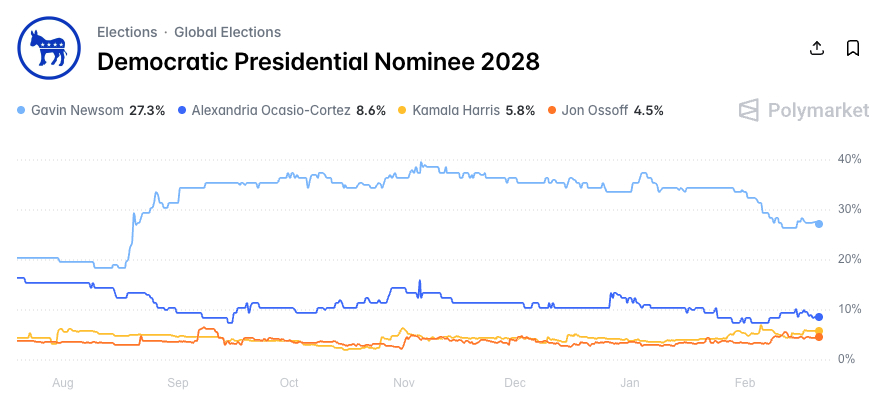
Current Odds for the 2028 Democratic Presidential Nominee
In the wake of the 2024 election, where Donald Trump secured a decisive victory, Democrats are grappling with internal shifts. Prediction markets have captured this momentum, with Newsom’s lead solidifying over recent months. As of February 20, 2026, data from various sources show Newsom commanding a probability of 27-31%, translating to a strong perceived chance of clinching the nomination. AOC, a progressive firebrand from New York, follows at 8-10%, while former Vice President Kamala Harris hovers around 5-6%. Other notable contenders include Pennsylvania Governor Josh Shapiro at 6% and Georgia Senator Jon Ossoff at 4-5%. These odds are dynamic, influenced by recent political developments, including the Democratic Party’s introspection on policy failures in swing states like Wisconsin and Arizona.
| Candidate | State/Region | Odds Range | Implied Probability | Key Factors |
|---|---|---|---|---|
| Gavin Newsom | California | 27-31% | High | Anti-Trump stance, California donor base, policy wins on climate and economy |
| Alexandria Ocasio-Cortez | New York | 8-10% | Moderate | Progressive appeal in urban areas like NYC and Chicago, youth voter mobilization |
| Kamala Harris | California (former) | 5-6% | Low | 2024 reflections, potential comeback in Western states |
| Josh Shapiro | Pennsylvania | 6% | Low | Swing state advantage in Rust Belt regions |
| Jon Ossoff | Georgia | 4-5% | Low | Southern strategy focus in Atlanta and suburbs |
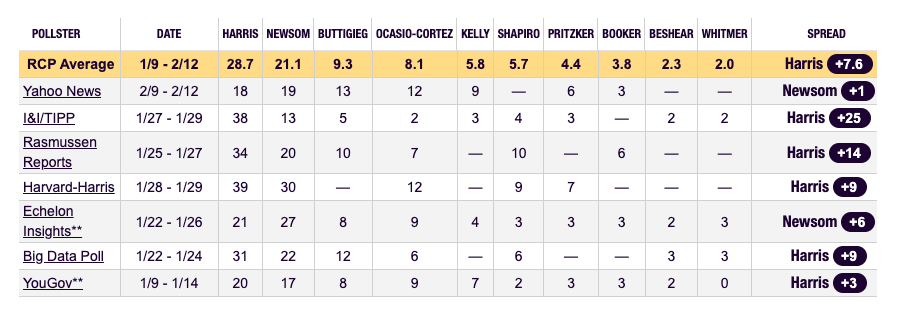
It’s worth noting how different the prediction markets see the future Democratic Presidential Nominee differently from traditional polling results, which favor Harris, rather notable:
Gavin Newsom’s Path to the Nomination
Post-2024, the Democratic Party has undergone significant shifts, with many attributing the loss to failures in addressing working-class concerns in Midwestern states like Ohio and Michigan. Newsom has capitalized on this by touring battleground areas, emphasizing a “back to basics” approach on jobs and healthcare. Traders see his national profile, bolstered by frequent media appearances, as a key asset. Perhaps most importantly, many voters view him as the strong anti-Trump candidate; while Trump will not be on the ballot in 2028, showing strident anti-Trump stances appeals to a wide swath of the likely Democratic voting base.
With volumes surpassing $50 million—and actually reaching into the hundreds of millions—this market’s liquidity suggests strong belief in Newsom’s viability. His odds have held steady despite competition, as prediction markets reward his perceived electability in a post-2024 landscape where Democrats seek a fighter against MAGA Republican dominance.
Alexandria Ocasio-Cortez: The Progressive Challenger Trailing Behind
Alexandria Ocasio-Cortez, often abbreviated as AOC, represents the progressive wing of the Democratic Party and is trailing Newsom with odds of 8-10%. From her New York district, AOC has built a national following through social media savvy and advocacy for policies like the Green New Deal and Medicare for All. Her appeal is strongest in urban areas such as Brooklyn, Queens, and similar progressive hubs in cities like Seattle and Boston.
However, post-2024 analyses suggest her polarizing style may hinder broader appeal in swing states like Florida and Texas. While AOC energizes the base, her odds reflect concerns over her ability to win moderates in the South and Midwest. In New York, her favorability remains high, but national surveys show mixed results, as discussed in recent favorability polls versus nomination intent. AOC’s strategy moving forward may involve leveraging her youth and digital presence to challenge Newsom’s establishment ties.
Other Key Contenders in the Race
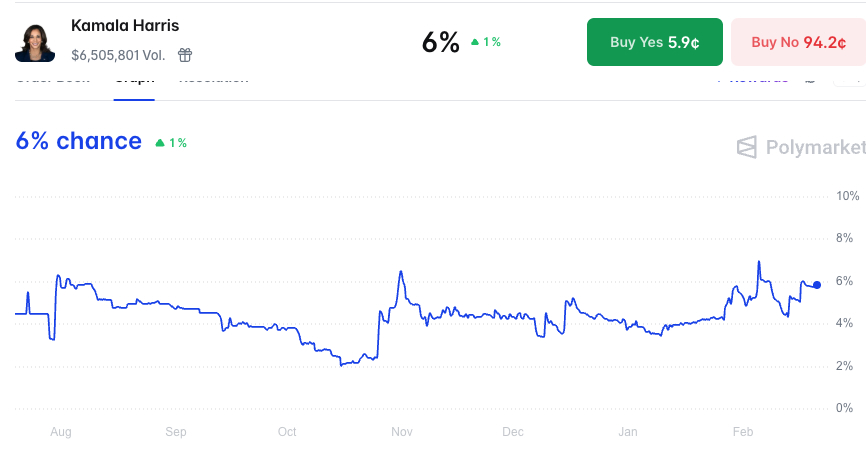
Beyond Newsom and AOC, the field includes Kamala Harris, whose odds have ticked up to 5-6% following reflective speeches post-2024. As noted above, Harris is doing far better in traditional political polling than she is in money-backed markets on the prediction platforms, where she’s yet to rise about 7%.
Harris, with ties to California and previous national experience as VP and 2024 Presidential nominee, could mount a comeback by focusing on women’s rights and economic equity in states like Nevada and Virginia. Josh Shapiro from Pennsylvania offers swing-state credibility, appealing to voters in Philadelphia and Pittsburgh with his moderate policies. Jon Ossoff from Georgia represents Southern hopes, targeting Atlanta’s growing suburbs.
These candidates’ geographic bases are crucial for understanding electoral math. For example, Shapiro’s Pennsylvania roots could flip the Keystone State, vital after 2024’s Republican gains there.
Post-2024 Democratic Party Shifts Driving Market Activity
The 2024 election marked a turning point for Democrats, with Trump’s victory prompting soul-searching on issues like border security and inflation in key regions. Party shifts include a move toward centrism in battlegrounds like Georgia and Arizona, where losses were attributed to progressive overreach. This has boosted Newsom’s odds, as he balances California liberalism with national pragmatism. Volumes topping $50 million reflect this uncertainty, with traders wagering on who can rebuild coalitions in the Rust Belt and Sun Belt.
Geographically, the shifts are evident: Democrats aim to reclaim Midwestern strongholds like Detroit and Milwaukee, while strengthening holds in Western states. Newsom’s lead stems from his ability to address these, as seen in recent tours.
The Role of Prediction Markets in the 2024 Presidential Cycle
In the 2024 U.S. presidential election, prediction markets demonstrated remarkable accuracy in forecasting Donald Trump’s victory, outperforming traditional polls that often showed a neck-and-neck race. Platforms aggregated billions in trades, with volumes hitting $1.27 billion in November 2024 alone, 89% tied to politics. These markets, where participants wagered real money, captured the “wisdom of crowds” effect, assimilating diverse information rapidly and resisting manipulation.
Unlike polls, which underestimated Trump’s support in swing states like Pennsylvania and Michigan, prediction markets consistently favored him, with probabilities aligning closer to the final Electoral College tally. This accuracy stemmed from financial incentives driving precise predictions, making them a superior tool for election forecasting. The 2024 cycle saw mainstream adoption, influencing media narratives and voter perceptions across geographic regions from the East Coast to the Midwest.
Studies confirmed their edge: in five prior elections, they beat polls 74% of the time. Even amid volatility, markets like those on the popular vote margin drew huge bets, proving their reliability in high-stakes environments. This success has carried over to 2028, where similar dynamics are at play.
Implications for the 2028 Election Cycle
Newsom’s 27-31% lead implies a consolidated Democratic field by 2028, potentially focusing on economic populism to regain ground in states like Florida and Texas. AOC’s trailing position suggests progressives may need to moderate to compete nationally. Geographically, this could mean intensified campaigns in the South and West, with markets signaling early trends.
Trading Volumes and Market Interest in 2028
Volumes have exploded past $50 million, reaching $684 million in some reports, driven by post-2024 intrigue. This liquidity, from traders across the U.S., underscores the markets’ role in gauging sentiment in diverse regions like the Northeast and Pacific Coast.
Conclusion
As much attention was paid to prediction markets in the 2024 Presidential cycle, expect that to be exponentially greater for future political elections and events. This will definitely include the 2028 party nominations for President, where volumes and interest in these markets is immense more than two and a half years before the election.