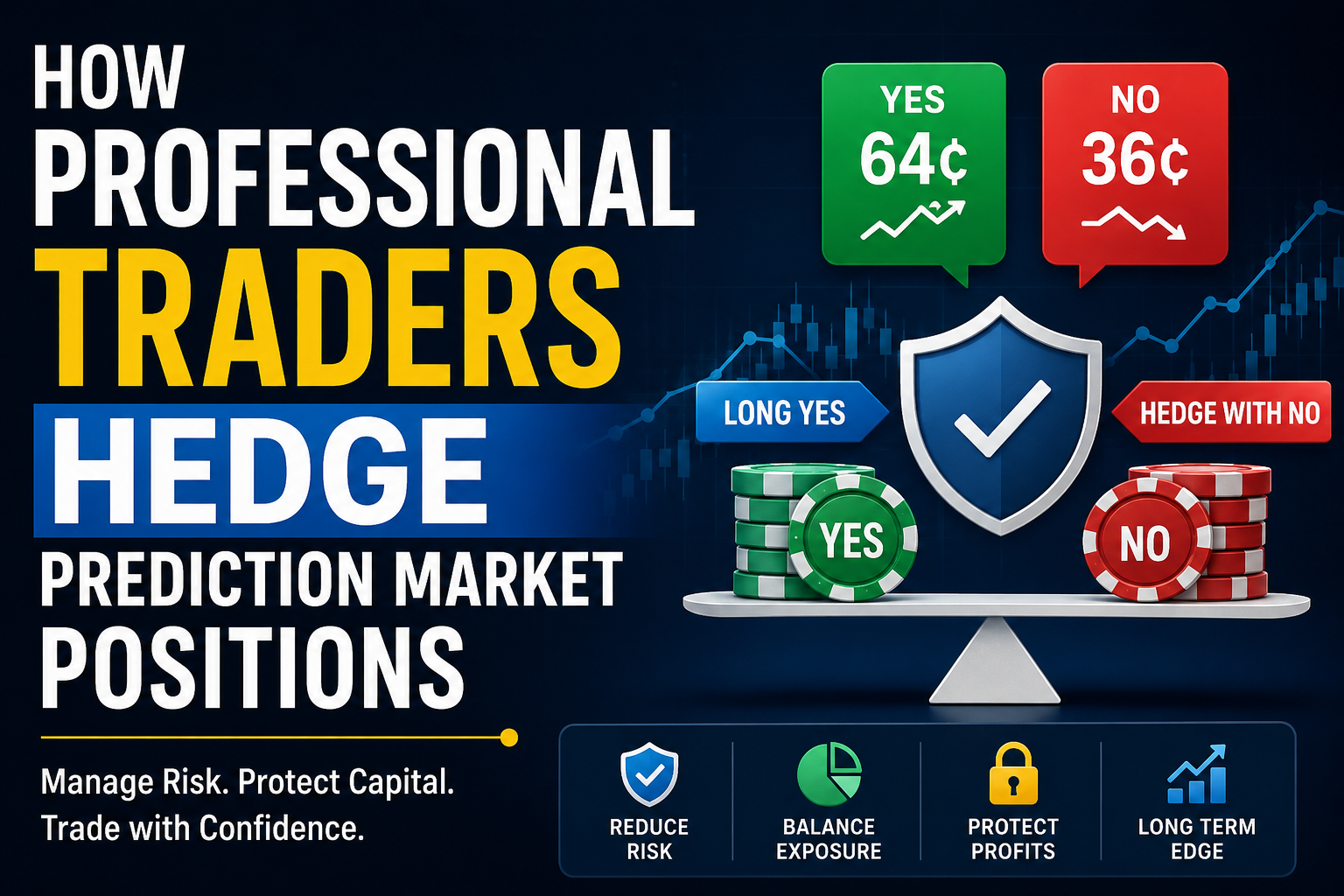

A Kalshi Guide for Newbies
If you’re new to prediction markets and wondering how to bet on future events like elections, sports outcomes, or economic indicators, Kalshi is an excellent platform to start with. As a regulated prediction market exchange in the United States, Kalshi allows users to trade event contracts—essentially binary options where you bet on yes or no outcomes. This comprehensive guide, aimed at beginners, will walk you through everything from signing up to placing your first bet, with real-world examples and visuals to make the process crystal clear. Whether you’re interested in Kalshi prediction market betting for fun, hedging risks, or profiting from your insights, this article covers it all.
Prediction markets like Kalshi aggregate collective wisdom to forecast events more accurately than traditional polls. By the end of this tutorial, you’ll understand how Kalshi works for new users, including the mechanics of share prices, payouts, and strategies. Let’s dive in and explore how to use Kalshi for beginners.
What is Kalshi? An Introduction to the Platform
Kalshi is a U.S.-based prediction market platform founded in 2018 and fully regulated by the Commodity Futures Trading Commission (CFTC). Unlike traditional betting sites, Kalshi operates as a designated contract market (DCM), meaning it’s legal for U.S. residents to trade on events ranging from politics and economics to sports and entertainment. The platform uses event contracts, which are binary yes/no questions about future outcomes. For instance, “Will the Federal Reserve cut interest rates by 0.25% in March?” Traders buy “Yes” or “No” shares, and the price reflects the market’s estimate of the probability.
For new users, Kalshi stands out for being user-friendly, with no minimum deposit beyond funding your trades, and it supports fiat currency (USD) without requiring cryptocurrency. This makes it accessible compared to offshore platforms like Polymarket. Kalshi’s mission is to democratize forecasting, allowing anyone to monetize their predictions while providing valuable data to the public.
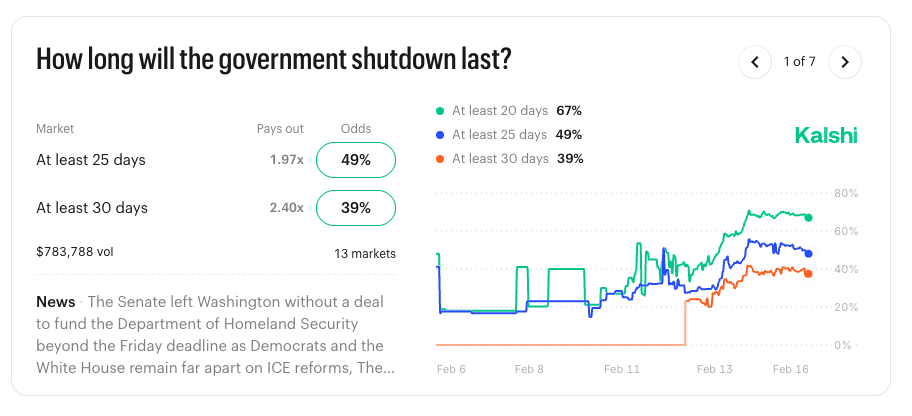
To visualize the platform, here’s a screenshot from the Kalshi homepage, showcasing popular markets and the intuitive interface, and in this case, a prediction event they are showcasing at the top of their page.
How Prediction Markets Work: The Fundamentals Explained
Before diving into Kalshi specifics, let’s break down how prediction markets function. At their core, prediction markets are platforms where participants trade contracts based on the likelihood of future events. Each contract pays out $1 if the predicted outcome happens (Yes) or $0 if it doesn’t (No). The current price of a share—ranging from $0.01 to $0.99—represents the market’s consensus probability. For example, if a “Yes” share costs $0.65, the implied probability is 65%.
This crowd-sourced pricing often proves more accurate than expert opinions because participants have skin in the game. Real-world studies, like those from the Iowa Electronic Markets, show prediction markets outperforming polls in election forecasting.
Here’s a simple diagram illustrating how prediction markets aggregate information and adjust prices over time.
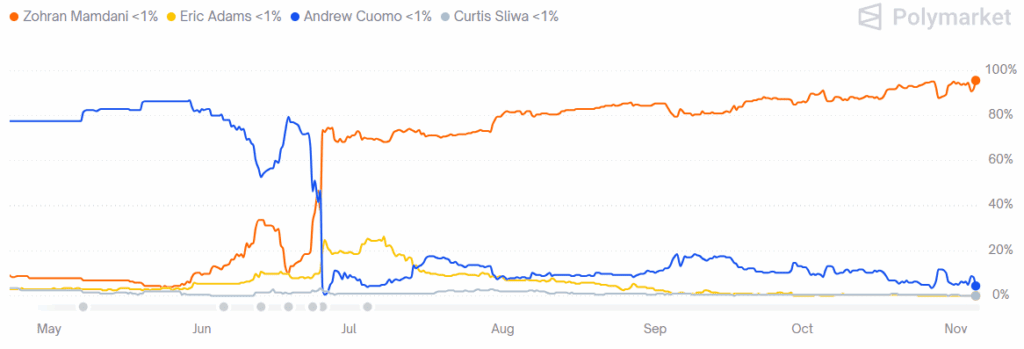
Though this historical chart isn’t directly from Kalshi, it demonstrates cyclical patterns in markets, similar to how event contract prices fluctuate based on news and trader sentiment.
On Kalshi, markets are settled based on objective data sources, such as official election results or economic reports from the Bureau of Labor Statistics. This transparency ensures fair payouts.
Signing Up on Kalshi: Step-by-Step Guide for New Users
Getting started on Kalshi is straightforward, especially for U.S. residents aged 18+. Here’s how to sign up:
- Visit the Website or Download the App: Go to kalshi.com or download the Kalshi mobile app from the App Store or Google Play. The app is ideal for on-the-go trading.
- Create an Account: Click “Sign Up” and provide your email, phone number, and basic personal info. Kalshi requires identity verification to comply with CFTC regulations.
- Verify Your Identity: Upload a government-issued ID (like a driver’s license) and a selfie. This KYC (Know Your Customer) process usually takes minutes.
- Fund Your Account: Link a bank account via ACH or use a debit card. Deposits are free, and you can start with as little as $5.
- Explore the Dashboard: Once verified, you’ll see the main dashboard with categories like Politics, Sports, and Crypto.
For visual learners, here’s a screenshot of the Kalshi mobile app interface, highlighting the sign-up and market browsing features.
The app’s clean design makes navigation intuitive, with tabs for trending markets and your portfolio.
Navigating the Kalshi Platform: Key Features for Beginners
Once logged in, Kalshi’s interface is divided into sections to help you find and analyze markets easily.
- Markets Tab: Browse by category—e.g., Elections, NFL Games, or Oscar Winners. Each market shows the question, current Yes/No prices, volume, and a price chart.
- Forecasts Tab: View aggregated predictions and historical data to inform your bets.
- Ideas Tab: Community discussions and strategies shared by other users.
- Portfolio: Track your open positions, past trades, and P&L (profit and loss).
- Search Function: Quickly find specific events, like “Super Bowl Winner.”
Kalshi also offers educational resources, including tutorials and a help center, perfect for new users learning how Kalshi works.
Placing Bets on Kalshi: A Step-by-Step Tutorial
Betting on Kalshi involves buying or selling shares in event contracts. Here’s a detailed walkthrough:
- Select a Market: Choose an event, like “Will the US Unemployment Rate be Below 4% in February?”
- Analyze the Data: Review the price history graph, volume, and rules. If Yes is at $0.40, it means a 40% chance according to the market.
- Decide Your Position: Buy Yes if you think it’s more likely than 40%, or No if less. You can also sell (short) for the opposite view.
- Enter Your Trade: Specify the number of contracts (each $1 max payout) and review the cost. For 10 Yes shares at $0.40, you’d pay $4.
- Confirm and Execute: Hit “Buy” or “Sell.” Trades are instant during market hours.
- Monitor and Exit: Sell your position anytime before settlement to lock in profits or cut losses.
Fees are low: 0.05% per contract side, capped at $0.25. Withdrawals are processed quickly via ACH.
Real-World Examples of Kalshi Betting
Example 1: Betting on Elections
One of Kalshi’s most popular categories is politics. Suppose there’s a market: “Will Donald Trump Win the 2028 Republican Nomination?” If Yes shares are trading at $0.70 (70% chance), and you believe it’s higher, buy Yes. If he wins, each share pays $1; if not, $0.
In the 2024 election cycle, Kalshi markets accurately predicted outcomes better than polls, with volumes exceeding $1 billion. For a $10 investment at $0.70, you’d buy about 14 shares. Win: $14 payout minus $9.80 cost = $4.20 profit.
Example 2: Sports Betting on Kalshi
Kalshi now includes sports after regulatory approvals. For “Will the Kansas City Chiefs Win Super Bowl LXI?” If No is at $0.35, and you think they’re overrated, buy No. A real 2025 example: During the playoffs, markets on game winners shifted dramatically with injuries, allowing savvy bettors to profit.
Here’s another app view showing sports and other markets.
Example 3: Economic Indicators
Bet on “Will GDP Growth Exceed 2% in Q1 2026?” Prices reflect economic forecasts and data releases. In 2025, inflation markets saw heavy trading, with payouts based on CPI reports.
These examples show how Kalshi turns news into tradable opportunities.
Risks and Considerations for New Kalshi Users
While exciting, prediction market betting carries risks. Markets can be volatile, and you could lose your entire investment. Always bet what you can afford to lose. Kalshi promotes responsible trading with limits and resources.
Tax implications: Profits are treated as capital gains. Track your trades for IRS reporting.
Legal note: Kalshi is CFTC-regulated, but check state laws, as some restrict certain markets.
Advanced Tips and Strategies for Kalshi Betting
For beginners advancing, consider:
- Arbitrage: Exploit price differences across related markets.
- Hedging: Bet against your real-world risks, like weather impacting your business.
- Research: Use external data to inform trades, but avoid insider info.
- Diversification: Spread bets across categories to manage risk.
Community forums and Kalshi’s ideas tab offer strategy insights.
Conclusion: Start Your Kalshi Journey Today
Kalshi transforms prediction into profit, offering a legal, engaging way for new users to bet on the future. From signing up to mastering strategies, this guide equips you with the knowledge to navigate Kalshi confidently. Remember, success comes from informed decisions, not luck. Sign up today and explore the world of prediction market betting.