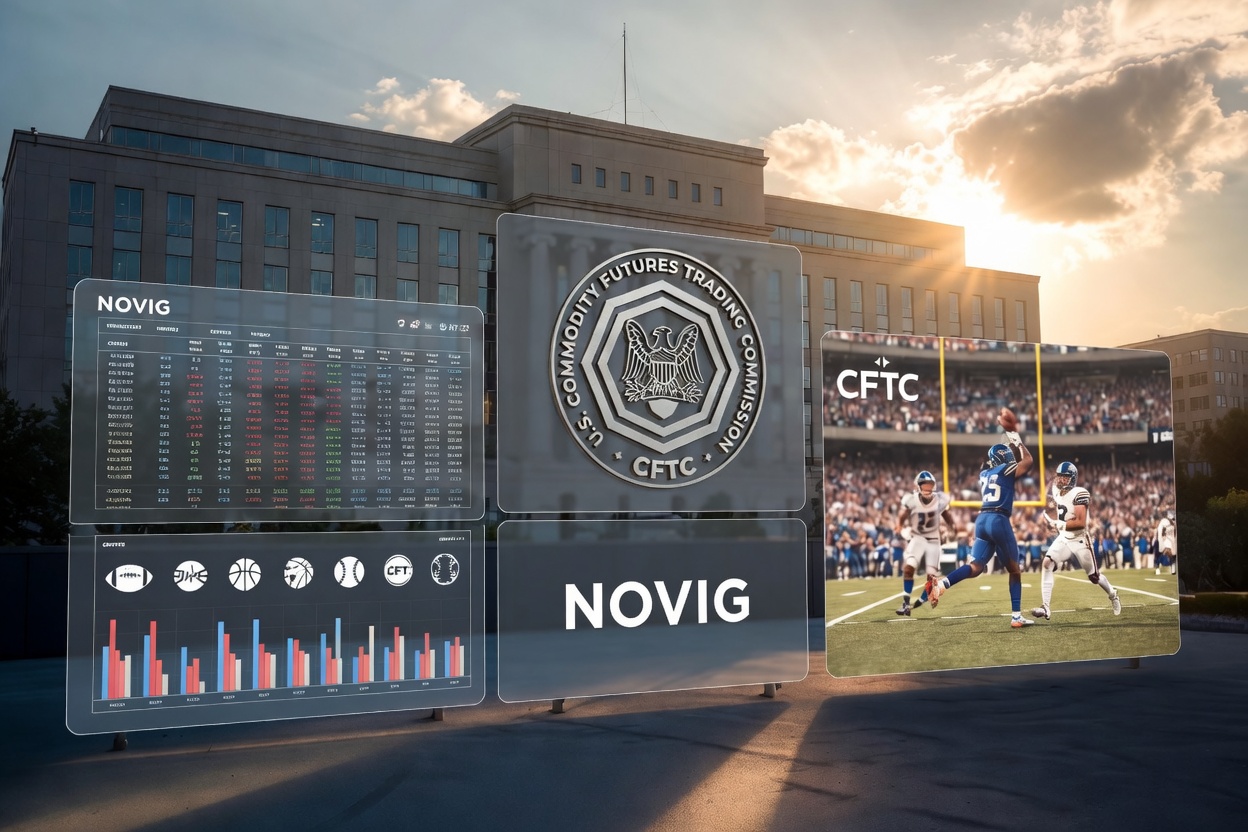
Novig, a peer-to-peer sports prediction market and betting exchange, just earned a landmark victory as the U.S. Commodity Futures Trading Commission granted Ludlow Exchange, LLC — Novig’s affiliate — full designation as a Designated Contract Market. The approval immediately enables the platform to offer commission-free, peer-to-peer contracts for sports events nationwide to traders aged 21 and older.
Co-founders Jacob Fortinsky and Kelechi Ukah have guided Novig through ambitious growth, processing over $5 billion in cumulative volume. This designation now allows the company to scale under unified federal oversight with regulatory rules for market integrity and user protection.
From Application to Approval: A Rapid Regulatory Journey
Novig filed its Designated Contract Market application for Ludlow Exchange on January 21, 2026. Regulators completed a swift review of the rulebook, compliance program, and corporate structure, issuing formal approval by mid-June. There’s no doubt the current CFTC sees itself as generally positive toward prediction markets. While adhering to their own strict approval guidelines, they are inclined to promote new entrants rather than impede the growth of prediction markets.
CEO Fortinsky described the platform as one built by sports traders for sports traders. Prices form through real-time supply and demand rather than house-set odds, letting skill and insight shape outcomes more directly than a sportsbook, where it’s all players versus one host.
Recent additions to the company board, including derivatives veterans Gary DeWaal and Bonnie Litt, strengthened governance and helped shape Ludlow’s robust oversight program.
Key Features of Novig’s Commission-Free Sports Trading Model
Traders buy and sell contracts directly with one another on outcomes ranging from major league results to player performance milestones. As with other prediction markets, the exchange earns revenue through activity fees rather than losses, aligning incentives around transparent, liquid markets. Traders seem to innately enjoy a market where the operator isn’t invested in your outcomes but instead provides a smooth, trusted place to bet.
Volume and Traction Highlights
| Metric | Reported Figure |
|---|---|
| Cumulative Trading Volume | $5 billion+ |
| Annualized Run-Rate Volume | $8 billion+ |
| Recent Funding Round | $75 million Series B at a $500 million valuation |
| Age Requirement | 21+ |
How Ludlow’s CFTC Status Changes the Competitive Landscape
CFTC approval for Novig arrives as multiple platforms compete for sports event contract volume. While Kalshi leads overall, Novig’s sports-native focus, alongside entrants like ProphetX, creates meaningful differentiation. Polymarket, Robinhood, DraftKings, and FanDuel have expanded their offerings, making specialized execution a key advantage.
Novig’s peer-to-peer model treats sports outcomes as tradable assets. Traders enter and exit positions without house-counterparty risk, rendering certain traditional sportsbook mechanics obsolete through market-driven pricing. Regulatory clarity from the CFTC legitimizes the category by preserving sports markets while setting clear boundaries on sensitive topics such as player injuries or officiating.
Nevertheless, Novig’s addition to this sector will only add to the dispute ongoing between states/sportsbooks and the CFTC/prediction markets.
Funding Momentum and Strategic Vision
The $75 million Series B round, led by Pantera Capital with participation from Forerunner Ventures and Lux Capital, supplied critical resources for Novig’s regulatory effort. Applying for these kinds of certifications is costly and is one of the barriers to entry for entities looking to compete as licensed and regulated options in this space. Total funding for Novig now exceeds $105 million, signaling strong confidence in sports trading as a distinct asset class.
Company leaders plan a full nationwide rollout within weeks, complete with enhanced surveillance and verification processes required under federal rules.
Novig’s CEO posted an article to X celebrating the successful accreditation.
Broader Regulatory Context Supporting Growth
The CFTC’s active role in event contract rulemaking has provided clearer guidance for operators. Ludlow’s successful application shows that well-structured, sports-focused platforms can secure rapid approval when paired with the proper legal package (not cheap) and when they emphasize market integrity and innovation.
Federal preemption of registered Designated Contract Markets offers traders consistent nationwide rules, replacing fragmented state approaches. This is a rather disputed legal point at the moment, but the CFTC has clearly sided with the aggressive assertion of federal pre-emption in this controversy.