
In the high-stakes world of U.S. presidential elections, accurate forecasting is paramount for voters, campaigns, and analysts alike. While traditional opinion polls have long been the go-to method for gauging public sentiment, prediction markets have emerged as a powerful alternative, often demonstrating superior accuracy. These markets, where participants trade contracts based on election outcomes, harness the collective wisdom of crowds through financial incentives, turning bets into probabilistic forecasts.
This article examines the track record of prediction markets in forecasting U.S. elections, drawing on historical data and real-world case studies from 1988 to 2024. We’ll explore how platforms like the Iowa Electronic Markets (IEM), PredictIt, and Polymarket have performed, comparing them to polls and highlighting key examples where markets shone or faltered. We’ll define technical terms—such as “vote-share markets” (where contracts pay out based on a candidate’s percentage of the vote)—to ensure accessibility.
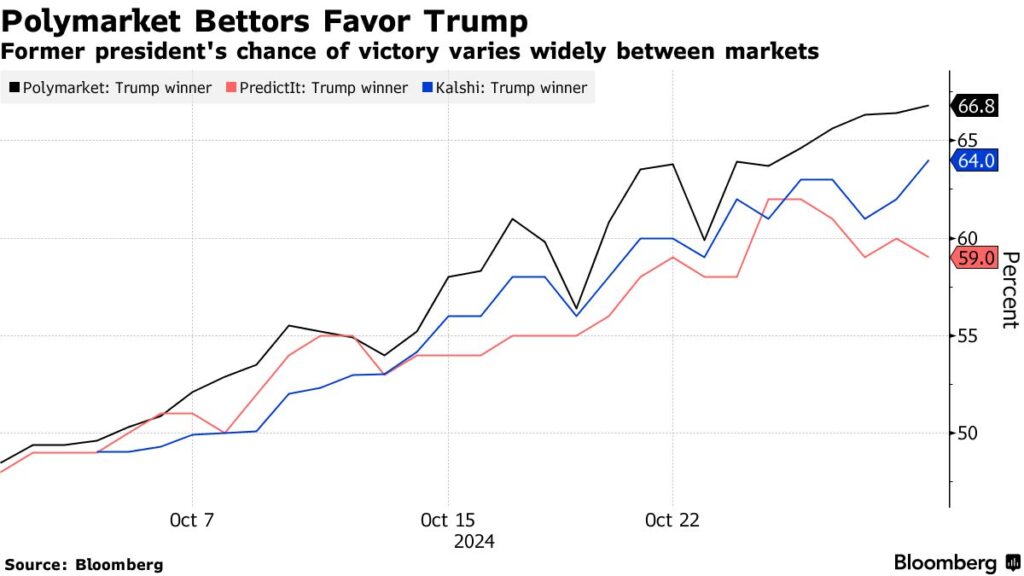
Prediction markets operate on the principle that prices reflect aggregated information efficiently, similar to stock markets. A contract trading at 60 cents implies a 60% probability of the event occurring. Studies show these markets outperform polls 74% of the time in presidential elections since 1988. In the 2024 election, where Donald Trump defeated Kamala Harris, platforms like Polymarket gave Trump 58-60% odds while polls suggested a toss-up, illustrating markets’ edge in capturing underlying trends.
By delving into case studies, we’ll see how markets aggregated dispersed information to form accurate probabilities, even when polls missed the mark. This exploration not only answers “How accurate have prediction markets been in predicting U.S. election outcomes?” but also provides insights into their mechanisms, strengths, and limitations. Whether you’re a political enthusiast or a data-driven decision-maker, understanding these tools can enhance your grasp of electoral dynamics.
What Are Prediction Markets?
Prediction markets are platforms where individuals buy and sell contracts tied to the outcomes of future events, such as elections. Unlike gambling, these markets focus on forecasting, with prices serving as probability estimates. For example, in a “winner-take-all” market, a contract for a candidate pays $1 if they win and $0 otherwise; a price of $0.75 indicates a 75% chance of victory.
Key platforms include:
- Iowa Electronic Markets (IEM): An academic platform since 1988, limited to small stakes for educational purposes. It has predicted vote shares with an average error of 1.34 percentage points.
- PredictIt: A regulated market with bet caps, focusing on politics. In 2024, it achieved 93% accuracy across markets.
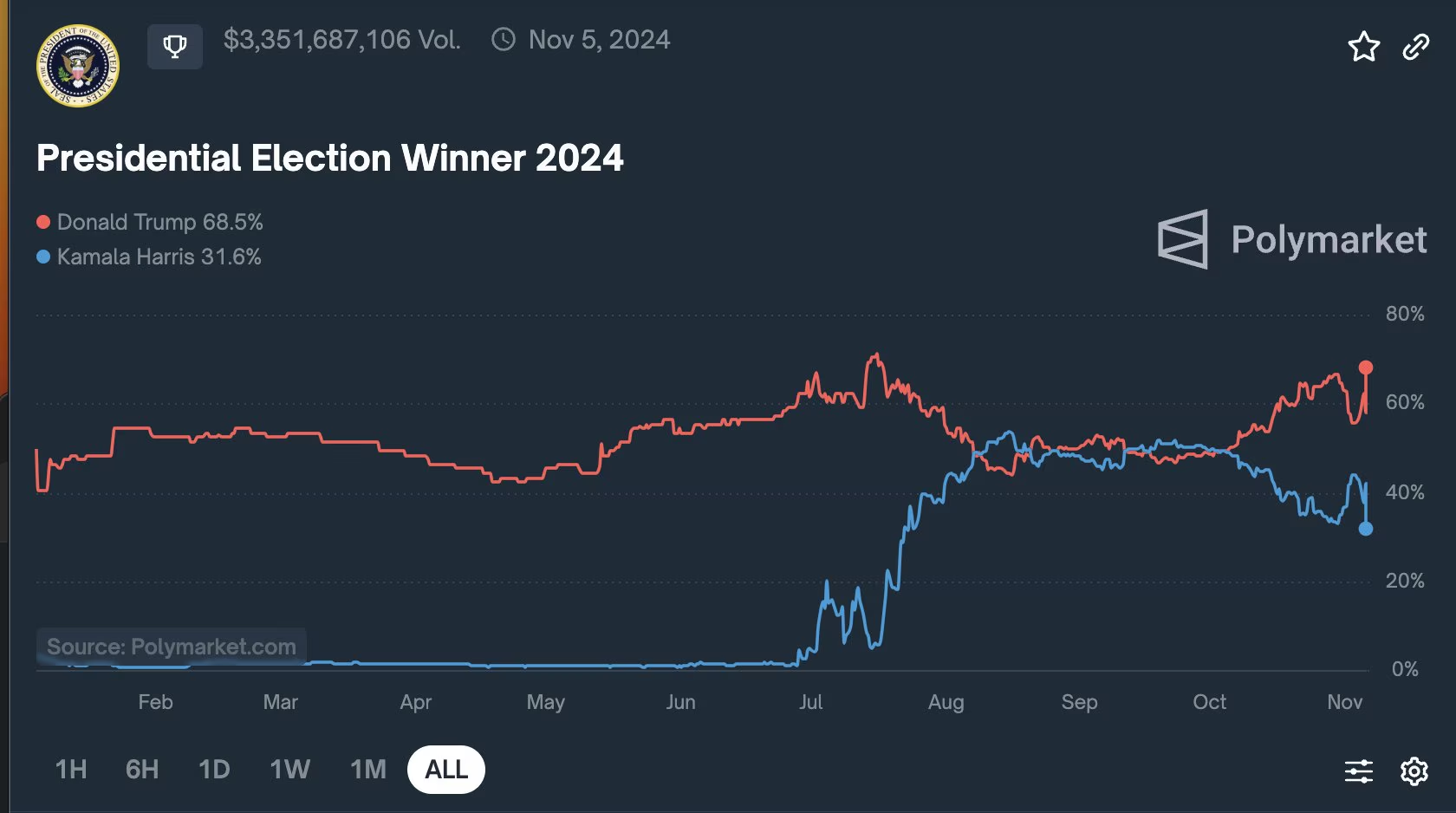
- Polymarket: A blockchain-based platform that surged in popularity during 2024, handling billions in volume. It correctly favored Trump in the final weeks.
These markets incentivize accuracy: informed traders profit by buying undervalued contracts, pushing prices toward true probabilities. This contrasts with polls, which capture stated preferences without stakes.
This screenshot of the IEM interface shows how users view and trade contracts on election outcomes.
Historical Overview
Prediction markets trace roots to 19th-century betting on elections, but modern versions began with IEM in 1988. Early markets outperformed polls, with IEM closer to actual results 74% of the time from 1988 to 2004. The 2000s saw expansion with PredictIt (2014) and blockchain platforms like Polymarket (2020).
In recent cycles, markets have gained credibility. For instance, in 2016, markets gave Clinton 70-80% odds versus polls’ 90%, better reflecting uncertainty. By 2024, trading volumes exceeded $2 billion, highlighting their growing influence.
Case Studies: Real-World Examples
1988-2004: The Early Years and IEM’s Dominance
From 1988 to 2004, IEM consistently outperformed polls. In 1988, IEM predicted George H.W. Bush’s win over Michael Dukakis with a vote share error of just 1.2 points, while polls varied widely. Over these five elections, markets were more accurate than polls 74% of the time, especially over 100 days out.
In 2000, amid the Bush-Gore recount, IEM prices fluctuated but ultimately favored Bush, aligning with the Supreme Court decision. Polls showed a tie, but markets incorporated legal uncertainties better.
The 2004 election saw IEM predict George W. Bush’s reelection with 51.5% vote share, close to the actual 50.7%, versus the polls’ average error of 1.62 points. These early successes established markets as reliable forecasters.
2008: Obama’s Victory
In 2008, IEM and emerging markets like Intrade predicted Barack Obama’s win over John McCain. Markets gave Obama 70% odds pre-financial crisis, adjusting to 85% post-Lehman collapse, reflecting economic impacts. Polls showed Obama leading by 7-10 points, but markets’ real-time updates proved more precise, with final predictions within 1 point of the results.
2012: Obama’s Reelection
Markets accurately forecasted Obama’s win over Mitt Romney. IEM’s vote-share market predicted 51.3% for Obama (actual: 51.1%). Polls were close, but markets handled late surges better, outperforming aggregates like RealClearPolitics.
2016: Trump’s Upset
The 2016 election challenged forecasters. Polls gave Hillary Clinton 85-99% odds, but markets like PredictIt hovered at 70-80%, signaling higher uncertainty. On election night, as results trickled in, markets shifted rapidly to Trump, hours before media calls. While wrong on the winner, the markets’ lower confidence in Clinton was vindicated by the close popular vote and Electoral College surprise.
2020: Biden’s Win Amid Pandemic
In 2020, markets favored Joe Biden but with caution. PredictIt gave Biden 65% odds, closer to the tight race than polls showing 8-10 point leads. Markets adjusted for COVID-19 impacts and mail-in voting uncertainties, predicting a narrower Electoral College margin. Post-election, markets resolved disputes faster than courts.
2024: Trump’s Return
The 2024 election between Donald Trump and Kamala Harris saw prediction markets shine. Polymarket consistently gave Trump 55-65% odds from October, while polls showed a dead heat. On Election Day, Polymarket had Trump at 62%, aligning with his victory (306-232 Electoral votes, 50.5% popular vote).
A study of over 2,500 markets found PredictIt 93% accurate, Polymarket 67% overall, but strong on presidential odds. Markets reacted to events like debates and polls faster, incorporating “Trump premium” from past underestimations.
This graph from Polymarket shows Trump’s rising odds in the final months of 2024:
Comparison to Polls
Prediction markets often surpass polls due to incentives and real-time adjustments. Historical data shows markets are more accurate 74-78% of the time. Polls suffer from response bias and static snapshots, while markets aggregate diverse info.
| Election | Market Accuracy (Error %) | Poll Accuracy (Error %) | Winner Predicted Correctly |
|---|---|---|---|
| 1988-2004 Avg. | 1.34 | 1.62 | Markets: Yes (74% better) |
| 2016 | 70-80% Clinton | 85-99% Clinton | Both wrong, markets closer |
| 2020 | 65% Biden | 8-10 pt lead | Markets better on margin |
| 2024 | 58-62% Trump | Tie | Markets: Yes |
Markets add value beyond polls when both are available.
Advantages of Prediction Markets
Financial incentives ensure accuracy; traders with better info profit. Real-time updates beat polls’ delays. Diversity reduces bias, as seen in 2024, when markets resisted poll herding.
Challenges and Limitations
Manipulation risks exist, though corrections are quick. Regulatory hurdles limit U.S. participation. Low liquidity in niche markets distorts prices. In 2024, Polymarket faced scrutiny for large bets skewing odds.
The Future of Prediction Markets in U.S. Elections
With 2024’s success, markets may integrate with AI for better forecasts. Regulatory changes could expand access. As trust in polls wanes, markets could become primary tools.
Conclusion
Prediction markets have proven adept at forecasting U.S. elections, often eclipsing polls through incentivized aggregation. From IEM’s early triumphs to Polymarket’s 2024 edge, case studies underscore their value. While not infallible, their evolution promises enhanced electoral insights.

The PolyPunter staff works tirelessly to bring you the latest and most insightful news, information, and tips on the fast-growing economic, financial, and social phenomenon that is prediction markets.


