The Commodity Futures Trading Commission just stopped 61 of Kalshi’s basketball contracts. It is the first formal order the agency has issued against any of the company’s sports products. The November 18 order stays those contracts right away and opens a false-certification proceeding. They give Kalshi until December 15 to respond. On the CFTC’s filings database, the contracts already show as “Withdrawn” with the note “Certification Stayed.”
These are contracts that let traders guess whether a team or player will hit a certain statistic in a game or a slice of a game. A winning position pays $1 if the official box score confirms it and pays nothing if it does not. The timing feels important here. Only weeks earlier, the NBA had named Kalshi one of its preferred prediction-market exchanges and signed an integrity agreement with the CFTC. The deal let the NBA at least unofficially weigh in on troublesome contracts.
Regulator Stays Contracts and Opens False Certification Proceeding
The order tells Kalshi to pull its class certifications under Commission Regulation 40.2(d)(2) and to send the contracts back as individual listings or much smaller groups. At the same time, the Commission starts a proceeding under Regulation 40.2(c) to decide whether the earlier certifications Kalshi filed under Regulation 40.2(a) were false. It freezes the contracts while that review runs.
On November 5, Kalshi had certified broad templates under 40.2(a) and then filed matching classes under 40.2(d) the same day. The CFTC called that approach a “pointless exercise.” It said Regulation 40.2(a) “cannot be used to make an end run around the procedures of Commission Regulation 40.2(d).” Because the classes mixed contracts that carry very different risks of manipulation, the agency preliminarily concluded that the underlying single-contract filings broke its rules. That finding is what triggered the false-certification case.
Kalshi now has until December 15 to file a written answer explaining why its certifications were proper. Once the Commission reviews that answer, it will decide whether the certifications were false and what, if anything, comes next. Traders who already hold positions or were planning to trade these contracts are stuck waiting. The stay is already visible in the public filings.
Affected Basketball Stat Contracts Cover Major and International Leagues
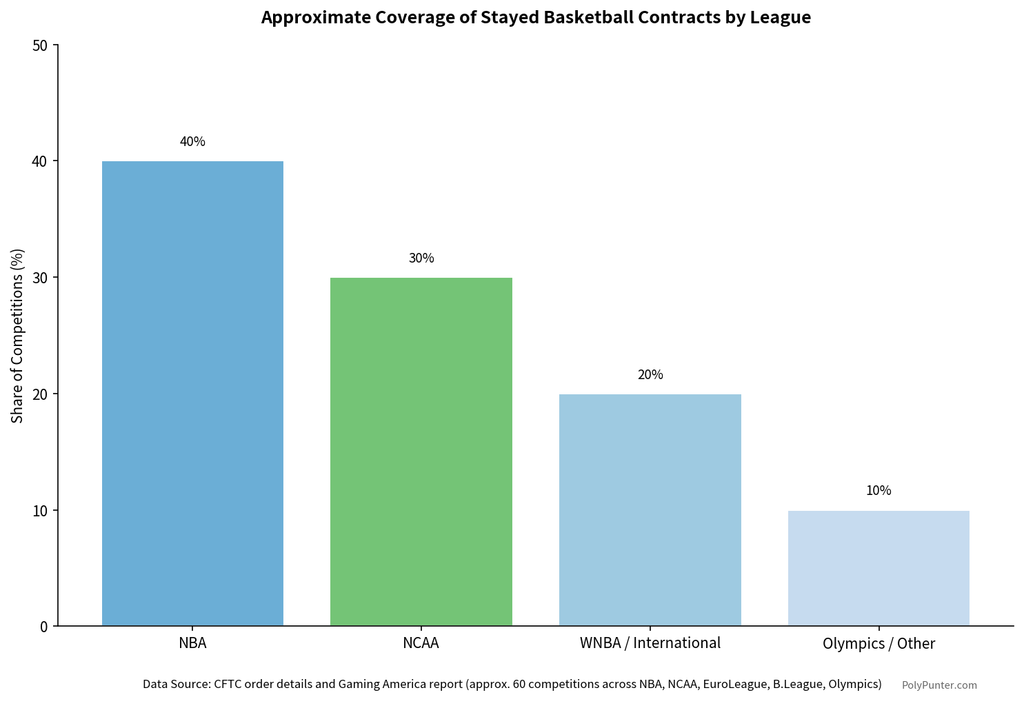
The stayed list includes a contract on the Golden State Valkyries’ first home game of the 2027 WNBA season, the Cleveland Cavaliers versus New York Knicks game on November 25, and the women’s basketball gold-medal game at the 2028 Los Angeles Olympics. Altogether, the class filings cover roughly 60 competitions that reach the NBA, the NCAA, the EuroLeague, and Japan’s B.League.
Plenty of the contracts are tighter than a simple full-game total. Some ask whether one player will score two points in the first five minutes of a quarter. Others settle on order, such as which player attempts the first three-pointer of the second quarter. Single-quarter statistics and shot attempts show up throughout the filings.
The CFTC is wary of markets that turn on one short action by one player. Anyone who can influence that action can also influence how the contract settles. A full-game number usually needs many plays to move. A “first to” contract can resolve in a few seconds. Single-quarter stats and shot attempts are also harder to flag as suspicious because an early three-point try looks like ordinary basketball.
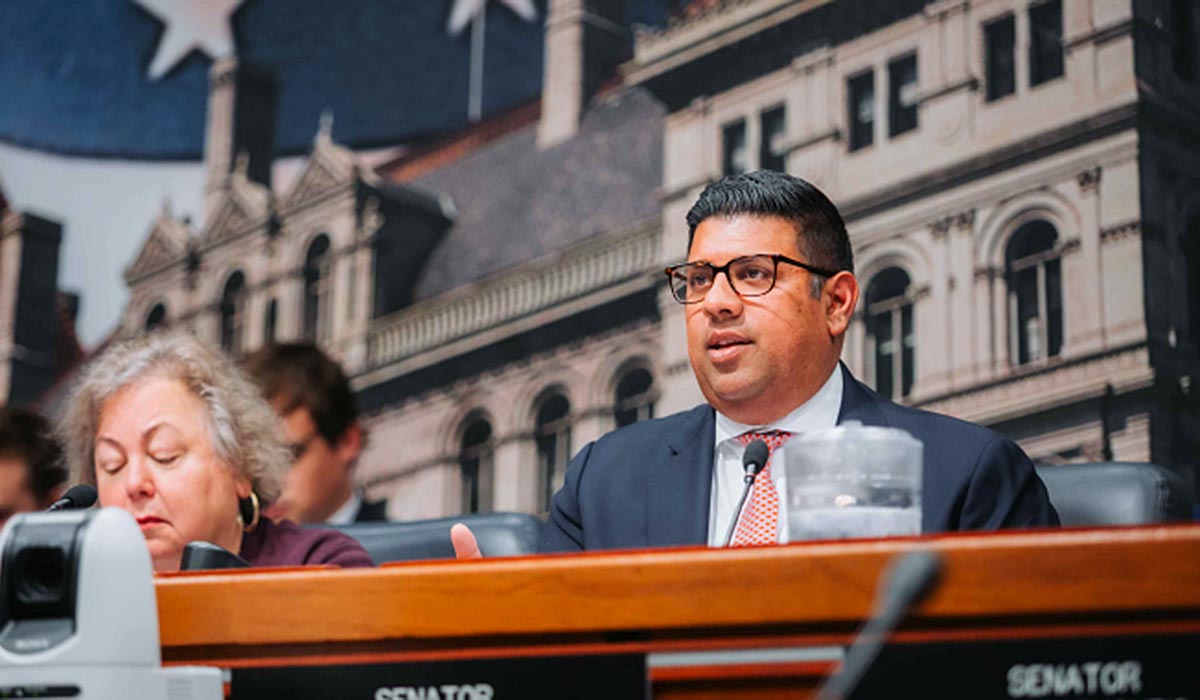
Braden Perry, co-founder of Kennyhertz Perry and a former CFTC senior trial attorney, told Gaming America that these micro-markets are tougher to police. He pointed out that every stayed contract must come back alone or in a narrow class, which slows new listings and forces the agency to review each one. Right now, the order both restricts certain player-focused products in practice and changes the way they must be filed.
CFTC Criticizes Broad Template Filings and Flags Manipulation Concerns
Under the self-certification rules, an exchange can certify one contract under Regulation 40.2(a) and then certify a class of nearly identical contracts under 40.2(d). Only the class path gives the CFTC the power to demand that the contracts be resubmitted one by one. By filing the broad templates and the matching classes on the same day, Kalshi sidestepped that closer look, the order says.
The Commission argued that contracts covering such a wide range should not have been certified together because they mix player statistics with team statistics. They carry different manipulation risks. The same “pointless exercise” language showed up in an October order that forced Novig’s exchange to withdraw similar NBA and WNBA class certifications over “first to” rules, single-quarter windows, and shot-attempt statistics. A July 24 staff advisory had already told operators that broad event-contract templates “should not be submitted.” Though they still try.
Perry said exchanges that still use broad templates should treat the order as clear notice that the CFTC now views those filings as improper. Because the case is framed as a false-certification question, the cost is higher than simply refiling. He expects other exchanges to start pulling broad filings and replacing them with narrower ones before staff asks. Kalshi itself faced a similar stay on its Trump mention contracts only days earlier, with an answer due by December 11.
December 15 Deadline Arrives Amid Ongoing Regulatory Pressure
The December 15 deadline lands soon after the NBA made Kalshi and Polymarket its preferred prediction-market exchanges. Those deals limit which markets the exchanges can offer, bar league and team personnel from trading NBA event contracts, and require the exchanges to share information about investigations and suspicious trading. Official Sportradar data will settle the authorized markets.
Earlier this year, the CFTC used emergency powers to make Kalshi honor certain Michigan trades after a state court tried to cancel them. There have also been reports that the agency could bring charges over how Kalshi submitted a handful of contracts, many of which were never actually listed. Since October, the Commission has used its stay authority on event contracts at Novig, at ProphetX, and now twice at Kalshi. That marks a change from the stretch when roughly 2,500 event contracts were self-certified with no opposition.
After Kalshi files its answer, the Commission could lift the stay, allow the contracts to list with revised terms, or take other steps. Traders following basketball markets will be watching whether narrower versions reappear and under what conditions.
References
- Kalshi Basketball Contracts Halted in First CFTC Sports Order
- CFTC Order to Withdraw Certification and Stay Listing of Kalshi Contracts
- Kalshi Trump mention contracts stayed by CFTC
- Kalshi pauses Trump “mention markets” in response to CFTC order
- CFTC and National Basketball Association Sign MOU to Protect Integrity in Professional Basketball
- NBA partners with Kalshi, Polymarket under sportsbook prop limits
- NBA Expands Prediction Market Access Amid Legal Battles
- NBA becomes third league to sign CFTC prediction market pact
- Not So Fast: The CFTC Puts Its Stay Authority to Work on Self-Certified Event Contracts
- Predictions platform Kalshi complies with order to halt Trump mention contracts