Published: November 21, 2026
Kalshi has set December 8 as the start date for new futures that track the U.S. Consumer Price Index and its core version, which strips out food and energy. Communications head Elisabeth Diana confirmed the timing and said the contracts will carry fixed expiration dates. This is how traditional futures work.
Desks that already watch every Bureau of Labor Statistics release for clues about the Federal Reserve now have a firm date for a listed product tied directly to those numbers. The contracts target banks and hedge funds that want standardized exposure rather than customized swaps. The timing comes as inflation still shapes rate expectations across trading floors.
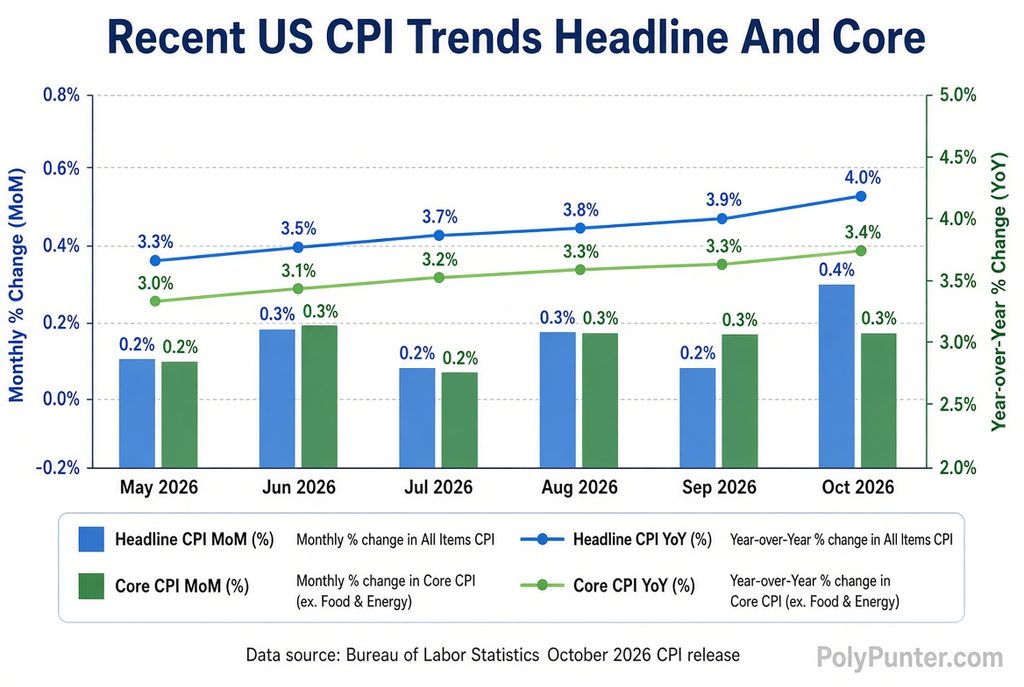
October’s BLS figures showed the headline index up 0.4% on a seasonally adjusted basis, and the core measure up 0.3%. Year-over-year headline readings have stayed near 4% in recent months, which keeps pressure on anyone trying to get ahead of the next policy move. The new contracts would let traders take positions on those exact series and settle against the published figures. That is a cleaner reference than tools that only capture inflation through interest-rate or bond futures.
Diana’s confirmation tightens earlier reports that mentioned only a broad December window. Fixed expirations let desks line positions up with specific report dates instead of managing an open-ended exposure. Most macro teams already do something similar with Treasury futures, so the structure will feel familiar. A dedicated CPI listing would give them one more direct channel alongside the mix of listed and over-the-counter tools they already use.
Fixed Expiration Contracts Aim at Institutional Trading Desks
The listings cover both the full CPI and the core series. Documents that have circulated show contracts for the next 12 monthly reference periods, then May and November contracts running four years out. Trading would run Sunday through Friday, with clearing through Kalshi Klear. Those terms resemble conventional exchange-traded futures with clear settlement rules. Banks and hedge funds that currently route inflation hedges through larger venues can now size up whether the new contracts fit their systems.
A fixed end date lets a trader who has a view on the December or January reading pick the matching contract and be done with it. That is simpler than rolling a position month after month. At the same time, having both the headline and core series lets a team choose the version that matches how the Fed talks about inflation, or the one that includes food and energy if that is what they want to trade.
People who follow the inflation market say market liquidity will decide whether the contracts stick. Volume in the early months usually clusters around the nearest releases. If the December 8 open coincides with year-end positioning, some of the banks and hedge funds already active in the space may step in quickly. A thin start, on the other hand, would look a lot like earlier inflation listings that never built lasting depth.
Kalshi has been talking to major banks and hedge funds about the product. The conversations have centered on margin treatment, reporting, and whether the contracts plug into existing risk systems without extra work. If those pieces line up, some of the flow that now sits in bilateral swaps could move to the listed version. Desk heads will compare the operational load and capital treatment against the OTC trades they already do.
Michael Ashton Shapes Contract Design for Wall Street Users
Kalshi brought in Michael Ashton, the former Barclays trader known as the Inflation Guy, to design the contracts and talk to institutions. Ashton has spent years trading and advising on inflation-linked products, and he worked on related specifications around 2012. His job covers both the fine print of the listings and the outreach to asset managers and banks. The hire shows the firm is trying to meet the practical requirements of the desks that already trade TIPS and inflation swaps in size.
Ashton has said no exchange currently lists a futures contract that references CPI directly. He wants Kalshi to be the place that does. CME Group tried something similar years ago but does not offer it now. The new design takes lessons from those earlier attempts and sticks to clean settlement against the BLS numbers plus standard expiration mechanics. Traders who know Ashton’s earlier work on inflation benchmarks can see the continuity in the approach.
He has also been speaking with long-only managers and hedge funds that are active in the inflation-linked bond and swap markets. Those talks are meant to adjust settlement rules and contract size so the products sit inside existing portfolio systems. A listed contract could reduce the need for one-off OTC hedges in some cases. Specialists on those desks will look at basis risk, expected liquidity, and capital charges alongside the methods they use today.
Kalshi CEO Tarek Mansour has called inflation a major issue for people in the United States and pointed out the shortage of good tools for expressing a view on where it is headed. The December 8 date puts the launch just ahead of the next major CPI cycle.
Competition in the Inflation Futures Space and Market Scale
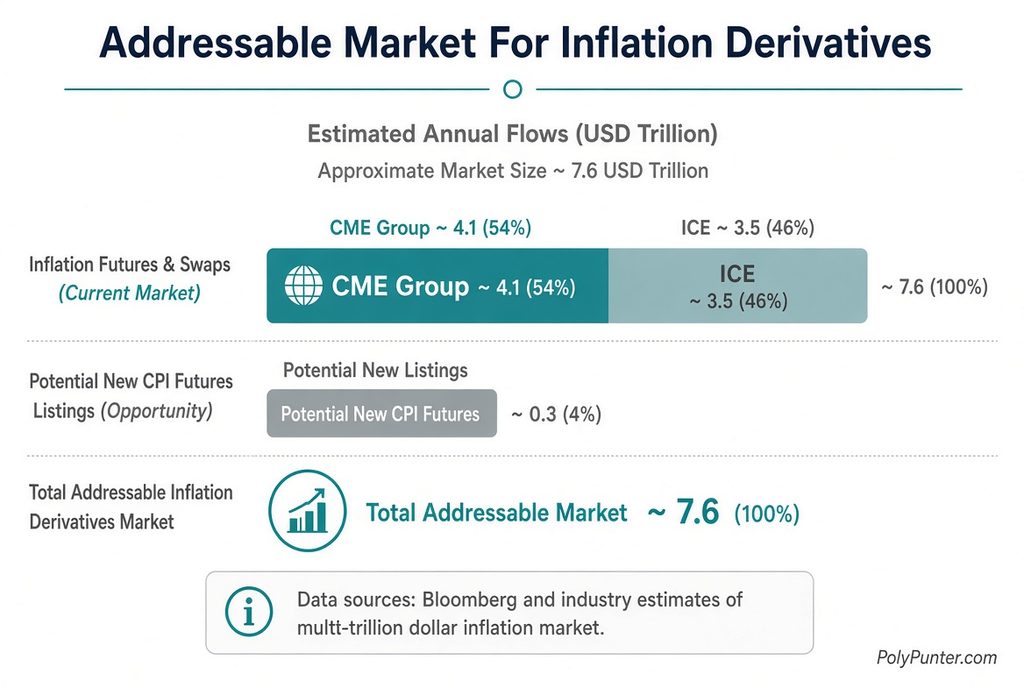
The broader market for inflation-related derivatives is large. Annual flow through inflation futures and related instruments is often put at $7.6 trillion or more once swaps are included. CME Group and Intercontinental Exchange already handle heavy volume in interest-rate and bond futures that embed inflation expectations. A pure CPI listing would sit alongside those products rather than replace them. Macro investors who already use rate futures to express views on the Fed path could add a direct inflation position on top.
Even a modest slice of that flow would be meaningful. One estimate noted that 0.5% of an $8 trillion annual figure equals $40 billion in notional, enough to support a working market if it concentrates in the active contracts. The December window means the team needs to get liquidity in place before desks lock in their year-end relationships. Getting one or more institutions to provide early size would help. Without it, the product could join the list of earlier inflation listings that never took hold. Bringing in Ashton was a clear sign Kalshi is looking to lock in some institutional connections.
A listed contract offers clearer pricing and standard terms than bilateral swaps. Clearing at Kalshi Klear keeps everything inside a regulated process. Desks will weigh those points against the deeper books available on the bigger venues. The Sunday-to-Friday hours also differ from some traditional schedules and could suit global macro books that trade across time zones.
The latest CPI numbers have kept the topic in focus. October’s 0.4% monthly rise and the still-elevated year-over-year readings are why many desks keep inflation hedges on. A futures contract tied directly to those releases gives them a direct position, rather than something that only approximates the move. The core series also lets them separate out the food and energy swings that often dominate short-term noise, especially with ongoing geopolitical events and military conflicts.
References
- Kalshi to Launch Futures Tracking US CPI and Core Inflation on December 8 – Tiger Brokers
- Kalshi Courts Wall Street in Bid to Be the ‘Inflation Exchange’ With CPI Futures – Bloomberg
- Consumer Price Index (CPI) News Release: U.S. Bureau of Labor Statistics
- CPI inflation report: October 2026 – CNBC
- Kalshi Courts Wall Street in Bid to Be the ‘Inflation Exchange’ – Yahoo Finance
- Kalshi Pitches Banks on Inflation-Related Futures Market – PYMNTS
- Kalshi plans December CPI futures launch to target Wall Street institutions — Prediction News
- Kalshi Takes on Wall Street’s $7.6 Trillion Inflation Futures Curse — TradingView News
- Kalshi pitches a futures market tied to inflation – report – Seeking Alpha
- Kalshi CEO on Midterms, Regulation and Inflation Futures – YouTube