Published: November 13, 2026
Kalshi is talking with investors about a new raise that would value the company at $65 billion. A meaningful portion of that capital infusion would go toward standing up a dedicated venue for trading GPU and cloud-computing futures. The conversations started just weeks after the firm closed a $1 billion round at a $40 billion valuation, co-led by Sequoia and Wellington. Many people assumed that October deal would be the last private capital before an IPO. Not so fast.
Trading activity has been climbing fast. Monthly notional volume roughly doubled from about $40 billion in August to nearly $100 billion in October. Most of this volume was driven by sports event contracts, especially combo contracts. That pace has pushed the annualized revenue run rate past $5 billion, with gross margins sitting near 90%. The financial numbers give Kalshi room to move quickly on contracts that let traders hedge or take a view on what it will cost to rent high-end Nvidia chips and broader cloud capacity in the months ahead.
The company already offers event contracts tied to hourly GPU rental prices and has published market-implied forward curves for the B200, H200, and A100. Those curves come from ladders of weekly and monthly contracts that settle against Ornn index data. They gave traders an early public look at where rental rates might be heading. Turning that into a proper futures platform would mean standardized, cleared contracts that larger institutions can actually use at scale.
What Is Driving Kalshi’s $65 Billion Fundraising Talks for Compute Futures
Moving from a $40 billion valuation to a $65 billion target in a matter of weeks equals a 62.5% step up. Earlier this year, a Coatue-led $1 billion round had put the company at $22 billion. The successive raises show capital continuing to flow toward platforms that already handle high-velocity trading and are now aiming at expanding their institutional offerings. In this case, the volatile cost of compute.
CEO Tarek Mansour has said the derivatives market around compute could reach $5 trillion if companies spend roughly $1 trillion a year on processing power. Right now, a lot of that spending still happens through private deals between hyperscalers, neocloud providers, and GPU rental platforms. Transparent forward prices remain scarce. On Kalshi, traders are already using existing contracts to express views on whether B200 hourly rates will finish above particular strikes.
A dedicated futures platform would let companies lock in capacity months in advance instead of riding every spike in the spot market. The same systems that already support Kalshi’s perpetual futures on crypto, equity indexes, and metals could be adapted for compute. That setup might let the exchange move faster than rivals still waiting on fresh regulatory sign-offs for entirely new contract types.
Building the Platform for Trading GPU and Cloud-Computing Futures
Fresh capital would pay for the technology, clearing setups, and market-making relationships needed to list standardized contracts on GPU rental hours and cloud capacity. The contracts could reference indexes such as Ornn’s Compute Price Index and settle in cash based on monthly averages of hourly rates for chips like the H100, H200, and B200. Traders would get exposure to future prices without ever taking physical delivery of hardware.
Kalshi has already shown it can pull market-implied prices out of event-contract ladders that run across different strikes and expirations. A full futures platform would layer on margin, clearing, and longer-dated listings that institutions prefer. Company leaders have called compute the new oil and said they want the exchange to be where buyers and sellers of capacity manage their risk.
In July, Mansour posted on X that the forward curves were the first step toward treating compute like a mature commodity with open price discovery. He pointed out that hyperscalers are spending more than $700 billion on compute this year and that a liquid derivatives market could eventually grow to many times the size of the underlying spot market.
Competition and Regulatory Hurdles in the Compute Derivatives Race
CME Group has teamed up with Silicon Data to list futures on H100 and B200 rental indexes. Each contract covers 730 GPU-hours and settles on a monthly average. Intercontinental Exchange is working with Ornn on cash-settled contracts that reference its transaction-based Compute Price Index. Both sets of proposals are still under CFTC review. Questions about price transparency, how fungible different GPU setups really are, and the risk of manipulation have slowed the process.
In August, reports said the Commerce Department asked Kalshi to take down its forward curves over national security concerns and pushed the CFTC to pause new compute-related approvals for 60 days. Commerce later pushed back, saying it had never asked for any markets to be removed. The underlying contracts stayed live even as the aggregated curves fell for a while.
Any new futures platform will have to navigate both CFTC product rules and the broader national-security questions surrounding public pricing of advanced AI chips. Traditional exchange operators have noted that futures usually follow a deep, standardized spot market, and compute does not yet have one. Kalshi’s side of the argument is that event contracts can generate the price signals first, letting the firm build liquidity while competitors wait for final approvals.
Investor Appetite and the Path Ahead for Compute Futures Trading
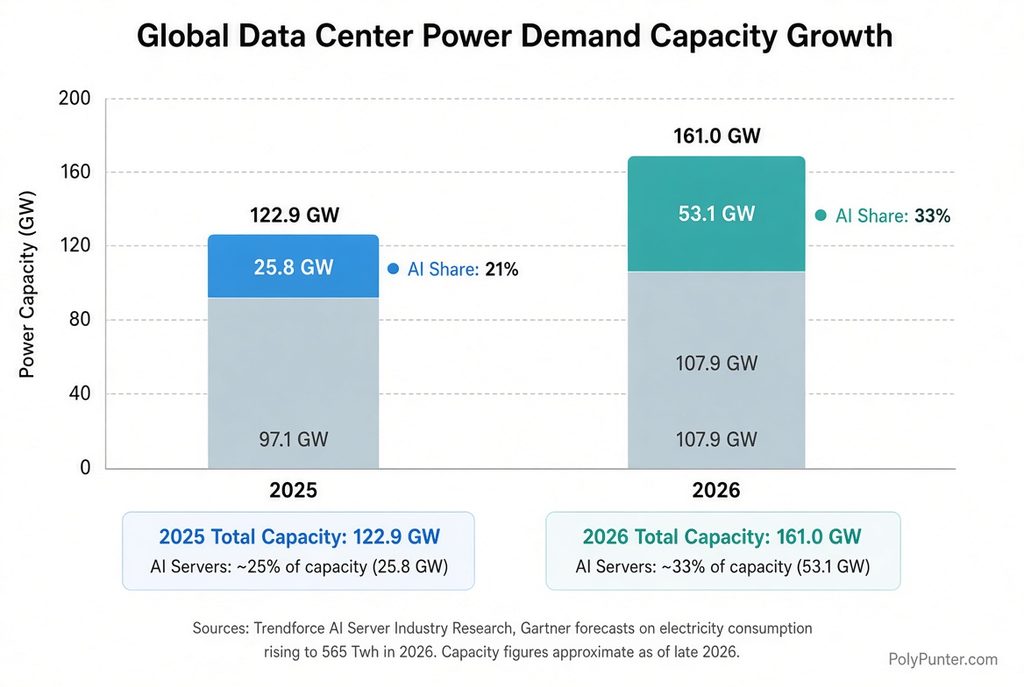
Sequoia, Wellington, Coatue, and other backers seem to see real upside in platforms that can intermediate risk around AI infrastructure. The jump in volume from roughly $40 billion to nearly $100 billion over a few months has already produced high-margin revenue and given the company a base to invest in new listings. Traders using event contracts to take views on B200 rates could shift to futures once spreads tighten and institutional-grade clearing is available.
A public futures venue would create continuous price discovery across different chip generations and contract months. Data-center operators could hedge the capacity they sell while AI labs lock in their input costs. That would cut some of the earnings swings that currently come with every shift in rental rates. Kalshi’s experience listing perpetuals and then expanding them from crypto into indexes and metals offers a practical template for how compute contracts could grow.
References
- Kalshi in talks to raise money at $65 billion valuation, Bloomberg News reports
- Kalshi in Talks for New Funding Round at $65 Billion Valuation
- Kalshi Plans To Raise Funds For Compute Futures Platform
- GPU compute forward curve — Kalshi
- Kalshi Is Sizing Up a $5 Trillion Compute Derivatives Market
- Tarek Mansour post on GPU compute forward curves
- Kalshi builds a forward curve for computing power
- Kalshi Offers Compute Forward Curves
- Exchanges eye turning AI compute into a tradable commodity
- Compute Futures Timeline