Published: November 13, 2026
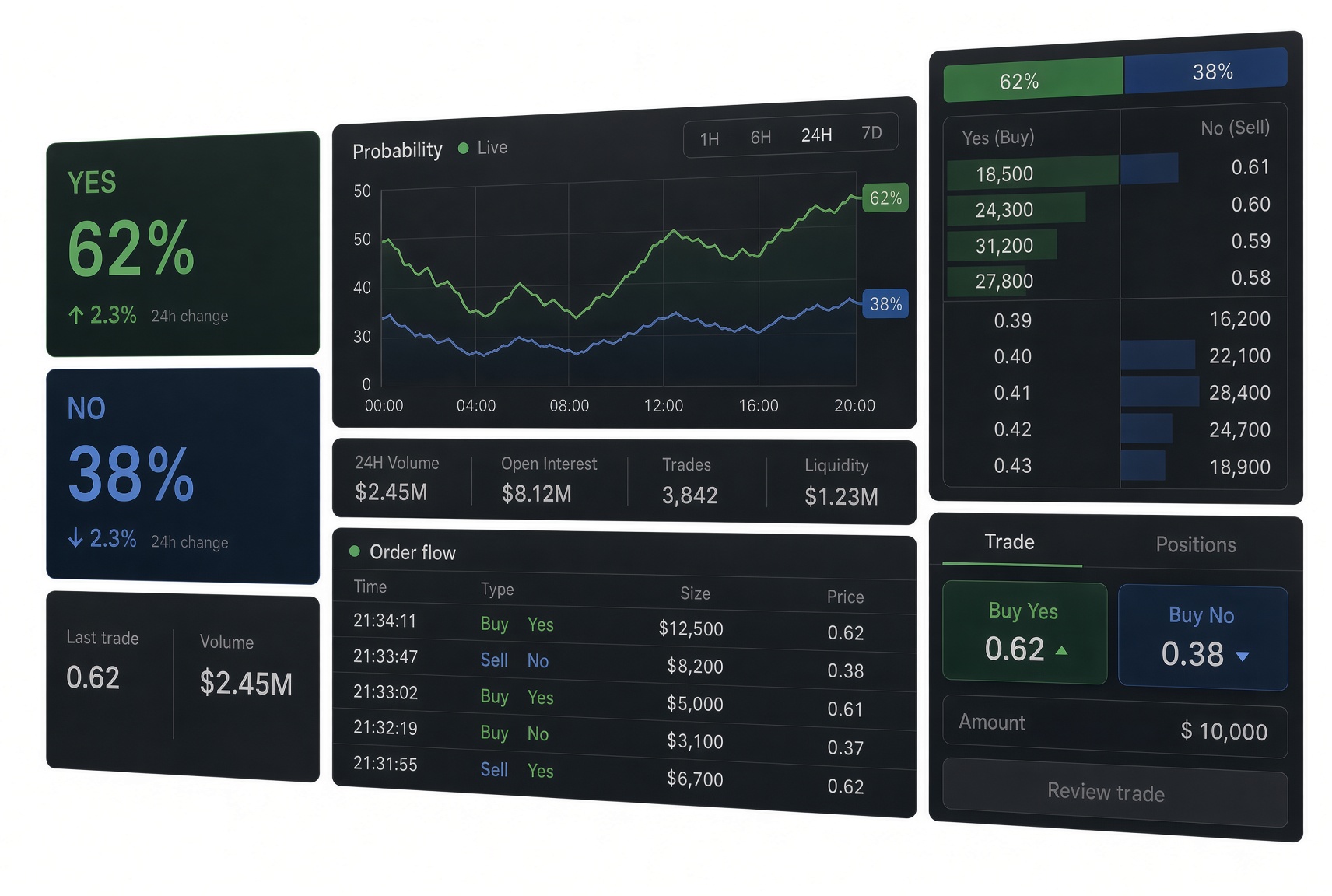
Sports event contracts let you trade outcomes before games and while the game is still going, with prices moving as soon as something changes on the field. For example, a contract at 62¢ basically means the crowd thinks there’s roughly a 62% chance that prediction about teams or players comes true. You’re trading with other people instead of against a house, so the line can move faster than a sportsbook once an injury report drops or a score changes. These markets have grown fast because sports draw constant attention, every day of the week and especially on weekends.
The main platforms list yes-or-no contracts on winners, spreads, totals, player props, and multi-leg combos. Each one settles at $1 if the outcome hits and $0 if it doesn’t. You can also sell early if the price moves your way or against you, which is the real difference from a sportsbook ticket that locks once you place it. Picking a platform usually comes down to how deep the sports menu is, what the fees look like, whether you already have an account elsewhere, and how liquid (easily tradable) the live markets feel.
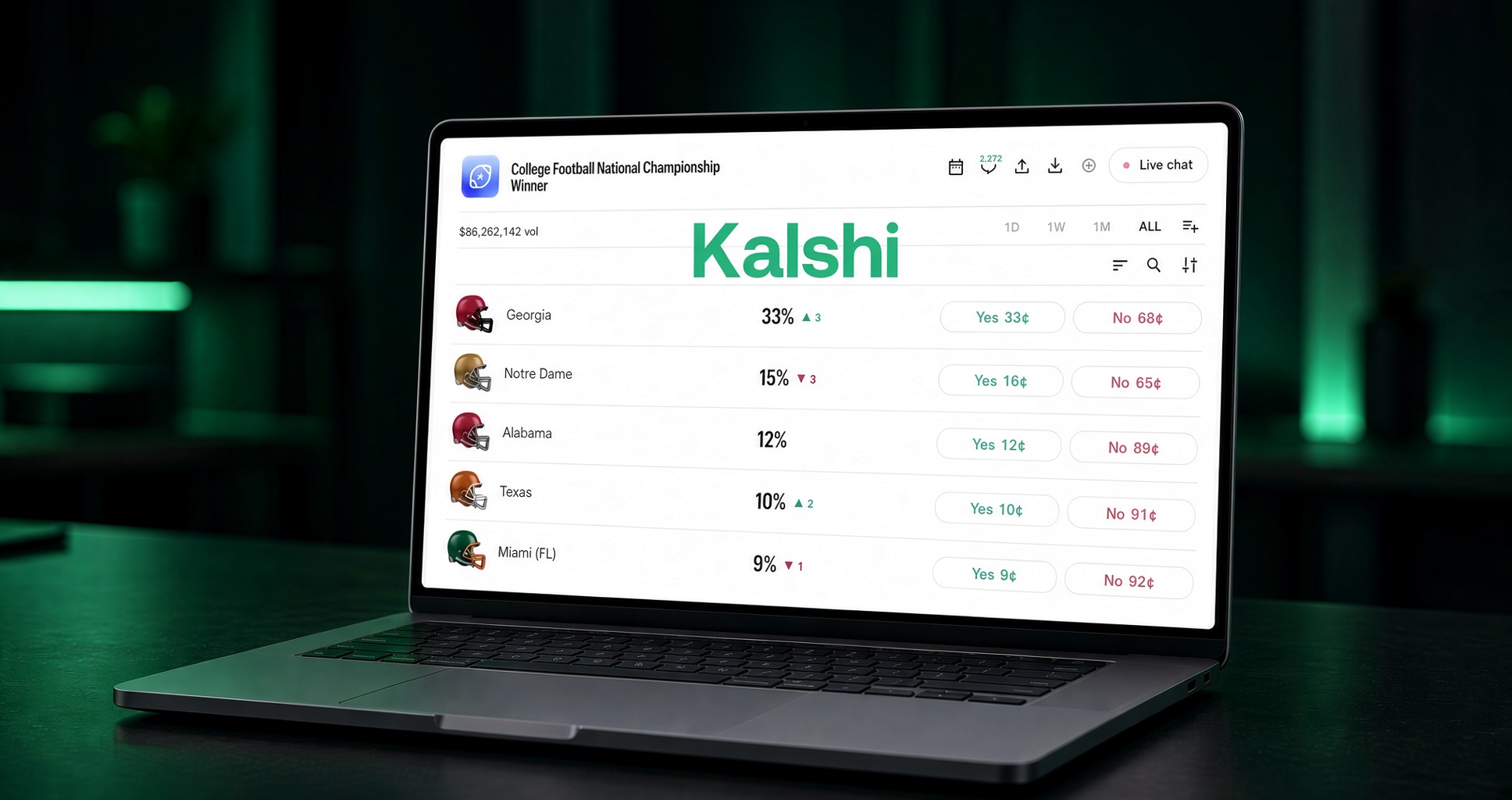
Kalshi is handling the biggest share of sports volume right now on a fully regulated U.S. exchange. Polymarket US is a clear second, with venues like Robinhood, Underdog, Novig, and the prediction market platforms for FanDuel and DraftKings vying for traders. Once you get how the contracts actually settle and what each place charges, the choice gets a lot clearer.
Kalshi: The Volume Leader for Sports Event Contracts
Kalshi runs as a designated contract market under CFTC oversight and currently has a healthy lead in sports event-contract volume. It lists games, spreads, totals, player props, and multi-leg combos across the major leagues. Sports and combos have made up the bulk of its activity lately. It has a website and native apps, and you have to verify your identity. Current markets and official info are on the Kalshi site.
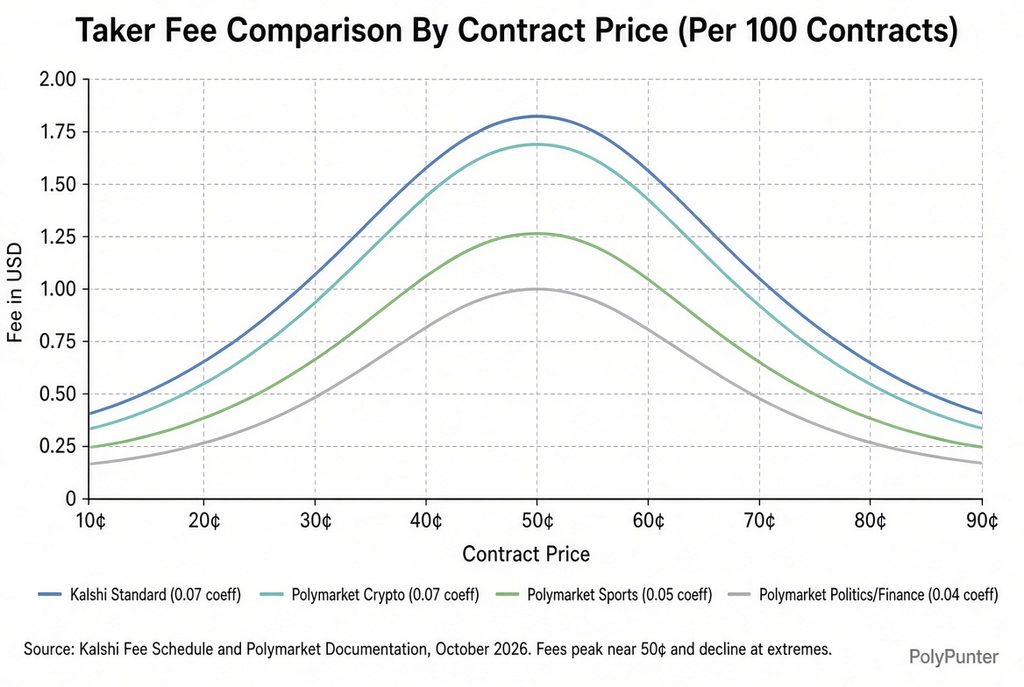
Fees use a formula that gets highest around the middle of the price range. A taker (buy) order pays roughly 0.07 times the number of contracts times the price times (1 minus the price), rounded up. In short, about 1.75¢ per contract when the price is around 50¢, dropping toward zero at the extremes. Many of the platforms use a similar transaction fee schedule where mid-priced contracts have higher fees than “sure things” or “long shots” to encourage more buying of those more extreme contracts
Liquidity on major games and popular props is usually deep enough for normal retail size, and live trading is open on many contests. Combos (parlays) pull a big chunk of the volume because people can package related outcomes into one contract. Position limits sit on each market rather than a single account-wide number. Sports contracts aren’t available everywhere because of ongoing court fights, so it’s worth checking access before you fund.
If you want the widest sports menu and the deepest books on a fully regulated exchange, Kalshi is the place most people start. Continuous trading, transparent formula fees, and heavy volume on both games and combos set it apart. Still, start small and read the specific rules, because settlement criteria can shift a little from market to market.
Polymarket US and Robinhood for Sports Trading
Polymarket US is a CFTC-regulated designated contract market that lists sports contracts along with other events. It runs on a regular dollar model for U.S. traders and has been adding more sports coverage. Fees are competitive with the other exchanges, and it works on both the web and in an app. You can find major leagues and props, with better liquidity on the bigger games. Official details are at Polymarket US. U.S. users can not access the Polymarket international crypto-based marketplace.
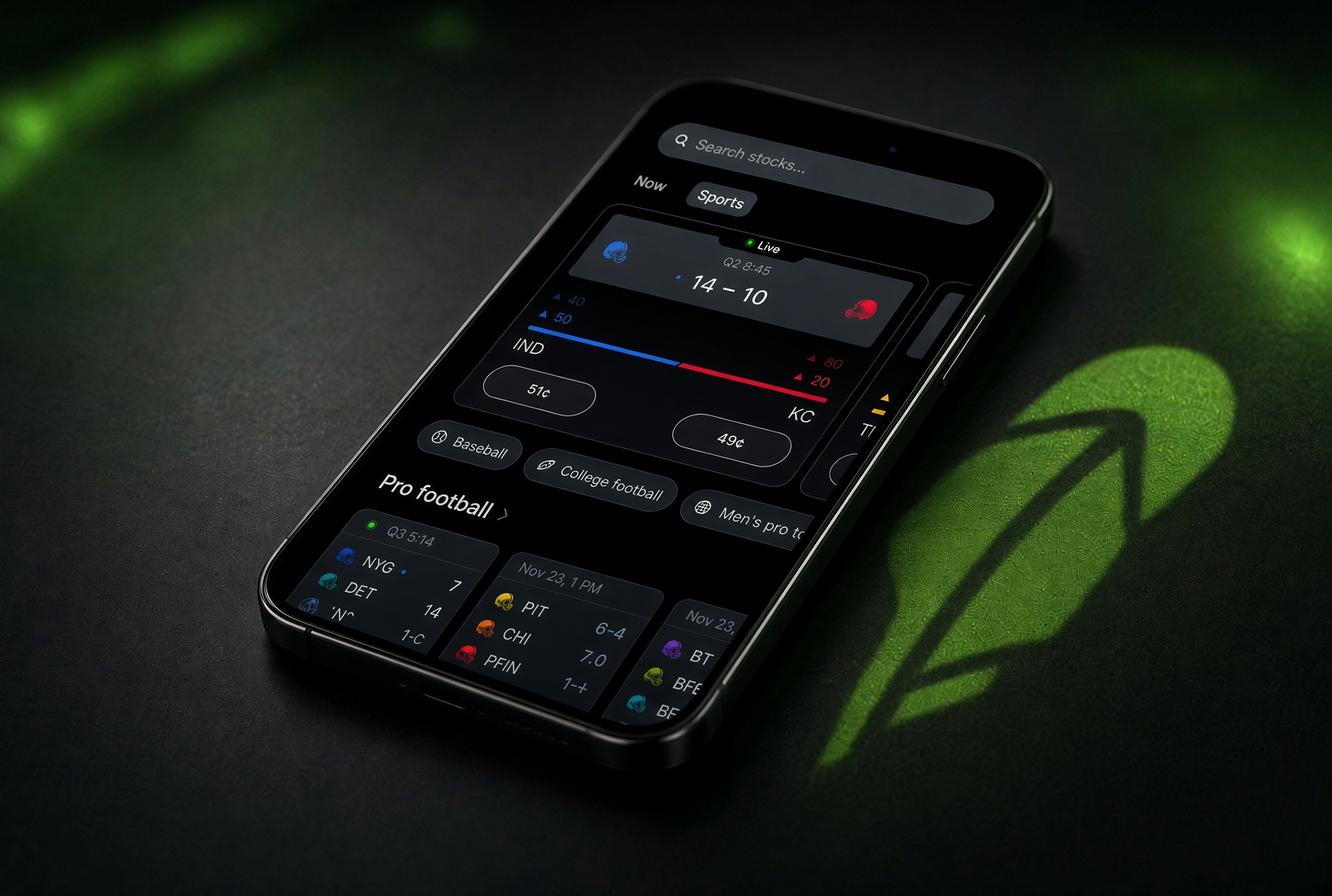
Robinhood, more well-known as a stock trading app, recently entered the event contracts marketplace. Everything sits inside the same Robinhood app many people already use for other trading, so friction is low if you already have an account there. Fees are usually a flat amount per contract on each side, often around $0.02 total for a round trip on many markets. Sports contracts are available, though the selection is more limited than on a dedicated exchange. More info is on the Robinhood site.
Both places settle contracts at $1 or $0 based on the official result, and both require identity verification. Polymarket US gives you a full exchange with its own order books, while Robinhood is more about convenience and keeping everything next to your brokerage balance. The biggest games are liquid enough on both, but the absolute depth is still highest on the largest dedicated exchange.
If you already use Robinhood, it can be the easiest way in; if you want a purpose-built sportsbook, most people lean toward the dedicated prediction market platforms like Kalshi and Polymarket.
Sports contracts can be restricted in certain places because of litigation, so availability isn’t the same everywhere. Checking the current rules on whichever platform you’re looking at before you deposit is the practical move.
Other Sports Trading Platforms
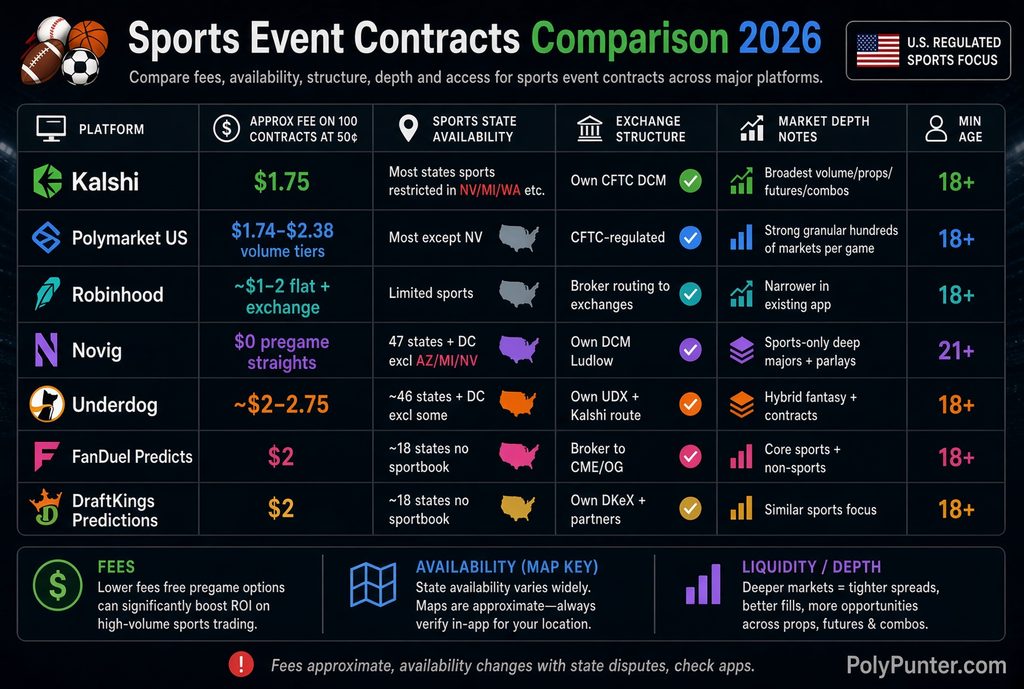
While Kalshi, Polymarket US, and Robinhood handle most of the volume, several other platforms are carving out space for sports event contracts. These options range from pure sports exchanges to apps that grew out of fantasy sports and sportsbook apps, and each brings its own fee structure and focus. Traders who want lower costs on straight game lines or a familiar sportsbook-style interface often check them out.
Novig stands out as a sports-only exchange that became a CFTC-designated contract market in 2026. It runs a peer-to-peer model where traders match against each other rather than a house. Pre-game straight trades on moneylines, spreads, and totals carry no fees (hence the name, No-Vig). Live in-game fees use a smaller coefficient that peaks around 0.75 cents per contract at 50-cent contracts. Most futures add a higher rate.
Market makers who match the buy requests pay nothing and can sometimes earn small credits. The platform is available in most states, though Arizona, Michigan, and Nevada remain excluded. Unlike the other platform, Novig is strictly 21+ to trade. In the most recent 30-day window, it handled about $3.46 billion in volume, all of it sports. You can see current markets at Novig.
Underdog added event contracts inside its existing fantasy app after acquiring a CFTC-registered exchange. The product, often called Underdog Predict, routes some markets to its own UDX exchange and others to partners. Fees typically include a small broker commission plus any exchange fee, and independent checks show totals up to 2 cents per contract (compared to Kalshi’s 1.75 cents), depending on the market.
Sports dominate, covering NFL, NBA, MLB, NHL, college football, and player props. The interface feels familiar to anyone who has used Underdog’s pick’em contests, and the company has been growing its volume quickly. Recent 30-day figures put Underdog near $2.39 billion. Details live at Underdog.
FanDuel Predicts brings the familiar FanDuel brand into event contracts through partnerships with CME Group and other exchanges. The fee is straightforward: 2% of the potential payout, charged up front and again if you sell early. On 100 contracts at 50 cents, that works out to a $2 fee for a $100 potential payout. Sports contracts are available in a limited set of states that do not already have legal online sports betting.
The app keeps the look and feel of FanDuel’s other products, which helps traders who already have an account move over quickly. Liquidity and market depth vary by event, so it pays to compare the all-in price against pure exchanges before trading. Learn more at FanDuel Predicts.
DraftKings Predictions has scaled fast since launch and now ranks among the larger sports-focused platforms by volume. It operates as a futures commission merchant and sources contracts from multiple exchanges, including its own. Fees generally run between 1 and 3 cents per contract depending on price and the underlying exchange; many mid-range contracts land near 2 cents.
In the latest 30-day data, it posted roughly $4.75 billion in volume across all sports, with a large share coming from combos. The company has invested heavily to grow the product and has reported more than 1.6 million customers using Predictions so far in 2026. Traders who already use the DraftKings sportsbook can often access the contracts from the same app. Current markets and fee disclosures are available at DraftKings.
These four platforms give sports traders more choices when Kalshi’s formula fee or Robinhood’s capped commission doesn’t fit a particular trade. Novig’s zero pregame fee on straight lines is hard to beat on cost, while Underdog, FanDuel, and DraftKings trade on brand familiarity and app convenience. Liquidity still concentrates on the biggest games, so the best price on any given night can shift between them. Checking the order ticket before you confirm your contract purchase remains the simplest way to see the real cost.
Fees, Liquidity, and What Matters for Sports Traders
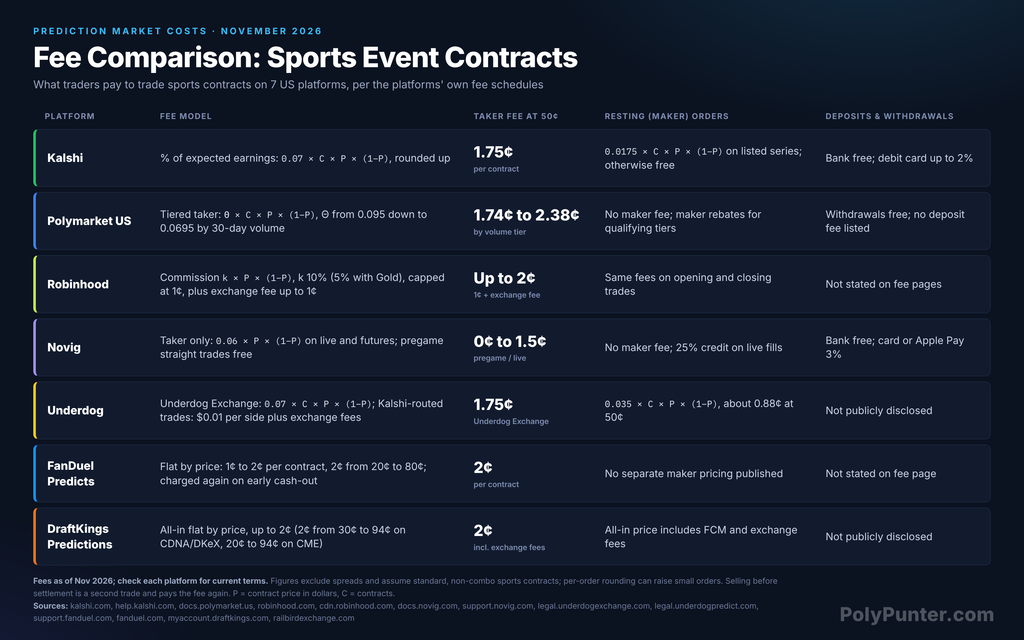
Fees vary enough that the same trade can cost more or less depending on where you place it. Since sports contracts turn over fast, the total cost of getting in and out matters more than it does on longer markets. You will always want to know what your fully loaded contract cost is before purchase to assess your true return potential. Winning or losing is unknown; fees are certain.
Liquidity decides how easily you can enter and exit at a fair price. Major games and popular props usually show tight spreads and enough size to make normal retail trades without difficulty. Smaller or longer-dated markets can be thinner, which is when limit orders (where you name the price and wait until filled) become more useful. Combos often trade with different depth than single-game contracts, and the volume numbers show they’ve become a big part of overall activity on the leading platforms. Checking the order book before you go larger helps keep you from moving the price against yourself.
Position limits change by platform. Dedicated exchanges set them per market, which usually leaves room for real size on active contracts. Brokerage platforms may add their own limits or just pass through whatever the underlying exchange uses. For most people starting to trade, liquidity is a bigger constraint than the stated cap. The only reliable way to know current fees and limits is to check each platform directly, because limit schedules and related rules change fairly often.
Practical Tips for New Sports Event Contract Traders
Read the rules on any contract before you enter. The settlement source determines whether the share pays $1, and the edge cases are written into those rules. Use limit orders on thinner markets so you control the price you get. Size the position so a full loss on that contract is something you can handle without messing up the rest of your trading. Most people start with one liquid game and a small contract purchase. Market trading is a skill that improves with experience.
Compare the live price on the prediction market platforms with what the sportsbooks are showing, because gaps can show up. The contract price already reflects what the market thinks, and fees take a bite out of any edge. On the formula platforms, the cost is highest near 50¢, so high-conviction trades near the extremes can be relatively cheaper. On flat-fee platforms, the cost stays more consistent across prices. Looking at both the price and the fee before you click keeps the math honest.
Live trading is open on many platforms while the game is in progress, so you can adjust if the score or an injury shifts the odds. That flexibility helps, but the prices can move fast. Having an exit plan ahead of time helps you avoid emotional decisions in the moment.
Funding with ACH is usually free and keeps costs down. Only use money you can afford to lose—contracts can go to zero, and liquidity can thin out near the end of smaller markets. Sports event contracts settle at $1 or $0 only, so you can lose your entire position in any market you enter.
The platforms leading right now for sports event contracts combine deep markets, clear fees, and the ability to trade in and out. Kalshi has the broadest volume and menu on a dedicated exchange. Polymarket US and Robinhood both work depending on whether you want a full exchange or the convenience of an app you already use. Starting small, reading the rules, and watching the order book teaches you more than any comparison chart.
Frequently Asked Questions
What is a sports event contract?
It’s a yes-or-no contract on a game outcome, prop, or combo that settles at $1 if the result hits and $0 if it doesn’t. The price, between 1¢ and 99¢, reflects the market’s current probability estimate.
Which platform has the most sports volume right now?
Kalshi is handling the largest share of sports event-contract volume on a fully regulated U.S. exchange, with heavy activity in both single games and combos.
How do fees work on Kalshi for sports contracts?
Taker fees use a formula that peaks around 1.75¢ per contract near a 50¢ price and drops toward zero at the extremes. Most maker orders are free on many markets.
Can I trade sports event contracts on Robinhood?
Yes. Robinhood routes the contracts to underlying exchanges and offers a selection of sports markets inside its existing app, usually with a flat per-contract fee.
Are sports contracts available on Polymarket US?
Yes. Polymarket US is a CFTC-regulated exchange that lists sports contracts along with other event categories. Polymarket international on-chain is not available to U.S. customers.
Can I exit a sports contract before the game ends?
Yes. You can sell at the current price any time before settlement as long as the market is open and has liquidity. Many sports contract traders buy and sell within the same market and never wait for their prediction to settle.
What should a beginner watch first?
Start with a liquid major-game market (all top pro league games and major college football and basketball), read the contract rules, use a small size, and compare the live price and fees on a couple of platforms before putting in more money.
Do I need a separate account for each platform?
Yes, for dedicated exchanges like Kalshi and Polymarket US. Robinhood uses your existing brokerage account if you already have one, though you will need separate derivatives trading sign-off.