Potential Diplomatic Breakthrough Sparks Record Activity Amid Volatile Odds
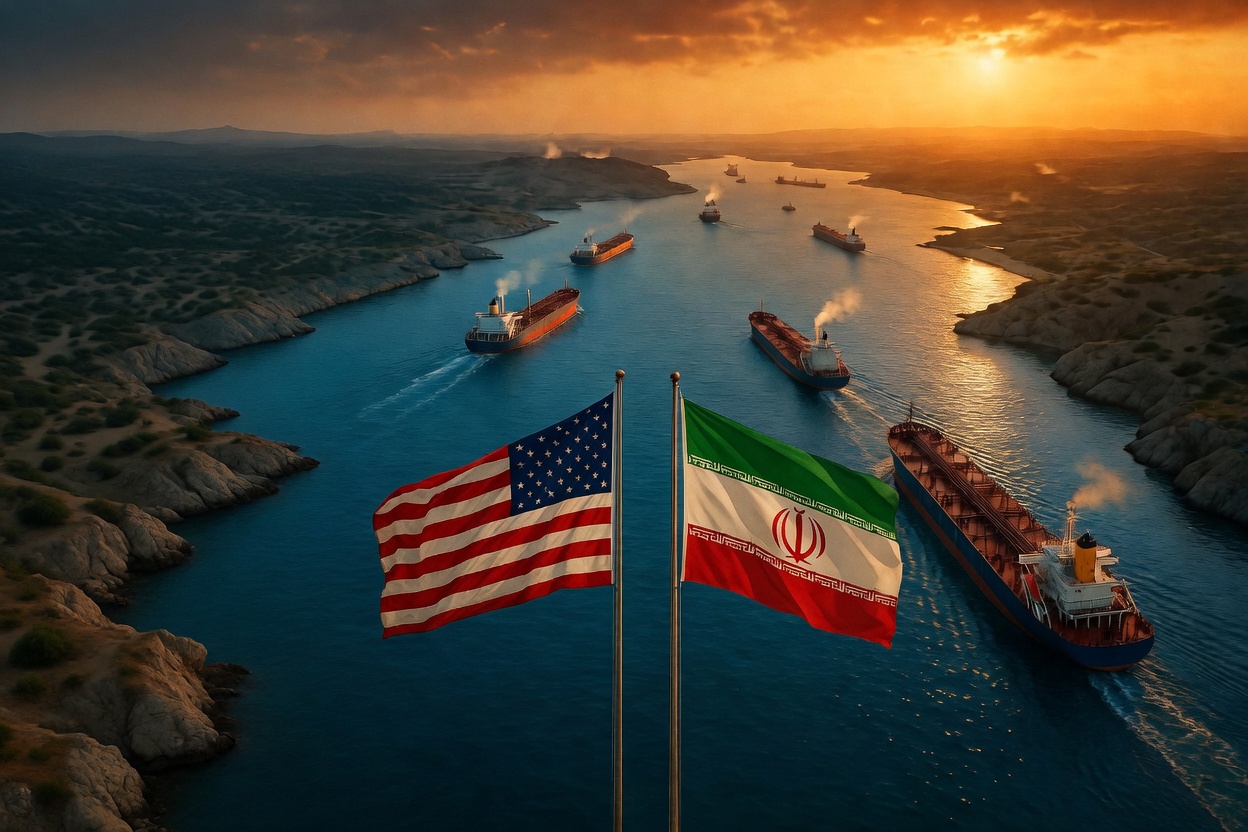
Traders poured hundreds of millions into contracts tied to a potential lasting agreement between the United States and Iran, driving volumes to extraordinary levels as President Trump signaled that key elements of a deal—including the reopening of the Strait of Hormuz—had advanced significantly.
Probabilities of short-term resolutions shifted dramatically, while longer horizons strengthened. Of course, we’ve seen close to this level of optimism on a deal between the warring nations before. Public signs of being “close” have not panned out.
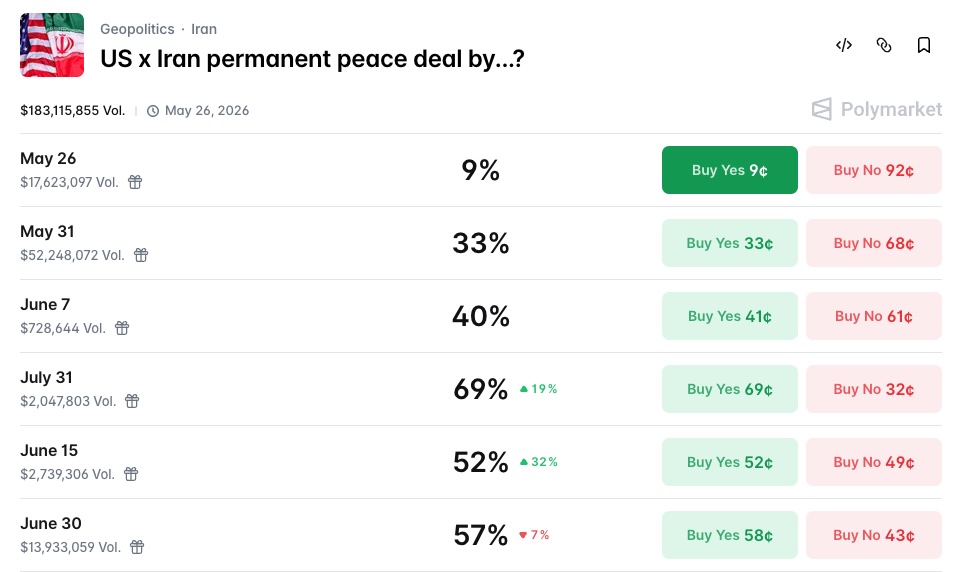
This frenzy reflects mounting optimism mixed with caution, as negotiators continue indirect talks mediated by regional partners from the Gulf States. Oil prices lowered on the news, underscoring how closely complementary markets watch these developments for economic ripple effects.
Key Trading Volumes on Major Contracts (as of recent data)
| Contract Date | Trading Volume | Yes Probability |
|---|---|---|
| May 26, 2026 | $17.45M (24h) | 10% |
| May 31, 2026 | $52.16M | 34% |
| June 30, 2026 | $13.89M | 54% |
| December 31, 2026 | $182.78M lifetime | 81% |
Ceasefire Extensions Fuel Short-Term Speculation
Contracts asking whether the current fragile ceasefire will hold through specific near dates saw rapid probability swings. One market tracking continuation plunged from near-certainty levels before rebounding on fresh diplomatic signals, while traders adjusted positions in real time on Polymarket ceasefire markets.
Although temporary pauses do not qualify as permanent deals under market rules, ceasefire extensions increase the common-sense probability of eventual deals compared to a resumption of military conflict. President Trump’s recent statements emphasized proceeding deliberately, telling negotiators not to rush while still highlighting progress on a memorandum of understanding. Again, these kinds of talks have failed in the recent past, but compared to active bombings and missile launchings, they tilt toward a positive sign on an agreement.
Meanwhile, related questions about diplomatic meetings and nuclear framework elements drew parallel interest, creating layered trading opportunities and hedging options for those following every diplomatic element.
Oil Market Reactions and Strait of Hormuz Implications
Crude prices dropped sharply as optimism spread, with Brent futures sliding several dollars per barrel on expectations that reopened shipping lanes could ease supply constraints. Traders betting on normalized Hormuz traffic by late June pushed probabilities above 50% in connected contracts.
Strait of Hormuz Traffic Normalization Odds Snapshot
| Timeline | Implied Probability | Associated Volume |
|---|---|---|
| End of May 2026 | Low single digits | $26M+ |
| End of June 2026 | ~51% | $10M+ |
Reopening this critical chokepoint could restore roughly 20% of global oil trade flows, though full normalization may take weeks even after any announcement and fulfillment of promises, according to BBC reporting on oil price reactions.
Longer-Term Permanent Deal Bets Dominate Liquidity
The flagship market for a US-Iran permanent peace deal by December 31 has captured the bulk of activity, amassing over $182 million in total volume since launch. Currently priced at an 81% chance of success by year-end, this contract reflects the trader’s conviction that diplomacy will eventually prevail despite major current hurdles and repeated diplomatic failures by the two main parties.
Shorter July and June horizons trade at 68% and 54%, respectively, indicating a stepped probability curve in which nearer dates feel too soon to get anything done, even if both sides are leaning this way.
Secretary of State Marco Rubio’s comments hinting at imminent positive updates added fuel, though Iranian officials pushed back on timelines, stressing that signing remains distant. This is not a market where public information is to be highly trusted. So much posturing, propaganda, and disclosure agendas make it hard to trust almost every public source on the topic.
Interplay Between Ceasefire and Broader Peace Prospects
While ceasefire extensions provide diplomatic breathing room and pauses from kinetic action, market rules strictly distinguish them from permanent resolutions. Temporary agreements, such as the April framework, do not trigger yes payouts on peace deal contracts. This distinction sharpens the focus on whether current talks can bridge to a lasting accord, given that previous attempts have failed. All while the original ceasefire continues to hold, at least on paper.
Regional mediators from Pakistan and Qatar continue shuttling between capitals, presenting proposals on sanctions relief, nuclear limits, and maritime security. Gulf states have a strong inclination to protect and promote their oil distribution mega-businesses, while also understanding the IRGC has fired and continues to fire some missiles and drones on their territory.
Broader Economic and Geopolitical Stakes
Resolutions in the Middle East could ease inflationary pressures from elevated global energy costs, yet delays risk renewed disruptions and further lean toward worldwide recession. Oil is literally the grease that lubricates the entire world’s production.
As talks continue, the market continues pricing scenarios that balance optimism against historical patterns of stalled progress. Recent missile exchanges near key waterways remind everyone that military realities shadow every diplomatic step. New York Times analysis.
Why These Markets Capture Global Attention
High liquidity in these geopolitical markets allows sophisticated positioning on outcomes. Traders are not vested in single, straightforward forecasts on these complex event contracts. Probability graphs show sharp repricings tied to weekend developments, illustrating how collective trader wisdom digests complex, fast-moving information.
These are not markets to play in unless you’re paying close, continuous, and thoughtful attention to all developments.
References
- Polymarket US x Iran Permanent Peace Deal Market
- CNBC: Trump Says Iran Deal Largely Negotiated
- Polymarket Iran Ceasefire Continuation Markets
- BBC: Oil Prices Slide on Hopes of US-Iran Deal
- Polymarket Strait of Hormuz Normalization
- Octagon AI: Hormuz Reopening Timeline
- Trump Truth Social Post on Agreement
- YouTube: Trump on Iran Deal and Hormuz
- Al Jazeera: Oil Prices Fall on Mixed Signals
- NYT: What to Know About Potential US-Iran Deal