Prediction markets have exploded in popularity in the past two years, drawing millions of traders wagering on everything from election outcomes to economic indicators to sports results to how many Tweets Elon Musk will post in a week. Despite its growing popularity, its legal basis remains a frequently asked question among curious online searchers.
This article explores how these platforms straddle the line between digitally innovative financial tools and regulated wagering. Although the core concept sounds straightforward, the legal landscape reveals sharp distinctions based on how regulators classify event contracts. Consequently, traders have to navigate a web of federal oversight, jurisdictional tensions, and evolving disputes that continue to reshape access in the United States and worldwide.
Nuances That Define the Legality Question for Prediction Markets
Understanding the legality of prediction markets starts with grasping what sets these platforms apart from traditional betting apps and sportsbooks.
At their heart, prediction markets operate as event contracts, often classified as swaps or derivatives under federal commodity laws. Participants are purchasing Yes-or-No contracts based on their estimated probability of a specific event occurring. In lay terms, if you believe there’s a better chance of an event occurring than the market does, you buy into the contract. And vice versa if you’re more pessimistic than the market. You are trying to out-predict all the other participants in the market, with whom you are trading these outcomes, unlike traditional betting, where a “house” offers the same odds to all comers simultaneously.
Prediction markets are peer-to-peer wagering. Prices are set entirely by the trading itself. Not by the house or the sportsbook, which has a financial interest in the event’s outcome. Prediction markets take service fees, so they are agnostic to the outcome.
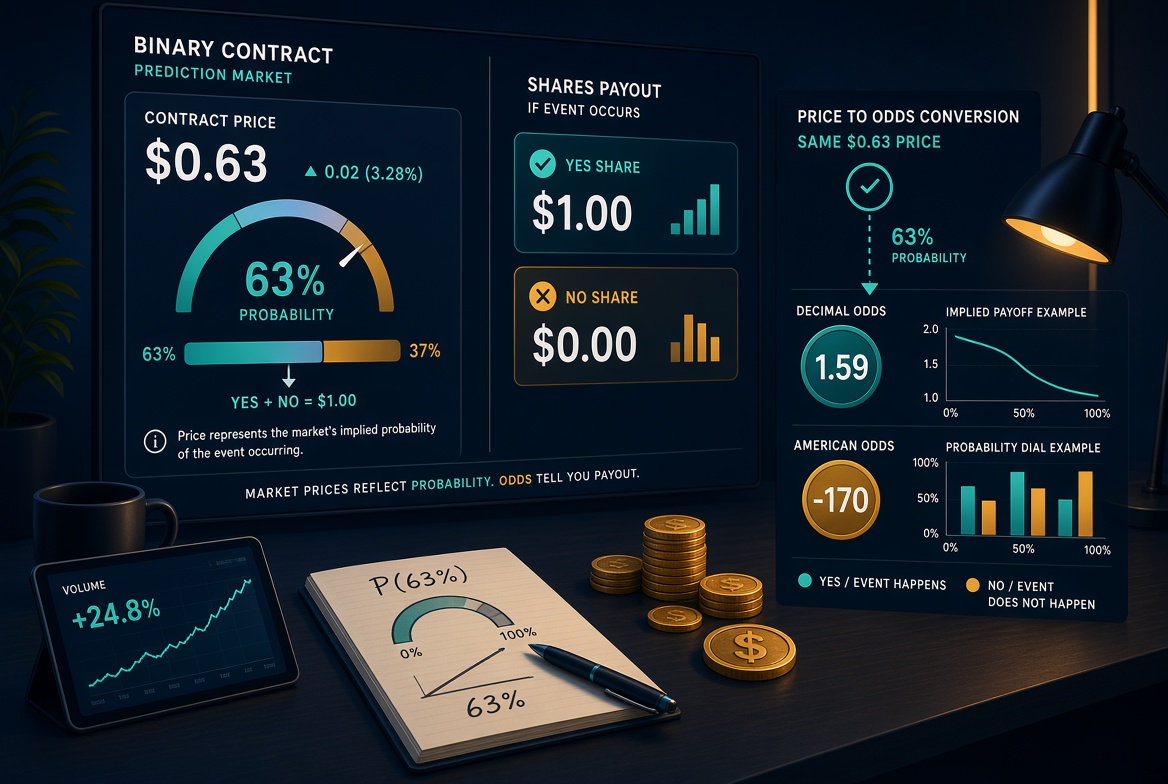
You can read here how implied probability in prediction markets equates to traditional betting odds.
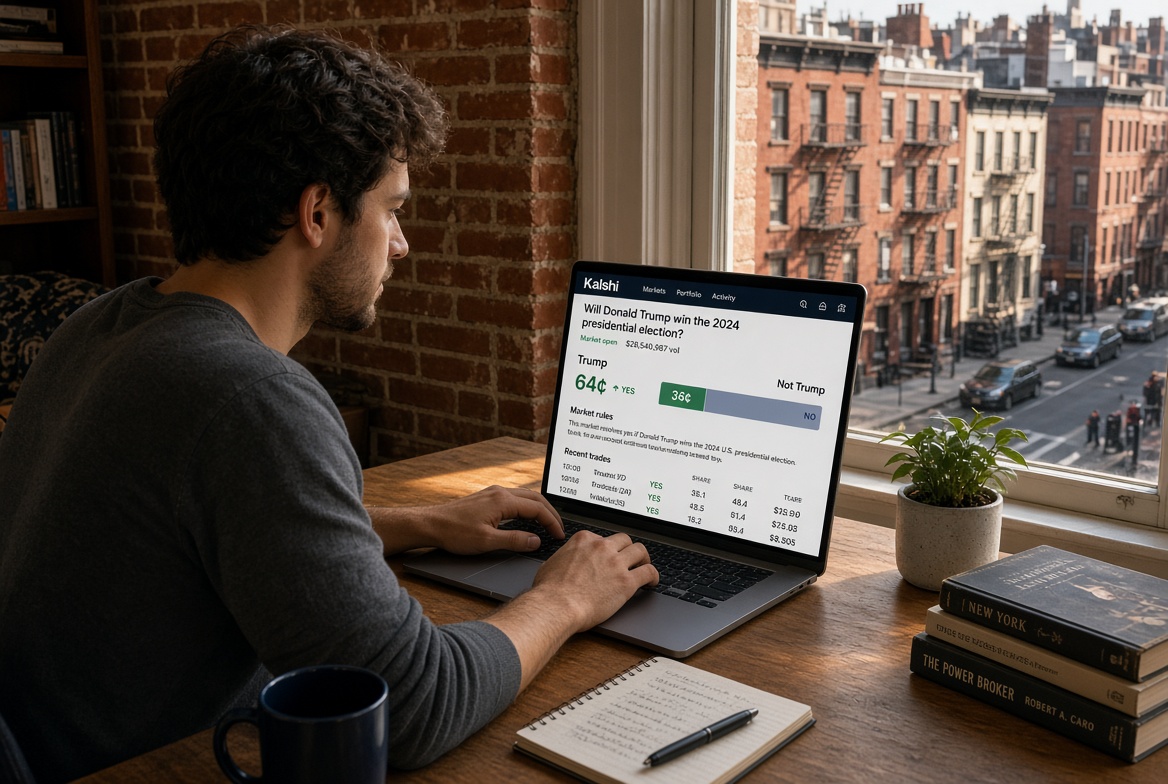
Prediction markets claim their event contracts qualify as swaps. Swaps are currently regulated under federal statute by the Commodity Futures Trading Commission (CFTC). Prediction markets insist that they answer to the CFTC rather than to the gaming regulators of individual states, who authorize and supervise sports gambling within their borders. The CFTC has issued guidance stating that it has regulatory control over prediction markets and works with platforms like Kalshi to operate within its federal guidelines.
A swap is a derivative contract in which two parties exchange cash flows or liabilities associated with two different financial instruments, usually over-the-counter (OTC). They are primarily used to manage risks—such as interest rate changes or currency fluctuations—or to lower borrowing costs by exchanging fixed-rate payments for floating-rate payments.
However, critics argue these prediction market event contracts mirror gambling because payouts hinge on uncertain future events. The key nuance lies in purpose: prediction markets aggregate information for hedging risks or forecasting, whereas conventional wagering prioritizes gaming and chance. Although both involve financial stakes, the former emphasizes market-driven pricing and transparency. Prediction markets argue their operations provide a valuable financial tool for all while sports betting is merely a vice, gambling, with no societal benefit.
Regulators evaluate whether prediction market contracts qualify as legitimate derivatives or fall into prohibited gaming categories. For example, binary options (Yes or No) on non-financial events such as elections, wars, or who will say what during The Oscars raise concerns about manipulation. Thus, prediction market platforms must demonstrate compliance with anti-fraud rules and surveillance requirements. The absence of a traditional house edge strengthens arguments for derivative status, yet sports-focused contracts blur lines dramatically.
A derivative is a financial contract whose value is derived from an underlying asset, such as stocks, bonds, commodities, currencies, or interest rates. Instead of owning the asset, traders use derivatives to speculate on future price movements, hedge against risk, or gain leverage. Common types include futures, options, and swaps.
Insider information adds another layer of legal complexity. Contracts tied to specific knowledge of an event, such as corporate announcements or political developments, invite enforcement actions. CFTC Director of Enforcement David Miller has emphasized that event contracts function as financial products and are subject to the fraud prohibitions under Rule 180.1. Consequently, exchanges now impose stricter monitoring to deter improper trading. Violations can lead to bans from prediction market platforms, fines, and potential criminal consequences.
Core Distinctions Between Event Contracts and Conventional Wagering
Aspect
Event Contracts in Prediction Markets
Traditional Gambling or Sports Betting
Structure
Peer-to-peer matching on regulated exchanges
House sets odds and acts as counterparty
Purpose
Information aggregation and risk hedging
Entertainment and chance-based wagering
Regulation
Federal derivatives oversight with surveillance
State-level gaming commissions and licensing
Risk Management
Positions can be offset before settlement
Real-time monitoring and audit trails are required
Manipulation Safeguards
Real-time monitoring and audit trails required
Variable depending on jurisdiction
This table highlights why classification matters so profoundly. Although differences appear clear on paper, real-world applications spark intense legal debate.
How Different Jurisdictions Approach Event Contract Oversight
Regulatory frameworks vary significantly across global markets, creating a patchwork of laws that affects accessibility and compliance. In systems such as the U.S., which currently emphasize federal derivatives authority, event contracts are treated as commodity instruments, thereby enabling broader international participation. However, jurisdictions that prioritize consumer protection through gambling statutes impose stricter licensing requirements or outright bans. Consequently, prediction market platform operators often have to geo-restrict users or seek specialized pre-approvals.
Switzerland, Spain, the Netherlands, Hong Kong, and Bulgaria are listed as countries that permit access to major prediction market platforms. Many other nations treat prediction market platforms as they do online betting, regulating access to and use of these platforms according to their own domestic regulations.
In the U.S., federal derivatives regulators at the CFTC maintain exclusive jurisdiction over registered exchanges, arguing that state-level interference disrupts national markets. Although this federalized regulatory position supports innovation, it conflicts with local gaming authorities, who view certain contracts as unlicensed betting.
In international contexts, European gambling authorities frequently classify these platforms as betting intermediaries that require dedicated licenses. Meanwhile, platforms operating without approval face domain blocks and fines from those countries.
In the United Kingdom, oversight falls under gambling frameworks rather than financial services unless contracts qualify as spread betting (i.e., the Lakers will beat the Knicks by 3 or more points). Prediction market operators must obtain approvals to serve local users legally.
Similarly, Australian regulators enforce restrictions on unlicensed derivatives, treating many event contracts as prohibited gambling activities. Although some territories, such as Gibraltar, have issued the first specialized licenses for betting intermediaries, broader European trends lean toward enforcement actions and geo-blocks.
Disputes Currently Reshaping Prediction Market Rules
Ongoing battles between federal and state authorities highlight the volatility surrounding the legality of prediction markets. The Commodity Futures Trading Commission has filed amicus briefs and lawsuits to defend its exclusive jurisdiction over event contracts traded on designated markets. CFTC Chairman Michael S. Selig stated in February 2026 that attempts to limit access ignore decades of precedent and destabilize markets. Consequently, the agency continues pursuing declaratory judgments against interfering jurisdictions.
Court rulings reveal deep divisions across federal circuits. In one circuit, judges affirmed preemption, allowing federally registered prediction market platforms like Kalshi to operate without state gambling enforcement. However, other decisions sided with local regulators, creating a circuit split likely to be ultimately taken up by the Supreme Court. While preliminary injunctions provide temporary relief, appeals prolong uncertainty.
Stanford Law professor and former SEC Commissioner Joseph Grundfest notes the major federal conflict:
“States like New Jersey and Washington contend that Kalshi’s sports-indexed markets are not legitimate contract markets of the sort that Congress intended to regulate under the Commodities Exchange Act (CEA). They urge that the CEA regulate financial and commercial contracts, contracts relating to interest rates, or currency prices, not traditional sports betting contracts that are “dolled up” to look like financial instruments. In response, the markets point to the CEA’s very broad definitional language and assert that sports contracts clearly fall within those definitions
There is also a constitutional dimension. The markets argue that the statute’s broad language supports field and conflict preemption. If that’s right, then Commodity Futures Trading Commission (CFTC) regulation preempts all state wagering regulation. The states counter with a version of the “major questions” doctrine, asserting that if Congress intended to preempt decades of state gambling regulation, it would have said so more clearly. The growing consensus expects a circuit split and that the matter will ultimately be resolved by the Supreme Court.”
An increasing number of Insider trading cases on prediction markets add urgency to legal resolution of jurisdiction. The CFTC issued advisories in February 2026 detailing enforcement actions against traders who used non-public information, including information about political candidates or company affiliates.
Kalshi has already internally penalized violators. Meanwhile, congressional proposals seek to ban sports-related contracts or impose new restrictions, reflecting bipartisan concern over blurring lines with traditional betting.
Platforms like Polymarket US operate under a U.S. CFTC designation, offering event contract services while maintaining compliance. Yet international versions face blocks in multiple regions due to gambling classifications. The global landscape remains fragmented, with ongoing disputes fueling calls for clearer international rulemaking.
Practical Implications for Traders Entering Prediction Markets
Traders passionate about these markets must learn current compliance rules. Don’t assume. They are ever-evolving, driven by both regulatory bodies and the platforms themselves.
Verifying platform registration with the federal derivatives authority, the CFTC, ensures access under current frameworks. However, age restrictions and know-your-customer (KYC) protocols apply universally. New participants in these markets should review the terms carefully before depositing funds. Ignorance of the rules is no excuse for potential penalties such as fines, suspensions, or even criminal proceedings in extreme cases.
For those exploring international options, geo-restrictions limit choices in certain regions. Transitioning between platforms demands awareness of local rules to avoid unintended violations. Thus, starting with established, regulated exchanges minimizes exposure while building experience. Kalshi and Polymarket are the two largest in North America and are fully compliant with CFTC regulations. However, current injunctions in several states are in effect regarding residents’ ability to access these prediction markets, particularly for sports and entertainment event wagering.
Why These Legal Debates Matter for the Future of Prediction Markets
Resolution of current legal (and social) disputes will determine whether event contracts flourish as financial innovations or face tighter constraints. Although federal preemption arguments are gaining traction in some courts, opposing plaintiffs are emphasizing state authority over federal regulation and are advancing well in numerous court cases. Supreme Court involvement appears probable in the near future to potentially unify standards across the U.S.
Platforms continue innovating amid uncertainty, launching new contract types while enhancing surveillance. Meanwhile, CFTC actions against insider cases demonstrate a commitment to market integrity.
Traders worldwide are watching these developments closely, recognizing the stakes for information markets. Although challenges persist, the surge in volumes signals enduring demand.
Frequently Asked Questions About Prediction Market Legality
Are prediction markets considered derivatives or gambling under current rules?
Federal derivatives regulators classify many event contracts as swaps or options subject to commodity laws and CFTC oversight. However, gambling authorities in various states disagree, treating these prediction market contracts as wagering activities requiring state licensing. The classification determines ultimate oversight and availability in various jurisdictions. The legal finality of this issue has yet to be determined.
What steps ensure legal participation in prediction markets?
Users should select prediction market platforms registered with federal derivatives authorities, the CFTC, and complete identity verification. Although age and location checks are in place, reviewing terms and monitoring updates help prevent compliance issues. There have been numerous cases of individuals not being paid out, being fined, suspended, or facing other penalties for ignoring the current prediction market rules. Read the guidelines before engaging!
How do ongoing court cases affect market access?
Disputes over preemption create temporary restrictions in a small number of U.S. states while allowing full operations across most of the country. Although split rulings among circuit courts create uncertainty about access and use, federal actions often preserve nationwide access under derivative frameworks. Platforms adapt quickly to rulings, but keep tracking announcements from the prediction markets themselves.
Do insider trading rules apply to prediction market trades?
Yes, prohibitions under derivatives regulations cover fraud and manipulation connected to event contracts. CFTC Director of Enforcement David Miller has clarified that these markets fall under such safeguards. Exchanges enforce surveillance to maintain fairness. People caught engaging in insider trading are subject to penalties and fines, suspensions from prediction markets, and potential civil or criminal legal consequences from federal authorities.
What changes might future regulations introduce?
Congressional bills and rulemaking processes could restrict certain contract types or enhance consumer protections. Although proposals target sports events specifically, Congress could easily expand the scope of its concerns. This is where politics and principles merge, and anything is possible. Prediction market users should track legal and legislative stories regarding prediction markets right here on PolyPunter!
Can international users access regulated prediction markets legally?
Availability depends on local gambling or financial regulations, with many countries imposing bans or licensing requirements. However, compliant prediction market platforms provide geo-appropriate options where permitted. Your ability to access various prediction markets from your country will be self-evident when you try to visit the site or app.
Why do prediction markets face more scrutiny now than in previous years?
To put it simply: they got big. Their rapid user adoption, growth in trading volume, and expansion into sports contracts intensified debates over classification as they began cutting more deeply into existing business interests. Although early academic-derived prediction markets operated quietly, mainstream adoption and the large dollar values triggered enforcement and legislative responses.
The PolyPunter staff works tirelessly to bring you the latest and most insightful news, information, and tips on the fast-growing economic, financial, and social phenomenon that is prediction markets.