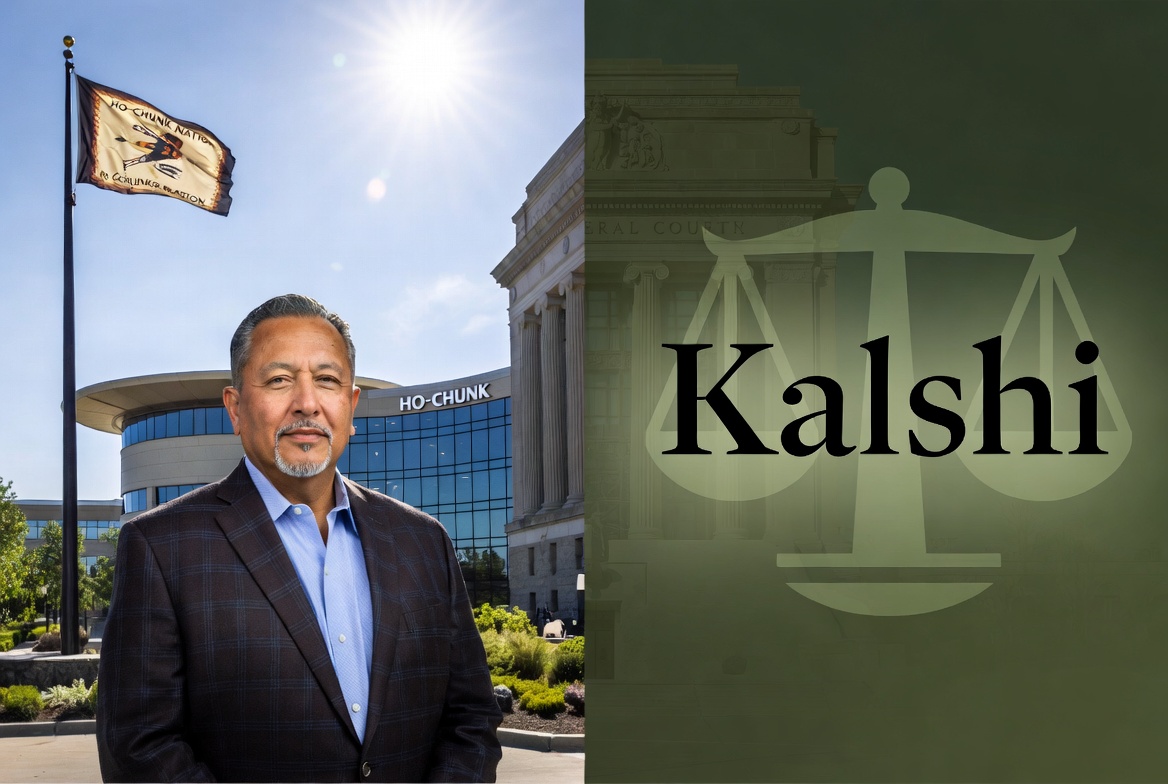
A federal court has determined that the Ho-Chunk Nation can move forward with its lawsuit against Kalshi under the Indian Gaming Regulatory Act (IGRA). The ruling explicitly states that the Ho-Chunk Nation tribe demonstrates a strong likelihood of success on the merits of its IGRA claim. This decision directly addresses Kalshi’s offering of sports-event contracts on Indian lands without the tribe’s consent, in violation of the Tribal-State gaming compact.
The Ho-Chunk Nation advanced its case seeking to halt the activity that circumvents established regulatory requirements. The court’s reasoning in its decision underscores the unauthorized nature of these operations as noted by the tribe.
Federal Court Ruling Validates Ho-Chunk Nation Position on IGRA Violation by Kalshi Sports Event Contracts
US District Judge William M. Conley issued an order permitting the Ho-Chunk Nation to pursue its core allegations: that Kalshi’s sports event contracts qualify as class III gaming under IGRA, yet operate outside the approved Tribal-State gaming compact framework. Therefore, Kalshi’s activities breach federal law by proceeding without tribal consent on Indian lands.
Court documents reveal the judge found the Ho-Chunk Nation likely to prevail on these IGRA claims. This assessment clears the path for further proceedings, including potential injunctive relief. Meanwhile, the decision marks an important affirmation of tribal rights in the Ho-Chunk Nation’s IGRA lawsuit against Kalshi’s sports events wagering.
This is not the only tribal-gaming legal proceeding against prediction markets offering sports-event contracts.
The ruling follows the tribe’s complaint detailing widespread access to the contracts through platforms that fail to restrict operations on trust lands. As a result, the Ho-Chunk Nation positions itself to secure remedies that restore regulatory control over sports event contracts on Indian lands.
Alleged Breach Centers on Unauthorized Sports Event Contracts Violating Tribal-State Gaming Compact
The Ho-Chunk Nation’s complaint emphasizes that IGRA classifies sports wagering as class III gaming, which requires a negotiated compact with the state and tribal approval. Kalshi’s sports event contract offerings bypass these mandates entirely. Therefore, the contracts interfere with the tribe’s exclusive authority to regulate such activities on Indian lands.
Compact provisions explicitly prohibit unauthorized gaming operations and require licensing, along with background checks, for any class III activities. Yet Kalshi continues to make sports-event contracts available to people on tribal lands without obtaining consent or entering into any agreement. This conduct, according to the filing, directly impairs tribal sovereignty and self-governance.
Revenue losses compound the harm because the tribe relies on compliant gaming enterprises to fund essential governmental functions. The complaint notes that such unauthorized competition diverts patronage and undermines programs serving tribal members and visitors alike.
While many of these lawsuits against prediction market sports wagering by states and tribal nations around the country are based on law and precedent and principle, never forget that in the end, we are talking about money, and who receives it.
Core Elements of the Ho-Chunk Nation IGRA Claim Against Kalshi
| Aspect | Legal Basis | Tribe’s Allegation |
|---|---|---|
| Classification of Activity | IGRA § 2703(8) and 25 C.F.R. § 502.4(c) | Sports event contracts constitute class III gaming requiring compact approval |
| Compact Violation | Tribal-State Gaming Compact Articles 3-5 and 7 | Operations occur on Indian lands without tribal consent or licensing |
| IGRA Preemption | 25 U.S.C. § 2710(d)(7)(A)(ii) | Unauthorized gaming triggers federal enforcement and injunctive relief |
| Impact on Sovereignty | IGRA § 2702 and trust responsibility | Activities impair tribal self-sufficiency and governmental services |
Ho-Chunk Nation President Stresses Critical Importance of IGRA Protections for Tribal Services
Ho-Chunk President Jon Greendeer describes the legal fight as a David-and-Goliath struggle that threatens the tribe’s social safety net. He points out that certain Kalshi event markets generate more revenue for the operator than the tribe earns in an entire year from its own enterprises. This disparity, he maintains, threatens the very foundation of tribal self-sufficiency established under IGRA.
Note: While many state gambling regulatory bodies are suing prediction markets over their sports-event contracts, the IGRA cases are federal under this Congressional Act.
Greendeer underscores how revenue from compliant gaming supports healthcare, housing, education, and other vital programs; one of the key predicates of the IGRA. The unauthorized sports event contracts on Indian lands erode these resources by drawing business away without contributing to tribal oversight or benefits. As a result, the Ho-Chunk Nation pursues the IGRA claim to safeguard programs that serve its members and surrounding communities.
Indian Gaming Community Rallies Behind Ho-Chunk Nation in Sports Event Contracts Dispute
Four tribal nation entities have filed similar lawsuits accusing Kalshi of violating federal law and state-tribal compacts by entering into unauthorized sports-event contracts. The Indian Gaming Association, along with the National Congress of American Indians and multiple regional gaming associations, has submitted amicus briefs (letters of support to the courts on behalf of one party) promoting the Ho-Chunk Nation’s position.
Collective action demonstrates unified resolve across Indian nations to defend hard-won gaming rights. The Indian Gaming Association has even established a defense fund to assist tribes facing comparable challenges. Consequently, the Ho-Chunk Nation’s IGRA lawsuit against Kalshi benefits from this widespread backing, which enhances its arguments before the court.
Tribal nations are not always in unity on issues. But this issue threatens all of their gaming revenues.
Supporting Organizations in Ho-Chunk Nation IGRA Action
| Organization | Role in Support |
|---|---|
| Indian Gaming Association | Filed amicus brief and created defense fund for tribal legal efforts |
| National Congress of American Indians | Joined amicus support emphasizing sovereignty protections |
| Regional Gaming Associations | Provided collective briefs highlighting compact violations |
| Additional Federally Recognized Tribes | 16 tribes submitted joint amicus materials in related motions |
Timeline of Developments in Ho-Chunk Nation IGRA Lawsuit Against Kalshi
Key Milestones in the Ho-Chunk Nation IGRA Lawsuit
| Date | Event |
|---|---|
| August 20, 2025 | Ho-Chunk Nation files complaint alleging IGRA and compact violations by sports event contracts |
| November 2025 | Federal court rules tribe can sue under IGRA and is likely to succeed on the merits |
| January 2026 | Multiple tribes and associations submit amicus briefs supporting preliminary injunction |
| May 12, 2026 | Federal court rules tribe can sue under IGRA and is likely to succeed on merits |
These milestones reveal the Ho-Chunk Nation’s dedication to enforcing its rights. Each step builds toward potential injunctive relief to prevent further unauthorized offerings of sports-event contracts on Indian lands.
Kalshi Responds to Federal Court Decision in Ongoing IGRA Dispute
Kalshi has argued in prior filings that its operations fall under separate federal regulatory oversight and are exempt from IGRA constraints. Court records show the company sought dismissal of the IGRA claims on those grounds. However, the judge rejected that position regarding the tribe’s ability to proceed and highlighted the likelihood of success for the Ho-Chunk Nation.
Kalshi maintains its contracts comply with applicable federal standards, yet the ruling shifts the focus back to the more specific issue of compact requirements for activities affecting Indian lands. As proceedings continue, both sides prepare for additional hearings that could result in permanent remedies. This back-and-forth underscores the complex intersection of federal statutes governing tribal gaming.
To consider: online digital gaming creates a range of territorial issues not previously contested under brick-and-mortar casino days. This is a matter of digital access and possibly digital fencing around people residing on tribal lands who access a server that may be thousands of miles away but is considered to be taking place within the tribal lands.
Potential Injunction and Damages Sought in Ho-Chunk Nation IGRA Claim
The Ho-Chunk Nation tribe requests preliminary and permanent injunctions to prevent Kalshi from offering sports-event contracts on or near Indian lands. Declaratory relief would confirm that the contracts violate IGRA and the Tribal-State gaming compact. Additionally, the complaint seeks monetary damages, including disgorgement of profits and recovery under related statutes, to address the harm already inflicted.
The Ho-Chunk Nation emphasizes that these measures protect not only revenue streams but also the integrity of IGRA’s framework for class III gaming. Therefore, the federal court’s finding of likely success positions the tribe favorably to obtain the requested relief.
Broader implications extend to other tribes monitoring similar challenges. The decision reinforces IGRA’s role in safeguarding Indian lands from unauthorized gaming while encouraging operators to respect compact boundaries.
Gaming law specialist Daniel Wallach highlighted the development in a detailed post that underscores the significance of tribal compacts.
Throughout the litigation, the tribe has documented how unregulated access erodes its exclusive rights and diverts resources intended for community benefit. The court’s acknowledgment of these arguments signals respect for the trust relationship between the federal government and tribes.
References
- Bloomberg – Kalshi Judge Predicts Tribe Will Win Block on Sports Contracts (May 12, 2026)
- ICT News – Prediction Markets Challenge Tribal Casinos’ Hard-Won Place in US Gambling
- Ho-Chunk Nation Complaint PDF (August 20, 2025)
- CourtListener Docket – Ho-Chunk Nation v. Kalshi Inc.
- FX News Group – Indian Tribe Ho-Chunk Nation Sues Robinhood, Kalshi
- X Post by Daniel Wallach on Federal Court Ruling
- Justia Docket – Ho-Chunk Nation v. Kalshi Inc.
- Law.com Radar – Ho-Chunk Nation v. Kalshi Inc.