
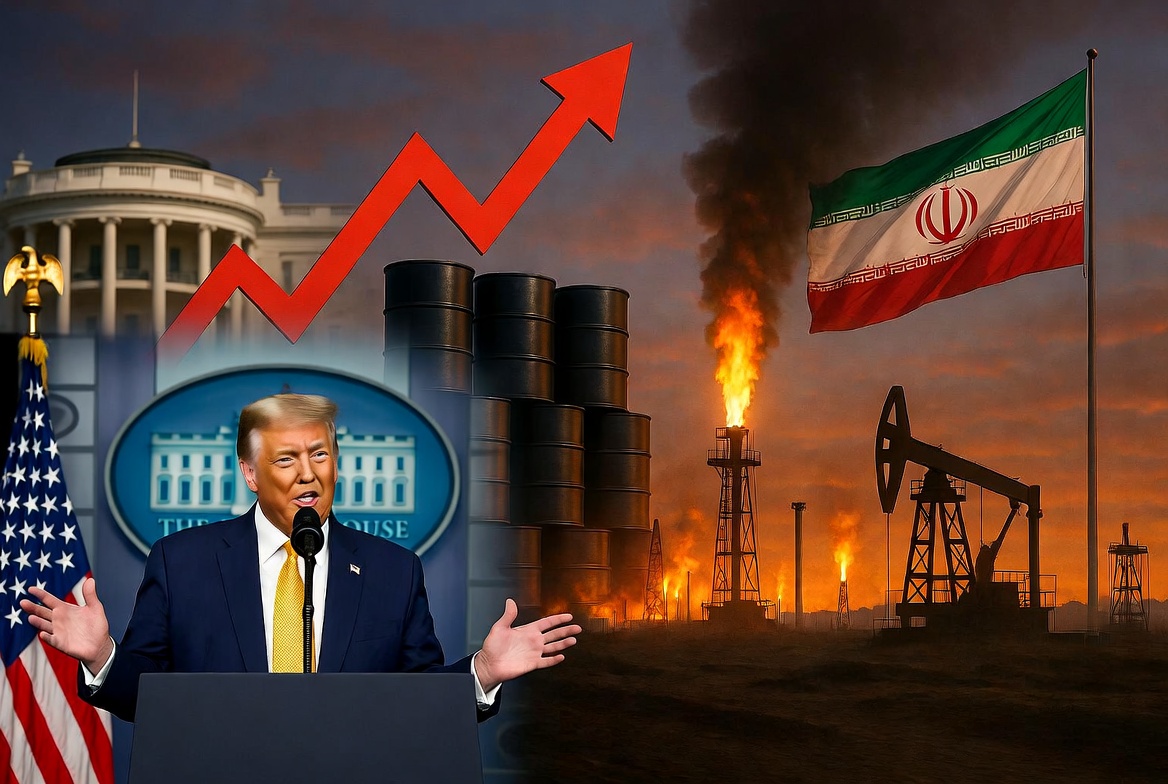
Trump Declares Iran Ceasefire on Massive Life Support After Rejecting Latest Proposal
President Donald Trump sharply rejected Iran’s latest counteroffer to a US peace proposal on May 10, 2026, labeling the response “TOTALLY UNACCEPTABLE!” in a Truth Social post. This blunt assessment placed the already incredibly fragile, month-old ceasefire on what he called “massive life support.” Traders on the prediction platforms reacted in short order, repricing contracts tied to any lasting US-Iran agreement. Oil prices surged as markets absorbed the heightened tensions and potential supply disruptions.
We’ve seen this same playbook multiple times now during the 2026 Iran-U.S. conflict.
Trump made his Truth Social remarks after Iran sent its response through Pakistani intermediaries, a step that had briefly raised hopes for progress in indirect talks. Trump noted during Oval Office comments that he “didn’t even finish reading it,” according to BBC reporting. The swift dismissal narrowed the diplomatic path and triggered immediate volatility across forecasting venues and commodity markets alike. Military action is afoot once again.
Polymarket Odds for US-Iran Permanent Peace Deal Drop on Near-Term Contracts While Year-End Probabilities Hold Steady
Prediction market participants repriced US-Iran permanent peace deal contracts rapidly following the president’s comments. Overall trading volume across related markets on the Polymarket platform surpassed $106 million, with sharp movements in short-dated resolutions. The implied probability of a permanent deal by December 31, 2026, settled near 70 percent, indicating traders still expect eventual progress despite current setbacks.
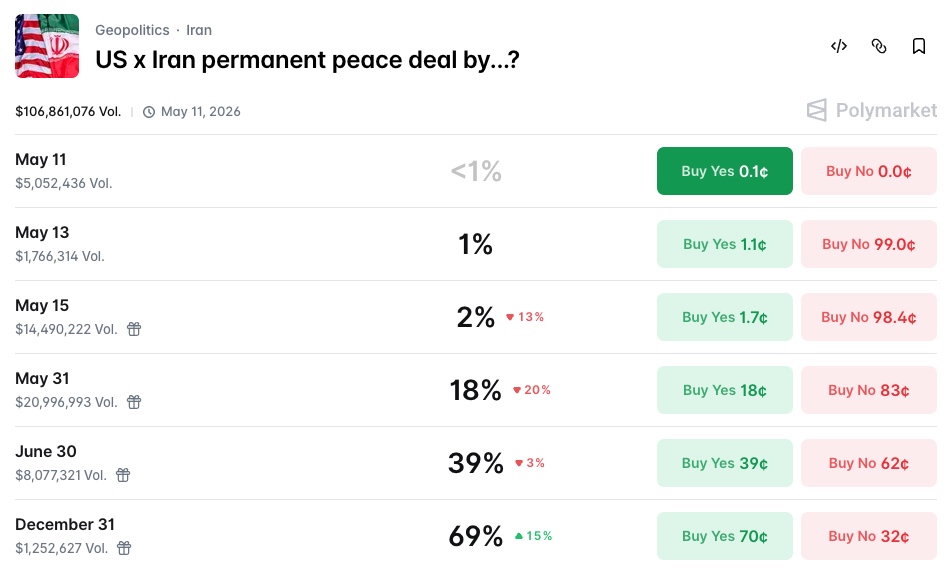
Near-term odds fell noticeably. Too low to bother becoming involved at this time. (Recall, PolyPunter recommends never getting into markets on the edges.)
Contracts for resolution by May 31, 2026, dropped to 20 percent, while June 30 probabilities held at 41 percent. Diplomatic meeting odds by June 30 climbed to 63 percent, indicating some market participants expect continued backchannel activity toward a peace deal.
These shifts demonstrate how high-profile statements drive fast adjustments in crowd-sourced forecasts.
Updated Polymarket Probabilities for US-Iran Permanent Peace Deal by Specific Dates
| Resolution Date | Yes Share Probability | Contract Volume |
|---|---|---|
| May 11, 2026 | <1% | $4,801,782 |
| May 13, 2026 | 2% | $1,754,035 |
| May 15, 2026 | 2% | $14,362,734 |
| May 31, 2026 | 20% | $20,928,740 |
| June 30, 2026 | 41% | $8,044,147 |
| December 31, 2026 | 70% | $1,243,696 |
Heavy trading volume flowed into these contracts as events unfolded, with participants buying No shares on early dates and accumulating Yes positions for longer horizons. The data reflects cautious optimism balanced against immediate, major, and ongoing diplomatic hurdles, as covered in the NBC News analysis.
Oil Prices Jump 4 Percent After Trump’s Iran Statement
Brent crude futures rose approximately 4% to around $105.50 per barrel before settling near $103.50 following the May 10 statement. West Texas Intermediate contracts gained over 2% in early trading on May 11. These increases reversed recent declines tied to earlier ceasefire optimism and closely aligned with activity on prediction platforms that track Middle East stability.
Iran reiterated its resolve to protect national interests, adding pressure on shipping routes and global supply expectations. Energy traders are monitoring both official communications and real-time shifts in probability to gauge future volatility, as detailed in CBS News live updates. The correlation between diplomatic updates and commodity pricing grew even tighter as a result.
Oil Price Reactions Following Key US-Iran Ceasefire and Peace Proposal Events
| Trigger Event | Brent Crude Movement | Approximate Settlement |
|---|---|---|
| Trump rejects latest Iran offer (May 10, 2026) | +4% | $103.50 |
| Initial ceasefire announcement (prior week) | -15% | $94.41 |
| Proposal transmission via mediators | Initial dip then reversal | $95 – $105 range |
These movements illustrate how prediction market repricing and traditional commodity trading often move in tandem during periods of elevated geopolitical risk. A sustained price increase on crude oil and related downstream products could affect broader economic conditions if the current impasse continues.
Adjacent Prediction Markets on Diplomatic Meetings and Nuclear Issues Show Parallel Shifts
Trading activity extended beyond core peace deal contracts to markets related to potential US-Iran diplomatic meetings, enriched uranium stockpile agreements, and longer-term stability outcomes. The probability of a diplomatic meeting by June 30 reached 63%, while the chance of Iran surrendering enriched uranium by year-end stood at 46%. Nuclear-related deals before 2027 maintained levels near 54%.
Iran invasion-related contracts before 2027 remained around 27%, reflecting measured risk assessments. Trump’s planned discussions in Beijing later this week introduced additional variables that some contracts began pricing in with lower near-term odds.
High Trading Volumes Highlight Intense Interest in US-Iran Ceasefire and Permanent Peace Deal Resolution Timelines
Related ceasefire markets recorded volumes exceeding $280 million, demonstrating strong engagement from participants seeking to profit from the uncertainty. Trump described the ceasefire as “unbelievably weak” in comments reported by The Hill, intensifying focus on longer resolution windows on the prediction markets. Iran’s foreign ministry responded by calling its proposals responsible, maintaining the public exchange that fuels ongoing market activity.
Why Traders and Stakeholders Monitor US-Iran Prediction Market Odds So Closely in Real Time
Substantial weekly activity across geopolitical contracts underscores the growing relevance of these prediction market forecasting tools during periods of tension.
Prediction market odds for a US-Iran permanent peace deal serve as valuable references for energy traders, policymakers, and international observers seeking data-driven snapshots of probable outcomes. With the ceasefire situation remaining fluid, new information will continue to influence probabilities and trading behavior in the days ahead, especially following the oil market reactions. See Yahoo Finance reporting for more on this topic.
- Trump Truth Social post on Iran response
- NBC News coverage of Iran-US peace talks
- BBC report on Trump’s Iran ceasefire comments
- Polymarket US-Iran permanent peace deal market page
- CBS News live updates on oil prices and Iran developments
- The Hill article on Trump’s ceasefire statement
- Al Jazeera on Trump’s Iran response
- Yahoo Finance on oil price reaction
- Polymarket Intel post on Iran discussions