

UAE defense officials reported multiple Iranian missile and drone attacks at their ports. Additional reports have come in regarding attacks on cargo ships in the Straits of Hormuz. These incidents triggered immediate reactions across prediction markets, where traders slashed probabilities for near-term Strait of Hormuz reopening. Volumes surged as participants repriced the risks tied to ongoing maritime disruptions and energy security threats.
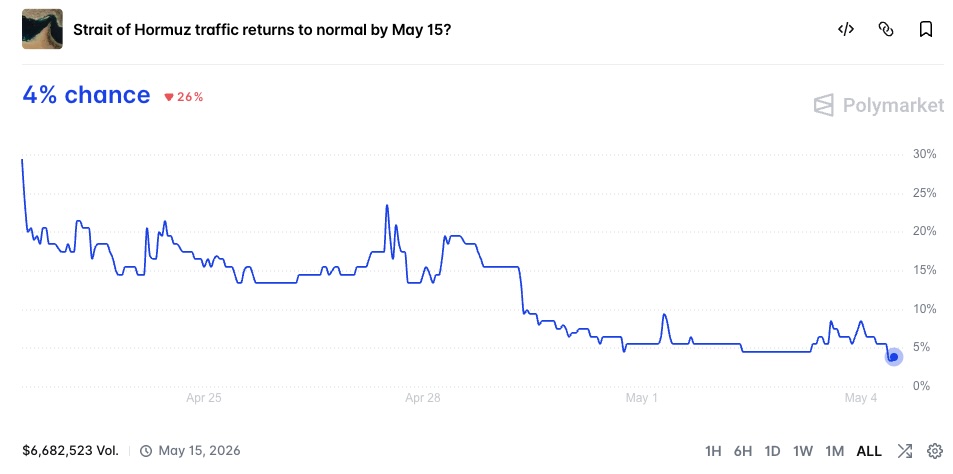
The latest strikes on ADNOC-linked vessels and infrastructure exposed fragile truce conditions. Bettors responded by selling yes shares on short-term normalization contracts. This shift highlights how prediction market odds on Strait of Hormuz traffic reflect real-time geopolitical developments with remarkable speed.
UAE Confirms Iranian Missile and Drone Attacks Post-Ceasefire
UAE Ministry statements detailed military strikes on May 4, 2026, including a drone hit on a tanker near the Strait of Hormuz. Officials condemned the violations and affirmed their right to defensive measures while documenting damage to oil facilities.
These events occurred despite explicit demands for unrestricted navigation. Cumulative intercepts since escalation reached hundreds of projectiles. Defense updates continue to influence trading decisions because each report adds evidence of persistent tensions.
This footage shows the scale of intercepts and official responses to the post-ceasefire Iranian actions.
How UAE-Iranian Attacks Shift Strait of Hormuz Prediction Market Odds
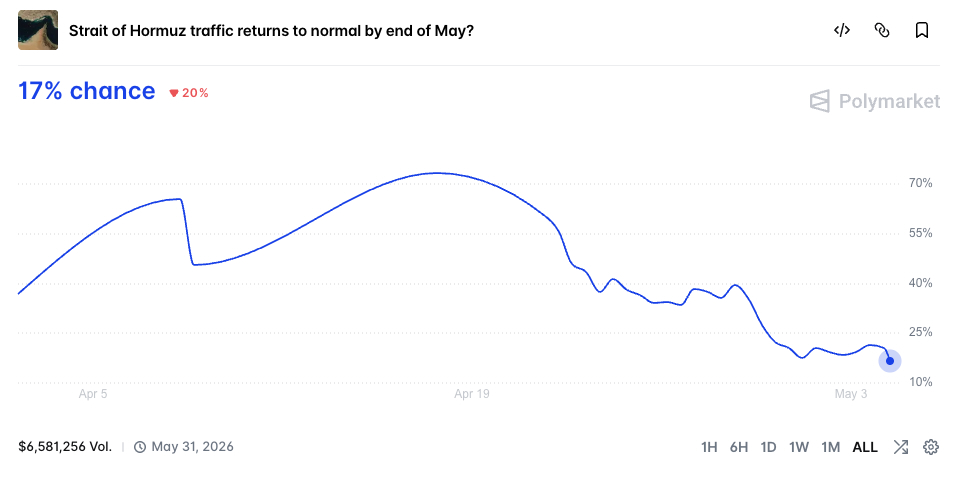
Polymarket traders drove the probability that Strait of Hormuz traffic would return to normal by May 15 down to 6 percent. Trading volume on this contract surpassed 6.5 million dollars as participants aggressively repriced timelines. The end-of-May contract sits near 19-21 percent yes amid fresh reports of vessel attacks.
June normalization odds hover around 40-43 percent with substantial volume. Bettors cite sustained low transits—under 10 percent of historical averages—and elevated insurance costs as key factors. Each UAE update prompts rapid position adjustments across related contracts.
Latest Strait of Hormuz Prediction Market Odds and Volumes
| Reopening Timeline | Yes Probability | Trading Volume | Platform |
|---|---|---|---|
| By May 15 2026 | 6% | $6,569,599 | Polymarket |
| By End of May 2026 | 19-21% | $6,477,453 | Polymarket |
| By End of June 2026 | 40-43% | $1,966,284 | Polymarket |
Spillover Risks and Trader Reactions to Post-Ceasefire Iranian Strikes
Ongoing attacks amplify concerns about 20 percent of the global oil trade passing through the strait. Prediction market participants incorporate vessel-tracking data and ministry statements to adjust positions within hours. This activity creates tight feedback between events and contract prices.
High-volume accounts sold near-term yes contracts after the May 4 incidents. Sentiment indicators reveal growing conviction that full recovery demands months of clearance operations. Traders monitor every diplomatic signal because breakthroughs could dramatically swing the odds.
Analysts break down how UAE-reported attacks intersect with current prediction market movements on Hormuz reopening.
Diplomatic Challenges Fuel Uncertainty in Hormuz Prediction Markets
UAE officials demand full compliance and reparations before supporting broader de-escalation. Stalled indirect talks keep the prospects for a permanent peace deal low. Prediction markets aggregate these hurdles into extended timeline expectations.
Project Freedom escort initiatives face resistance that prolongs blockades. Bettors weigh mine risks and insurance spikes against slim chances of rapid normalization. The dynamic keeps volumes elevated across energy-related contracts.
Implications of Iranian Attacks for Global Shipping and Energy Markets
Shipping operators reroute vessels and absorb higher war-risk premiums in response to repeated incidents. Prediction markets translate these costs into binary probabilities that influence broader sentiment. Traders anticipate prolonged volatility until daily transits approach the 60-vessel weekly average threshold.
Energy prices swing in tandem with each confirmed strike report from sources such as Xinhua. The crowd-sourced nature of these platforms delivers actionable signals on supply chain recovery. Continued UAE vigilance ensures fresh developments receive instant market attention.
Why Prediction Markets React So Strongly to UAE Reports on Iranian Attacks
Thousands of informed participants are tracking defense ministry statements and shipping data in real time. This collective intelligence produces precise repricing when new attacks surface despite ceasefire terms, as detailed in recent market analyses. The mechanism turns geopolitical noise into clear probability signals.
Volumes spike because both retail and professional traders quickly reposition capital. The result offers transparent insights unavailable through traditional analysis alone. As tensions persist, Strait of Hormuz prediction market odds remain a focal point for energy watchers worldwide.
References
- UAE reports missile, drone attacks from Iran after ceasefire – Anadolu Agency
- Strait of Hormuz traffic returns to normal by May 15? – Polymarket
- Strait of Hormuz traffic returns to normal by the end of May? – Polymarket
- Strait of Hormuz traffic returns to normal by the end of June? – Polymarket
- 2026 Iranian strikes on the United Arab Emirates – Wikipedia
- UAE says targeted with 17 Iranian missiles, 35 drones – Al Arabiya
- UAE intercepts missiles, drones despite ceasefire – Xinhua
- Odds of Strait of Hormuz opening plunge on prediction markets – MSN