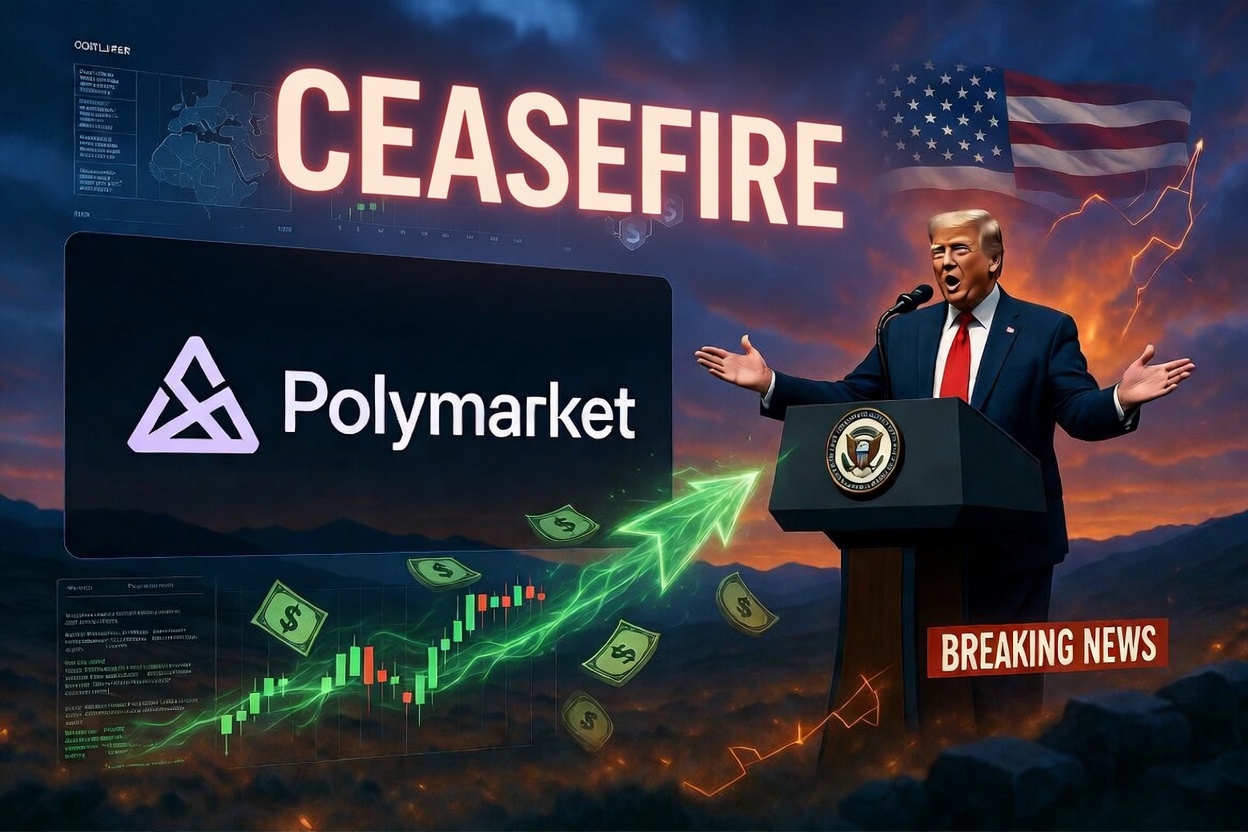
Newly created accounts placed massive Yes bets on the US-Iran ceasefire hours before President Trump’s announcement, turning modest stakes into hundreds of thousands of dollars in profits. Blockchain records reveal the trades hit the platform when public signals pointed to continued escalation rather than any deal. These well-timed wagers now fuel intense scrutiny over fairness in high-stakes event contracts.
The timing raises serious questions about information flow. At least 50 wallets executed substantial Yes positions on the April 7 ceasefire resolution. One wallet alone converted roughly $72,000 at an average price of 8.8 cents into a $200,000 payout once the market settled. Traders who monitored the order book watched probabilities surge in real time as the bets landed.
Suspicion spreads quickly across the community. Blockchain analytics firms track every transaction on the public ledger, exposing patterns that ordinary participants cannot ignore. The profits arrive just as the fragile two-week truce takes effect, leaving many to wonder who gained the edge.
Blockchain Evidence Points to Coordinated, Well-Timed Bets
Public data from Dune Analytics shows that the wallets were activated solely for this market and had no prior activity. Three newly funded accounts stand out in particular. They collectively secured $484,575 by purchasing Yes shares at low probabilities ranging from 2.9 percent to 10.3 percent, according to Politico reporting.
Lookonchain flagged the activity within hours of Trump’s Truth Social post. One wallet entered at 1:59 p.m. UTC on Tuesday, a mere eight and a half hours before the announcement. The other two placed initial bets earlier that day and the night before, locking in positions while most market participants priced in continued conflict.
Bubblemaps identified an overlapping cluster of accounts with a history of accurate geopolitical calls. These wallets netted an additional $611,000 on the ceasefire alone after correctly predicting earlier military moves. The shared patterns add another layer of intrigue to the on-chain trail.
Key Profitable Wallets in the US-Iran Ceasefire Bets
| Wallet Identifier | Entry Time (UTC) | Bet Amount | Average Price | Realized Profit |
|---|---|---|---|---|
| Wallet created Tuesday 10 a.m. ET | ~10:00 a.m. | $72,000 | 8.8¢ | $200,000+ |
| Lookonchain Wallet 1 | 1:59 p.m. | Undisclosed | 2.9%–10.3% | $200,525 |
| Lookonchain Wallet 2 | 10:01 a.m. | Undisclosed | 2.9%–10.3% | $158,600 |
| Lookonchain Wallet 3 | Previous evening | Undisclosed | 2.9%–10.3% | $125,450 |
| Bubblemaps cluster accounts | Recent weeks | Multiple positions | Varies | $611,000 (combined) |
Total volume on the ceasefire contract exceeded $170 million, making it one of the largest geopolitical wagers recorded, as detailed in Bloomberg coverage. Profits continue to flow as positions resolve, amplifying calls for immediate platform review.
On-Chain Researchers Uncover Patterns of Suspicious Activity
Bubblemaps traces connected wallets that change usernames yet share deposit paths. These accounts correctly called the timing of prior strikes before pivoting to the ceasefire outcome. Their success rate across military-related contracts exceeds random chance by wide margins.
Lookonchain posts detailed transaction hashes that anyone can verify on the blockchain. The firm highlights that the wallets were funded and traded in isolation, then ceased activity after settlement. Such behavior matches classic signals of non-public information access.
Community sleuths on X amplify the findings in real time. Senator Richard Blumenthal sent a letter to Polymarket CEO Shayne Coplan demanding that the platform explain its failure to block insider activity tied to national security events. Tyler McBrien shared the letter details on X.
Congressional Scrutiny Intensifies Over Prediction Market Integrity
Senator Blumenthal pressed for full disclosure on monitoring tools and enforcement policies. His letter cites the Iran ceasefire talks as the latest example of potential leaks compromising market fairness. Bipartisan lawmakers echo the concern and push legislation to expand the definition of insider trading.
Polymarket previously updated its rules to prohibit trades based on stolen confidential information. Enforcement remains reactive, however, relying on post-event blockchain reviews rather than proactive blocks. The platform reserves the right to ban wallets, yet the current wave of profits tests that commitment.
Traders voice frustration across forums as they witness rapid price swings driven by the suspicious volume. Some liquidate positions early while others hold, hoping the resolution stands. The episode exposes vulnerabilities that could erode trust if left unaddressed.
Video Breakdowns Highlight the Scale of the Scandal
France 24 examines the broader pattern of accurate Iran-related wagers and questions whether political connections enable the wins. The report details how accounts predicted strike timing with uncanny precision before shifting to bets on a ceasefire.
Another analysis explores possible official involvement in market moves tied to developments in the war. Viewers can see how oil bets and ceasefire contracts moved in lockstep with announcements.
Platform Volume Surges While Integrity Questions Mount
The ceasefire market alone drew more than $170 million in open interest before resolution. Odds shifted dramatically in the final hours as the cluster of new wallets piled in. Participants who entered early at depressed prices celebrated windfalls that dwarf typical retail gains.
Polymarket continues to process settlements while fielding inquiries from media and regulators. Company statements emphasize commitment to fair play, yet the public ledger tells a story of concentrated advantage. The difficulty of proving intent without direct evidence of information sources adds complexity to the debate.
Broader discussions turn to whether current definitions suffice for event contracts involving sensitive geopolitical developments. Blockchain transparency offers one safeguard, but it also spotlights the gaps that sophisticated actors exploit.
Community Reactions Reveal Deep Divisions
Traders split between admiration for the precision and outrage over perceived unfairness. Some celebrate the profits as validation of superior analysis, while others demand account freezes pending review. The debate rages in comment sections and dedicated tracking accounts.
Euronews summarizes the rapid sequence of events that left many questioning the system’s design. The outlet notes how new accounts appeared precisely when Trump hinted at winding down operations, capitalizing on the narrow window. Euronews provides full details on the massive wins.
Decrypt details the Bubblemaps findings on the $600,000-plus cluster and its prior winning streak on Iran strikes. The article underscores how the same group turned military timing bets into seven-figure hauls before the ceasefire play. Decrypt breaks down the Bubblemaps cluster analysis.
Future of Event Contracts Hangs in the Balance
Regulators eye the episode as a test case for expanded oversight. Calls grow louder for real-time monitoring partnerships with analytics providers. Platforms must balance innovation with safeguards that preserve the information-aggregation value these markets provide.
Profits from the ceasefire bets continue settling as the truce holds for now. This episode injects fresh urgency into ongoing reforms at both Polymarket and rival venues. Participants watch closely to see whether meaningful changes follow the latest scandal.
The stakes extend beyond individual wallets. Fair markets deliver sharper collective foresight on global events. When suspicion clouds the process, confidence in the signals these contracts generate begins to fade.
Blockchain researchers keep publishing fresh transaction graphs that map the flow of funds. Their work keeps pressure on platforms to act decisively. The coming days will determine whether the industry rises to meet the challenge or repeats familiar cycles of reaction and regret.
References
- Politico: Newly created Polymarket accounts bet big on US-Iran ceasefire
- Bloomberg: Polymarket’s Iran bets draw fresh disputes and insider scrutiny
- Euronews: Newly made Polymarket accounts won massively on US-Iran ceasefire bets
- Decrypt: Potential insiders made $600K predicting US/Iran ceasefire on Polymarket
- X post by Tyler McBrien on Senator Blumenthal’s letter