While we most often discuss the major volume prediction markets, with volumes in the tens of billions per month, dominating the sector, the future also necessarily entails the rise of niche or subject-matter-specific prediction markets. These upstarts will attempt to attract traders with their hyper-specificity compared with broader prediction markets, where their subject areas may be well down the list of interests or, in some cases, be excluded altogether due to concerns about ethical appropriateness.
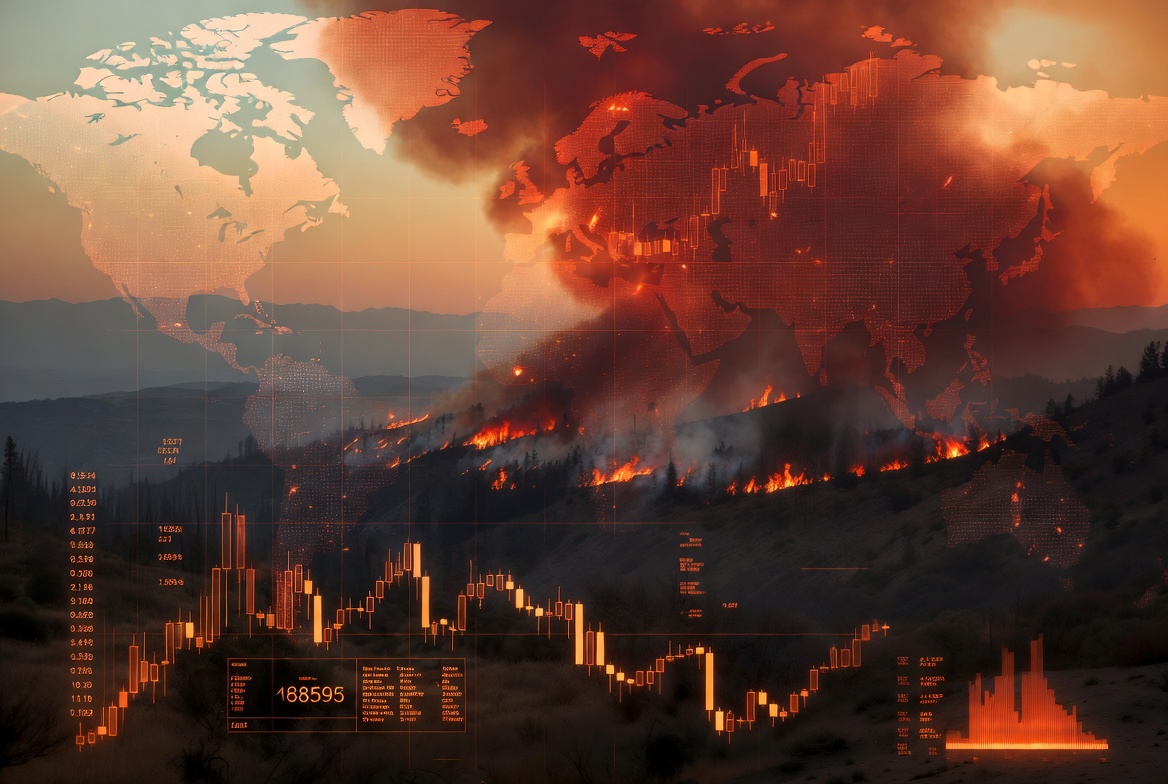
As wildfire activity has intensified across domestic landscapes, Wyldfyre launches with a focused approach to pricing regional fire outcomes. Traders can access paper trading immediately, with real-money features coming soon. This platform draws subject-area interest by channeling collective input toward dynamic assessments of wildfire probabilities at county and city scales. Developers frame the system as surfacing insights that complement traditional wildfire monitoring tools.
Users can navigate an interactive map to engage with targeted contracts. Settlement occurs based on confirmed burned acreage within defined zones, using satellite and perimeter data. Early simulation activity lets traders experiment before full capabilities become live.
Operational Details and Data Foundations
Traders buy contracts tied to whether fires reach specific boundaries or hit acreage thresholds. Values move between near zero and one dollar as sentiment evolves, creating real-time probability signals. The platform integrates NASA FIRMS hotspot detections refreshed multiple times daily and NIFC live perimeters for objective settlements.
Data Sources Supporting Precise Risk Assessments
| Data Source | Primary Contribution | Update Characteristics |
|---|---|---|
| NASA FIRMS | Hotspot detection from satellite imagery | Multiple refreshes daily |
| National Interagency Fire Center (NIFC) | Live fire perimeter mapping | Real-time boundary adjustments |
| Crowd-sourced trades | Collective probability adjustments | Continuous as volume occurs |
Platform statements highlight how aggregated positions could reveal patterns overlooked in complex terrain. Economics professor Koleman Strumpf at Wake Forest University noted that markets might encourage preventive actions, such as brush clearing, when traders price in lower risks. Meanwhile, economist Robin Hanson at George Mason University sees value in informal risk hedging for those facing exposure where traditional coverage remains limited.
Repeated trading cycles could iteratively sharpen collective understanding of wildfire danger levels. Obviously, this will take some time to reach practical accuracy, but it’s the first step on the path toward that destination.
Ethical Questions and Practical Concerns
Naturally, critics quickly raised moral issues around financializing events that bring widespread loss. Applied climate scientist Kaitlyn Trudeau at Climate Central called the concept gross given the human toll, referencing near-evacuations affecting people she knows.
Fire survivors expressed even stronger views. Sylvie Andrews, who lost her home in a major fire, described the activity as morally reprehensible and hoped any profits would support victims rather than private gain. Susan Sherman, another survivor, labeled it crass and heartless. Ann Skeet, senior director of leadership ethics at the Markkula Center for Applied Ethics at Santa Clara University, warned about bad actors and how such trading diminishes the perceived value of human life.
We’ve previously discussed the ethics surrounding prediction market contracts around human suffering and natural and unnatural disasters:
Agencies maintain clear separation. A U.S. Forest Service spokesperson stated that tying financial rewards to wildfire outcomes risks misuse, including arson, and conflicts with their mission. CAL FIRE relies on physics-based modeling instead of market signals. These perspectives underscore tensions between innovation and long-established operational methods and priorities. Innovations, particularly in life-and-death areas, are always subject to intense scrutiny and pushback, as makes natural sense.
Transparency, Status, and Future Path
Wyldfyre uses the tagline “You can’t predict fire. But you can trade on it.” Perhaps not the most consoling of taglines, but they did not ask for our opinion.
The site features an explorable map for regional pricing and currently offers live paper trading. Ownership details remain limited publicly, with no prominent contact information listed. The platform briefly went offline after initial reporting but returned as of early July 2026.
As real-money access nears, volume patterns will test whether specialized disaster markets can maintain engagement. Ongoing discussions around ethics and regulation will shape how this approach evolves alongside broader preparedness efforts.
References
1. Wyldfyre official site
2. High Country News article on wildfire betting concerns
3. Marketplace.org coverage of ethical questions around wildfire markets
4. Slate article on gamblers and wildfires
5. Prediction News on Wyldfyre launch
6. X post highlighting Wyldfyre launch