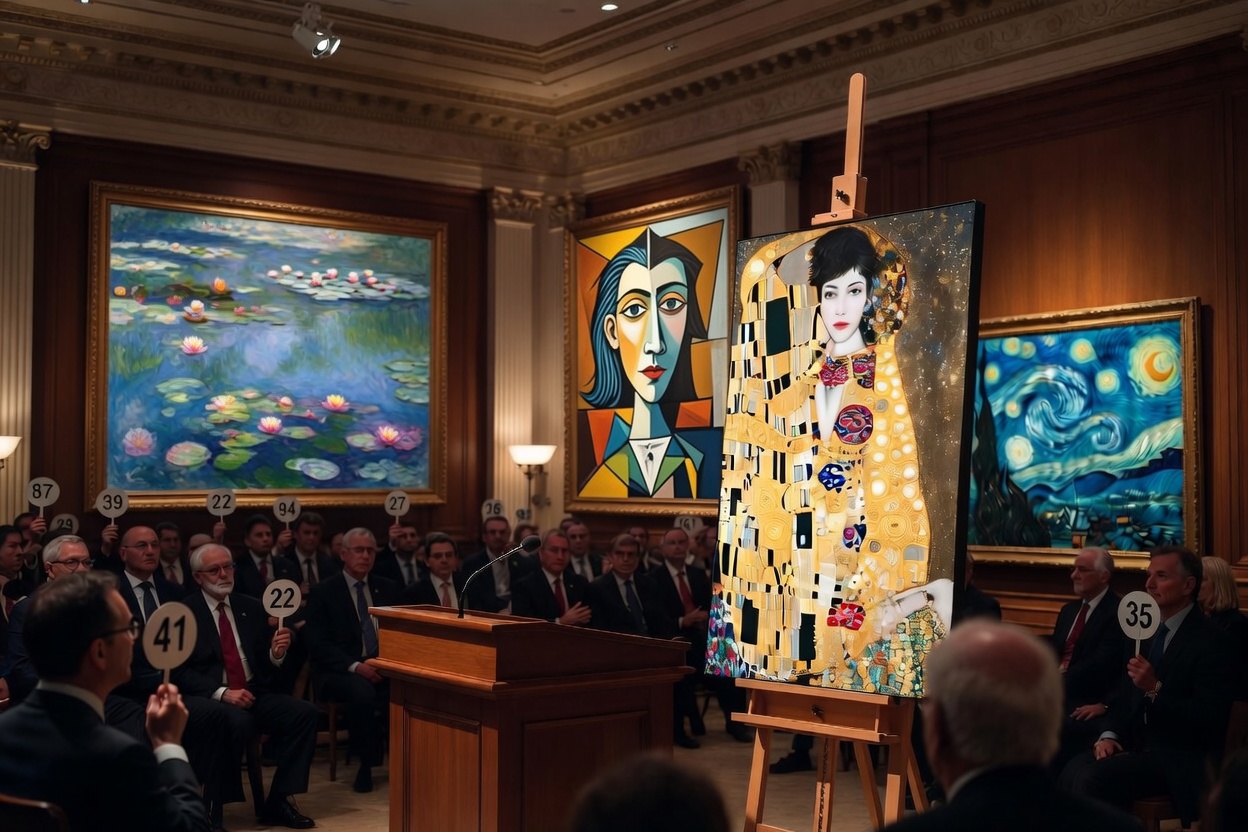
Kalshi has rolled out Yes-No contracts on art auction outcomes, sparking buzz across the fine art sector as traders bet on whether iconic pieces by masters like Vincent van Gogh and Andy Warhol will shatter existing records this season. Yeah, it’s not for everybody, but for people who love this stuff, they are pretty geeked.
Announced on May 26, 2026, via Kalshi’s official post, the expansion introduces binary event contracts tied directly to hammer prices and total realized values at leading auction houses. This may seem out of left field to those not paying attention to Kalshi business development moves, but understand the art world and big finance have large demographic crossovers.
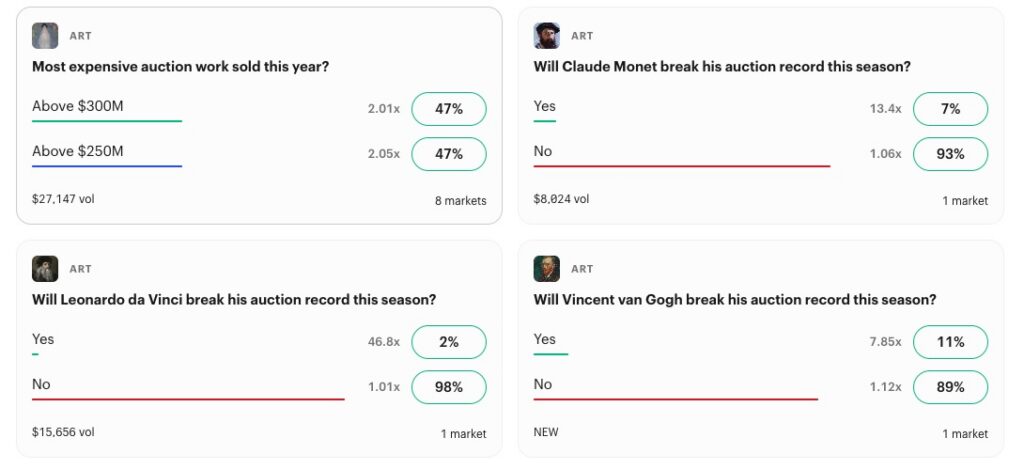
Kalshi Art Auction: Yes, No Contracts Target Record-Breaking Sales for 2026
Traders immediately dove into multiple arthouse contracts, like whether Van Gogh’s works will exceed the $117.18 million threshold or if Warhol pieces will topple the $195.04 million mark. Early trading volumes climbed steadily, reflecting strong interest in specific lots heading to Sotheby’s and Christie’s. Meanwhile, broader event contracts predicted the year’s highest auction sale price, with thresholds set at $250 million and $300 million drawing balanced action.
These contracts settle against publicly reported results from Artsy and major, reputable houses, thereby building high trust in the market’s resolution. As bidding wars intensify, the Kalshi contracts capture shifting sentiment in real time, turning traditionally opaque auction cycles into publicly tradable opportunities.
Current Kalshi Art Auction Contracts and Trading Volumes
| Contract Topic | Key Threshold | Yes Price (¢) | Volume Traded |
|---|---|---|---|
| Most Expensive Auction Work 2026 | Above $300M | 47 | $23,212 |
| Van Gogh Record Breaker | Yes | 13 | High |
| Gustav Klimt Portrait Sale | Above $38M | 71 | $27,928 |
| Most Expensive Work This Year | Above $150M | 60 | $12,357 |
How Kalshi Art Markets Add Hedging Power to the $65 Billion Art Sector
Valeria Vouterakou, legal counsel at Kalshi, emphasized the breakthrough for those with substantial Impressionist art collections who previously lacked effective risk management. A collector with $10 million in holdings can now offset exposure through targeted contracts while maintaining physical ownership. This development comes as first-quarter 2026 auction sales at major houses jumped 64.3% to $1.7 billion, signaling renewed buyer confidence in major works.
Although the global art market hovers near $65 billion annually, liquidity challenges and limited market information have long frustrated outsiders interested in getting involved. Kalshi arthouse contracts narrow that gap by allowing anyone to trade on the probability of verifiable outcomes, such as whether a Klimt exceeds $40 million at Sotheby’s London on June 24. Consequently, price discovery improves, and new capital flows toward cultural assets that once felt out of reach to those not directly immersed in and invested in the art world itself.
Watch this discussion breaking down the 2026 Art Basel and UBS Global Art Market Report
Specific Lot Contracts Drive Engagement on Upcoming Auction Highlights
Contract focus has centered on individual masterpieces with detailed price bands. For Gustav Klimt’s 1902 “Portrait of Gertrud Loew”, traders split views across $38 million and $40 million levels, generating strong early volume. Similar action unfolds around Amedeo Modigliani’s “Homme à la pipe” and Francis Bacon self-portrait studies, where Yes/No shares fluctuate with pre-sale estimates and market buzz.
Because each contract is resolved strictly by the final reported hammer price, disputes remain minimal, and confidence in market resolution stays high. Dealers monitoring these prediction-market signals adjust strategies ahead of live bidding, while contract speculators capitalize on short-term sentiment swings. As the fall auction season approaches, Kalshi is promising expanded offerings, including even more high-profile consignments.
Record-Breaking Potential for Iconic Artists in 2026 Season
| Artist | Current Record ($M) | Yes Odds for Break (% implied) | Trading Interest |
|---|---|---|---|
| Vincent van Gogh | 117.18 | 13 | High |
| Andy Warhol | 195.04 | 11 | Strong |
| Leonardo da Vinci | Record threshold | 2 | Emerging |
Broader Implications for Art Market Accessibility and Price Discovery
While traditional collectors once relied solely on gallery networks and insider whispers, these new contracts open participation to a wider audience who may see these high-end art pieces as purely financial assets.
Although concerns about potential manipulation linger in any fast-moving niche market, Kalshi enforces strict rules against insider trading (to the best of its ability) and requires that disputes be resolved through transparent public sources. This framework builds trust while encouraging broader engagement. As volumes build toward fall marquee events, the interplay between live auctions and parallel trading will likely intensify, creating a far more dynamic art sale marketplace.
In this video, Kalshi leadership discusses the platform’s rapid expansion into new categories, such as fine art.
Kalshi Continues Expanding Real World Asset Coverage with Art Focus
Following successful forays into luxury watches and collectibles, the art category marks another step in Kalshi’s push to cover tangible assets. Contracts now span price thresholds for specific works by Edgar Degas, Chaïm Soutine, and others that are scheduled for imminent sale.
With recent New York spring auctions totaling $2.1 billion, momentum in this forecasting market feels like a natural follow-on. As more data flows from resolved markets, traders are refining models and sharpening forecasts for subsequent seasons.
Because these tools democratize access to luxury tools without requiring multimillion-dollar purchases, they are likely to foster broader and deeper interest in the high-end art market. There’s no gavel and vocal auctioneering on Kalshi, but one can still picture themselves as an art trader. Over time, aggregated contract prices may even influence pre-sale estimates at traditional houses.
References
- Kalshi Official Announcement on Art Markets Launch
- Artnet News Coverage of Kalshi Art Auction Markets
- Barron’s Report on Kalshi Art Expansion
- Kalshi Live Art Auction Markets
- UBS Global Art Market Report 2026
- Kalshi Announcement Post on X