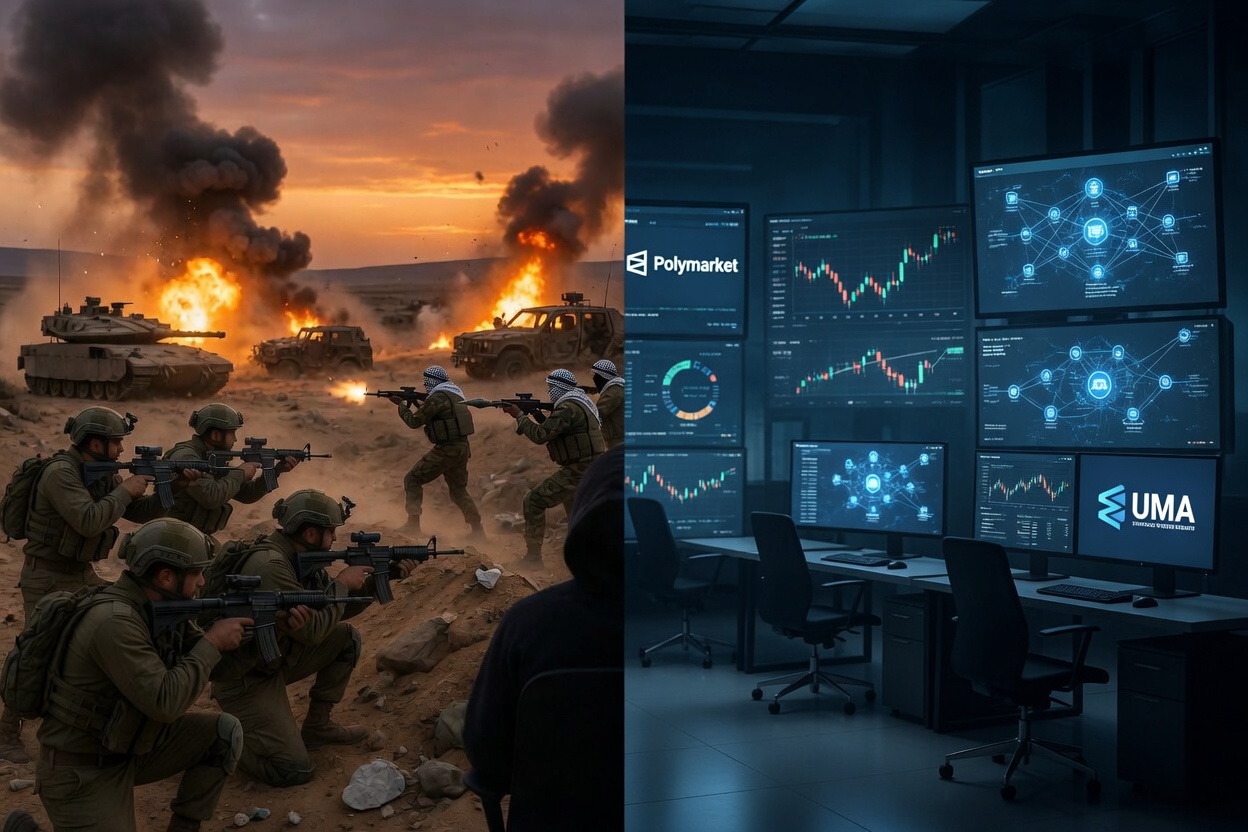
According to the Wall Street Journal, anonymous UMA token holders are deciding high-stakes Polymarket resolutions via Optimistic Oracle arbitration, as conflicts over cease-fire interpretations expose fairness concerns in decentralized dispute systems.
Polymarket traders are questioning the reliability of these crypto judges to resolve outcomes, particularly in the Hezbollah ceasefire market.
Wall Street Journal Reveals Tensions in Polymarket Hezbollah Cease-Fire Dispute Resolution

A trader named Garrick Wilhelm placed a $567 Polymarket bet against an Israel-Hezbollah cease-fire because he viewed any agreement as highly unlikely, given the tensions and his own research. Israel later announced a truce with the Lebanese government. Traders immediately debated whether the deal qualified under the market rules. Wilhelm argued that the Israel-Lebanon failed to meet the specific criteria directly involving Hezbollah, and he submitted evidence during the resolution dispute process.
Note to traders: ALWAYS read your resolution rules carefully before entering any prediction market.
The dispute escalated to arbitration, where anonymous crypto token holders voted through the Polymarket UMA system. Polymarket created this system so its users could be the arbiters of resolution disputes rather than Polymarket officials making top-down judgments.
Wilhelm lost the wager, and the outcome left him deeply frustrated with the process. His case underscores persistent issues with how Polymarket handles contested resolutions and highlights broader reliability questions that retail traders like Garrick face in high-stakes markets. Am I getting equal treatment as the big guys?
UMA Optimistic Oracle Process Drives Contentious Polymarket Resolutions
Traders propose dispute resolution outcomes by staking a $750 USDC bond; a two-hour challenge window follows. Unchallenged proposals stand with the proposer, who claims the bond plus a reward. Challenges trigger escalation; disputers post matching bonds, and a 24-48 hour debate unfolds in UMA Discord channels for evidence sharing.
UMA token holders vote over roughly 48 hours. Results range from proposer victory to disputer success, too early, or an unknown split.
This dispute resolution process delivers speed yet draws criticism over voter incentives and anonymity. Traders who lost on the cease-fire market raised sharp objections, insisting that the truce excluded direct Hezbollah involvement and noting persistent military actions. The vote still went against them despite the evidence submitted, intensifying calls for clearer standards in Polymarket UMA arbitration disputes.
Core Stages in UMA Dispute Resolution for Polymarket Markets
| Stage | Description | Timeframe | Financial Stakes |
|---|---|---|---|
| Proposal | Anyone posts a bond and suggests an outcome | Immediate | $750 USDC bond |
| Challenge | Half a loser’s bond as bounty | 2 hours | Matching $750 bond |
| Debate | Evidence shared in Discord | 24-48 hours | Bonds at risk |
| Voting | UMA token holders decide | ~48 hours | Half loser’s bond as bounty |
Conflicts of Interest Surface in Polymarket UMA Token Holder Votes
Roughly 60% of UMA voters in reviewed cases link to Polymarket trading accounts. In nearly 20% of those instances, voters have a direct stake in the markets under review, which fuels suspicions of self-interested rulings that favor larger holders. A judge in other venues would likely recuse themselves in such matters.
One X post captured widespread trader anger as users accused voters of equating Lebanon’s government with Hezbollah to influence payouts for profit.
Although defenders point to economic incentives through staking and bonds that theoretically align interests toward truthful outcomes rather than self-interested rulings, the overlaps create at least an appearance of a conflict of interest and real tension.
High Volume Geopolitical Markets Amplify the Stakes in Crypto Judge Decisions
Cease-fires, elections, and geopolitical conflict markets on Polymarket often handle massive volumes, heightening the importance of accurate resolutions. Real-world events aren’t like sports events. They are far more complicated when it comes to event contracts. They test contract language and push disputes into the arbitration system, where whale voters sometimes coordinate to their own desired outcome. Token-weighted voting allocates influence based on holdings, adding another layer of potential fairness issues.
Wilhelm’s $567 loss, though modest, creates a test case for issues retail traders face. They enter these platforms seeking clear rules for contract resolution but encounter interpretive battles settled by pseudonymous judges. Similar patterns to this Hezbollah-Israel ceasefire contract appear in temperature markets, which face sensor tampering claims and, as with political events, spark edge-case fights.
Community Pushes for Reforms in Polymarket Dispute Handling
Heated exchanges are common now in UMA Discord channels during major Polymarket resolution disputes. Bettors are not known for happily accepting defeat by technicalities or judgments off the field, as you might expect.
Disputing traders submit official statements, media reports supporting their positions, and interpretations of the Polymarket platform rules, but final votes frequently disappoint the losers. How much of this disappointment is endemic to bettors simply upset they lost money versus those who truly believe they were screwed by the dispute process? Hard to say.
Some Polymarker users have suggested mandatory conflict disclosures or hybrid models that combine token votes with stricter guidelines that preserve decentralization while boosting trust among those trading on geopolitical events, especially smaller dollar traders who often feel like second-class wagerers.
Impact of Notable Polymarket Disputes Across Event Types
| Event Type | Dispute Trigger | Approximate Volume Affected |
|---|---|---|
| Geopolitical Cease-Fire | Truce party interpretation | $20M+ |
| Temperature Readings | Suspicious sensor data | $20K+ per case |
| Political Announcements | Ambiguous outcomes | Multi-million |
Watch Discussion on Polymarket Oracle Risks and Dispute Challenges
This video examines systemic issues in decentralized resolution following recent high-profile cases and offers insights into ongoing challenges with crypto judges.
References
- The Mysterious Crypto Judges Who Settle Polymarket Disputes – WSJ
- Polymarket Crisis, Oracle Risk, and Regulatory Scrutiny
- Polymarket Resolution Documentation
- How Are Markets Disputed? – Polymarket Help
- Israel x Hezbollah Ceasefire Market on Polymarket
- Inside UMA Oracle for Polymarket Resolutions
- UMA Optimistic Oracle
- Polymarket Crisis and Oracle Risk Video
- Polymarket’s Most Contentious Debates Decided by Anonymous Crypto Votes
- Tom Wright on X about Crypto Judges