
Prediction Market Basics
Prediction markets, also known as betting markets or event derivatives, have become essential tools for accurate forecasting of future events in 2026. These innovative platforms enable users to trade in prediction markets on outcomes ranging from political elections and sports events to economic indicators and cryptocurrency prices. By leveraging collective intelligence through decentralized prediction markets and regulated exchanges, they often surpass traditional polls in providing reliable probabilities. In this primer on prediction markets, we’ll explore what prediction markets are, their historical development, the leading platforms, including Polymarket and Kalshi, how prediction market trading operates, and their current market size, scope, and future potential. Ideal for beginners seeking an introduction to prediction markets or experts analyzing forecasting accuracy, this guide covers everything from crypto prediction markets to political betting markets, including detailed Polymarket case studies on the 2024 U.S. election and other notable events.
What Are Prediction Markets?
Prediction markets are dynamic exchange platforms where participants buy and sell contracts tied to the outcomes of uncertain future events, functioning much like financial markets but focused on event probabilities. For example, in political prediction markets, a contract on whether a candidate will win the 2026 midterm elections might trade at $0.75, indicating a 75% implied probability. These markets, often referred to as information markets or decision markets, aggregate diverse opinions to generate precise forecasts, making them superior for election betting markets and beyond.
Known variously as idea futures or binary event contracts, prediction markets incentivize accurate predictions by requiring participants to stake real money. Unlike traditional gambling against a house, these peer-to-peer systems facilitate direct trades among users on platforms like decentralized prediction markets built on blockchain technology. The primary goal is to reveal aggregated beliefs about events, with market prices serving as real-time probability estimates. Traders with informed insights drive the market toward accuracy, enhancing the reliability of forecasts in areas like sports prediction markets and economic event derivatives.
Contracts in prediction markets are typically binary—paying $1 if the event occurs (yes) and $0 otherwise (no)—but variations include scalar contracts for ranges or multi-outcome options. Popular categories encompass political betting on elections, crypto prediction markets for asset prices, sports outcomes, and even cultural events like award shows. In 2026, with the rise of blockchain prediction markets, users can wager on niche topics such as climate change milestones or geopolitical shifts, broadening the appeal of these forecasting tools.
A standout feature is their proven forecasting accuracy. Research demonstrates that prediction markets frequently outperform expert opinions and surveys due to financial incentives aligning with truthful information sharing. During the 2024 U.S. presidential race, platforms excelled in election prediction markets, offering probabilities that mirrored results more closely than polls. This crowdsourced wisdom, as described in James Surowiecki’s seminal work, underscores why prediction markets are increasingly adopted in finance, policy-making, and risk management.
Despite their benefits, prediction markets face scrutiny for resembling gambling, prompting regulatory oversight from bodies like the CFTC, which classifies them as event contracts. Nonetheless, they democratize access to sophisticated forecasting, transforming uncertainty into actionable insights through efficient prediction market trading mechanisms.
History of Prediction Markets
The origins of prediction markets trace back to ancient practices of wagering on uncertain outcomes, evolving into modern forecasting platforms. Early examples include 16th-century betting on papal elections in Italy, highlighting the long-standing use of markets for political prediction. By the 19th century, informal election betting markets flourished in the U.S., with odds published in newspapers, laying the groundwork for structured event derivatives.
A pivotal moment came in 1907 with Francis Galton’s experiment on crowd estimates at a fair, revealing the surprising accuracy of aggregated guesses—a core principle of today’s prediction markets. The 20th century saw formalized betting on Wall Street for U.S. elections, but it was the 1988 launch of the Iowa Electronic Markets (IEM) that marked the birth of modern prediction market platforms. This academic initiative allowed small-stakes trading on political outcomes, consistently beating polls in forecasting accuracy over multiple cycles.
| Year | Event | Significance |
|---|---|---|
| 1503 | Betting on papal successors in Rome | Early informal prediction markets |
| 1907 | Francis Galton’s ox-weight experiment | Demonstrated wisdom of crowds |
| 1988 | Launch of Iowa Electronic Markets | First modern electronic prediction market |
| 2001 | Intrade platform launch | Commercialization of prediction markets |
| 2020s | Rise of blockchain-based platforms like Augur and Polymarket | Decentralized, trustless trading |
| 2024 | Record volumes during U.S. election | Mainstream adoption and regulatory shifts |
The 2000s brought commercialization with platforms like Intrade, offering global users contracts on politics, entertainment, and more, popularizing idea futures. Economists championed their efficiency in aggregating information, leading to advocacy for deregulation in influential publications. Corporate adoption followed, with companies like Google using internal prediction markets for project forecasting, while government agencies experimented with them for intelligence analysis.
Regulatory hurdles in the U.S. confined many operations offshore until the 2020s, when blockchain technology spurred decentralized prediction markets. Platforms like Augur pioneered smart contract-based trading, resistant to censorship. The 2024 election cycle was transformative, with crypto prediction markets handling billions in volume on political betting, prompting legal reforms. By 2026, prediction markets have matured into a multi-billion-dollar industry, integrating with fintech for broader applications in risk hedging and decision support.
This historical trajectory illustrates the shift from rudimentary wagers to advanced tools for precise event forecasting, driven by technological innovation and growing recognition of their superior accuracy in areas like election prediction markets.
Major Players in Prediction Markets in 2026
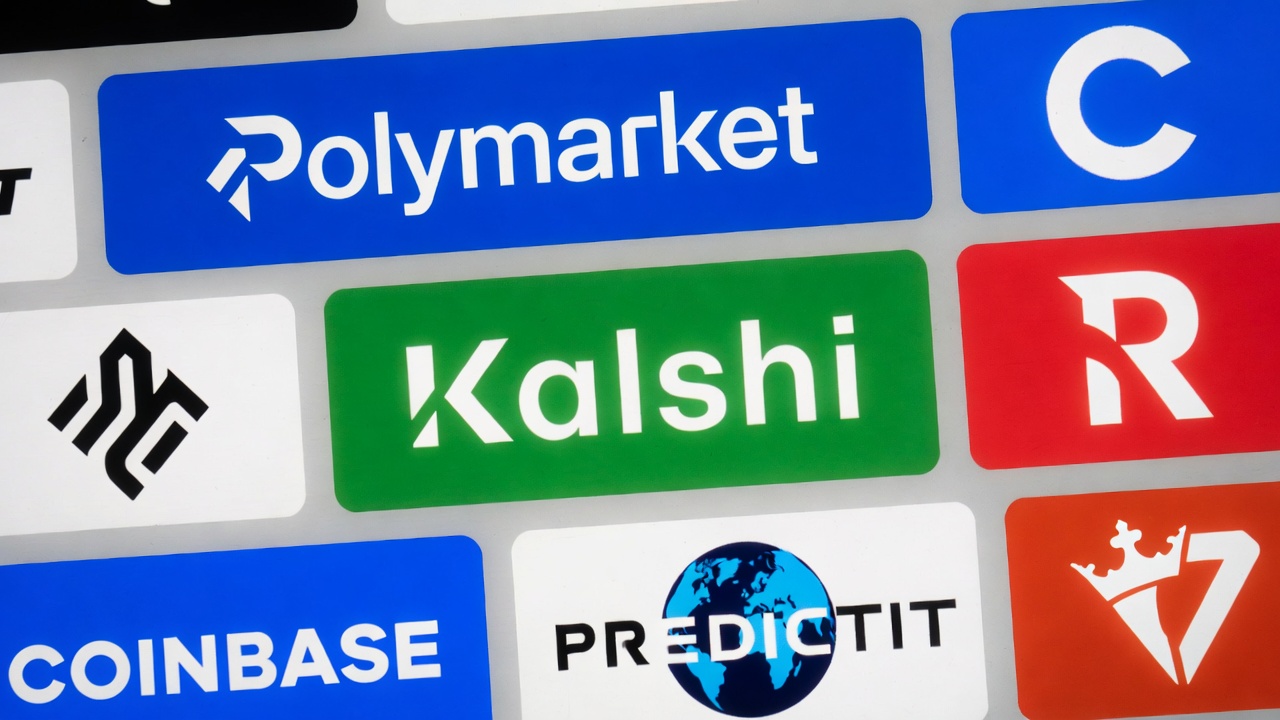
In 2026, the landscape of prediction market platforms is vibrant, featuring a blend of decentralized and regulated entities dominating political betting markets, crypto prediction markets, and sports forecasting. These top prediction markets boast high liquidity, diverse contracts, and innovative features, attracting millions of users globally.
| Platform | Type | Valuation (2025 est.) | 2025 Volume (est.) | Key Focus Areas |
|---|---|---|---|---|
| Polymarket | Decentralized (Blockchain) | $12 billion | $3.6 billion (single event); $2.6 billion monthly | Politics, Crypto, Culture |
| Kalshi | Regulated (CFTC) | $11 billion | $5 billion monthly | Economics, Sports, Politics |
| Robinhood | Regulated Fintech | N/A (Segment: $300 million annual revenue) | Hundreds of millions | Sports, Politics, Economics |
| Coinbase | Crypto-Integrated | N/A | Significant in crypto events | Crypto, Blockchain Events |
| PredictIt | Academic/Regulated | N/A | Smaller scale | Politics |
| DraftKings/ FanDuel | Sports Betting Integrated | N/A | Billions in sports bets | Sports, Entertainment |
Polymarket: As the premier decentralized prediction market, Polymarket leverages blockchain for trustless trading in USDC. It excels in political prediction markets, crypto event contracts, and cultural bets, achieving record volumes exceeding $3 billion during major events. Valued at over $12 billion, it’s a go-to for accurate election betting markets, with seamless integration for U.S. users post-regulation.
Kalshi: A leading regulated prediction market platform under CFTC oversight, Kalshi offers USD-based trading on economics, sports, and politics. Known for robust liquidity in election prediction markets, it reported billions in 2025 volumes and a $11 billion valuation. Its user-friendly interface and real-time data feeds make it ideal for beginners exploring event derivatives.
Robinhood Markets: Expanding into prediction markets, Robinhood provides accessible trading on sports and political outcomes, generating substantial revenue. Its integration with AI tools enhances forecasting accuracy, positioning it as a top choice for retail investors in binary event contracts.
Coinbase Global: Through partnerships, Coinbase bolsters crypto prediction markets, allowing seamless trades on blockchain-based events. It’s evolving into a comprehensive platform for decentralized forecasting, appealing to crypto enthusiasts.
PredictIt: Focused on academic and political betting markets, PredictIt offers capped stakes for research-oriented trading, maintaining influence in election prediction analysis.
Emerging contenders like DraftKings, FanDuel, and Novig specialize in sports prediction markets, while Augur upholds decentralized traditions. These major players drive innovation, with the sector’s total valuation surpassing $50 billion, fueled by blockchain prediction markets and regulatory advancements.
How Do Prediction Markets Operate?
Understanding how prediction markets work reveals their efficiency in generating accurate forecasts through structured trading mechanisms. At the heart of prediction market trading are contracts representing event outcomes, traded on platforms that aggregate collective intelligence.
Contract Design: Binary contracts dominate, priced between $0.01 and $0.99 to reflect probabilities in political betting markets or crypto predictions. Traders buy “yes” shares if optimistic or “no” if pessimistic, profiting from correct outcomes at settlement.
Trading Dynamics: Utilizing order books or automated market makers (AMMs), platforms ensure liquidity for seamless buys and sells. Low fees encourage active participation, with prices adjusting rapidly to new information in real-time forecasting.
Incentive Structures: Financial stakes promote truthful betting, as informed traders correct mispricings, enhancing overall accuracy in election prediction markets and beyond.
Resolution Process: Trusted oracles, such as official data sources or decentralized votes, determine outcomes, ensuring fair payouts in event derivatives.
Safeguards against manipulation include arbitrage opportunities and regulatory compliance, making prediction markets reliable for hedging and decision-making.
Size and Scope of Prediction Markets
The size of prediction markets has surged, with 2025 monthly volumes hitting $13 billion, driven by popular platforms in the crypto and political sectors. Projections forecast the decentralized segment reaching $95.5 billion by 2035, reflecting a robust CAGR. Industry revenues are expected to grow from $2 billion in 2025 to $10 billion by 2030.
The scope extends to diverse applications: from sports prediction markets dominating weekly volumes to geopolitical and economic forecasting. Global accessibility via blockchain prediction markets has expanded user bases, with weekly volumes reaching $6 billion in early 2026.
Challenges like regulation persist, but the broadening scope positions prediction markets as vital tools for uncertainty management in business and policy.
Case Studies on Polymarket: Real-World Applications and Insights
Polymarket, as a leading decentralized prediction market platform, has been at the forefront of several high-profile events, demonstrating its forecasting accuracy and market dynamics. These Polymarket case studies highlight its role in political betting, geopolitical predictions, and cultural trends, providing valuable lessons on how prediction markets aggregate information and influence public perception. From the 2024 U.S. presidential election to niche bets in 2025, Polymarket’s performance offers insights into the strengths and challenges of blockchain-based event derivatives.
| Event | Volume ($M) | Forecast Accuracy | Key Insight |
|---|---|---|---|
| 2024 U.S. Election | 2700 | High (60% for winner) | Outperformed polls |
| Maduro Capture (2025) | N/A | High | Insider trading suspicions |
| Israel-Iran Strikes (2025) | N/A | High | Rapid odds shifts |
| Zelenskyy Suit Bet (2025) | 145 | N/A | Resolution ambiguities |
| Papal Election (2025) | N/A | Low (1-2% miss) | Rare forecasting error |
Polymarket Case Study: 2024 U.S. Presidential Election Predictions
One of the most prominent Polymarket case studies is its handling of the 2024 U.S. presidential election, where the platform saw a staggering 48x surge in trading volume. Users placed over $2.7 billion in bets on whether Donald Trump or Kamala Harris would win, with Polymarket’s odds consistently favoring Trump at around 60% probability in the days leading up to the vote. This contrasted sharply with traditional polls, which often showed a near 50-50 split or a slight Harris lead. Ultimately, Trump’s victory aligned closely with Polymarket’s forecasts, underscoring the platform’s superior accuracy in election prediction markets.
The event also highlighted potential issues, such as allegations of wash trading to inflate volumes and manipulate odds, with researchers identifying blockchain evidence of manipulative activities. Despite this, Polymarket’s real-time sentiment data attracted institutional investors and media attention, solidifying its reputation as a reliable tool for political betting markets. This case study illustrates how financial incentives in prediction market trading can aggregate dispersed information more effectively than surveys, achieving over 90% accuracy in similar high-stakes events.
Polymarket Case Study: Geopolitical Events and Insider Trading Suspicions in 2025
In 2025, Polymarket featured notable geopolitical prediction markets, including bets on events like U.S. strikes on Iran and Venezuelan President Nicolás Maduro’s ousting. A striking case involved a user who bet on Maduro’s capture shortly before a U.S. operation, netting a $436,000 payout and raising red flags for potential insider trading. Similarly, accurate predictions on Israel’s strikes against Iran in June 2025, earning around $100,000, sparked concerns about leaked information influencing market odds.
These incidents demonstrate Polymarket’s sensitivity to real-world developments, with odds shifting rapidly based on trader insights. However, they also expose vulnerabilities, such as the risk of manipulation or unfair advantages, prompting discussions on regulatory safeguards in decentralized prediction markets. Despite these challenges, Polymarket’s geopolitical forecasts often outperformed traditional analyses, with overall platform accuracy reaching up to 94% for events hours before resolution.
Polymarket Case Study: Cultural and Niche Bets, Including the Zelenskyy Suit Debacle
Polymarket’s scope extends beyond politics, as seen in the 2025 “Will Zelenskyy Wear a Suit Before July?” market, which traded over $145 million despite its seemingly trivial nature. The bet became contentious due to ambiguities in resolution criteria, leading to debates among users and highlighting the importance of clear oracle processes in event derivatives. This case study reveals how cultural prediction markets can go viral, drawing massive volumes while testing platform governance.
Another example is the 2025 papal election, where Polymarket’s low odds (1-2%) for Robert Prevost (now Pope Leo XIV) were proven wrong, marking a rare miss and emphasizing that even high-accuracy platforms (around 95% in some analyses) can falter on unexpected outcomes. These niche bets showcase Polymarket’s versatility but also underscore the need for robust mechanisms to handle disputes and maintain trust in forecasting accuracy.
Overall, these Polymarket case studies affirm the platform’s prowess in aggregating collective wisdom for superior predictions, while also revealing areas for improvement in regulation and transparency within the evolving landscape of crypto prediction markets.
Conclusion
Prediction markets, encompassing decentralized platforms and regulated exchanges, offer unparalleled forecasting accuracy in 2026. From their historical roots to current dominance in election betting and crypto predictions, they empower users with data-driven insights. As illustrated in the Polymarket case studies, these markets excel in high-stakes scenarios like the 2024 election but face ongoing challenges. As the industry grows, mastering prediction market trading becomes essential for navigating future uncertainties.

The PolyPunter staff works tirelessly to bring you the latest and most insightful news, information, and tips on the fast-growing economic, financial, and social phenomenon that is prediction markets.


